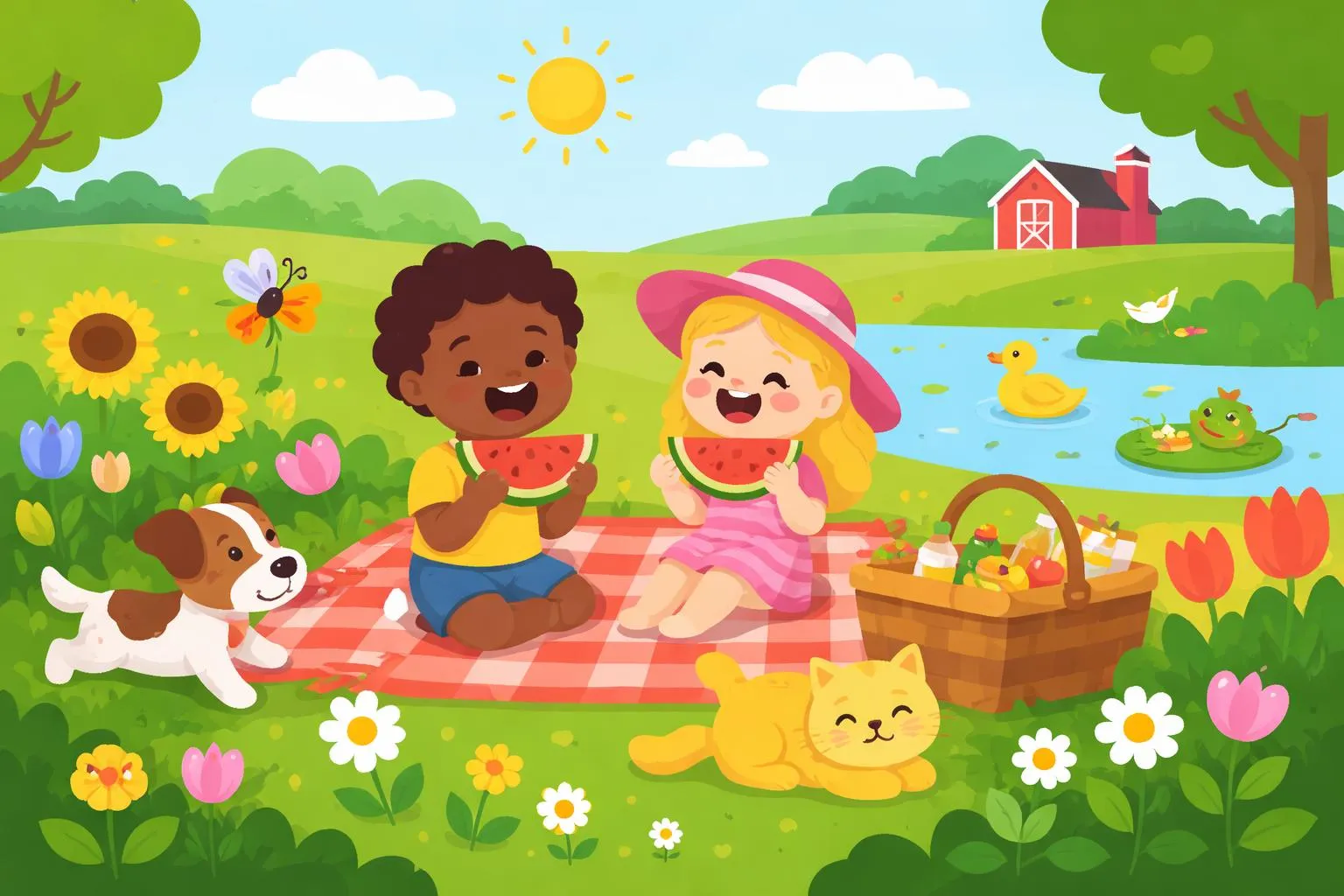

Original Story:
Oh, summer has clothed the earth
In a cloak from the loom of the sun!
And a mantle, too, of the skies’ soft blue,
And a belt where the rivers run.
And now for the kiss of the wind,
And the touch of the air’s soft hands,
With the rest from strife and the heat of life,
With the freedom of lakes and lands.
I envy the farmer’s boy
Who sings as he follows the plow;
While the shining green of the young blades lean
To the breezes that cool his brow.
He sings to the dewy morn,
No thought of another’s ear;
But the song he sings is a chant for kings
And the whole wide world to hear.
He sings of the joys of life,
Of the pleasures of work and rest,
From an o’erfull heart, without aim or art;
‘T is a song of the merriest.
O ye who toil in the town,
And ye who moil in the mart,
Hear the artless song, and your faith made strong
Shall renew your joy of heart.
Oh, poor were the worth of the world
If never a song were heard,—
If the sting of grief had no relief,
And never a heart were stirred.
So, long as the streams run down,
And as long as the robins trill,
Let us taunt old Care with a merry air,
And sing in the face of ill.
Expansion and Analysis
Summary and Interpretation
This poem beautifully captures the essence of summer as a season of life, joy, and freedom. The earth is personified as being dressed in a "cloak from the loom of the sun," symbolizing the warmth and light that summer brings. The imagery of the "skies’ soft blue" and "rivers" emphasizes the natural beauty and calmness of the season.
The poem then shifts focus to a farmer’s boy who sings joyfully as he works in the fields. His song is spontaneous and heartfelt, a celebration of both work and rest, and it reaches beyond himself — it is a song for "kings and the whole wide world to hear." This highlights the universal power of simple happiness and the connection between humans and nature.
The poet encourages those who toil in towns and markets to listen to this "artless song" to renew their faith and joy. The poem ends with a hopeful message: as long as nature thrives, and birds sing, we can face life’s difficulties ("old Care") with a cheerful spirit.
Background and Author Introduction
This poem reflects the Romantic era’s deep appreciation for nature and the simple joys of life. The Romantic movement, which flourished in the late 18th and early 19th centuries, emphasized emotion, nature, and the individual’s connection to the world. Although the author is not specified here, the style and themes are reminiscent of poets like William Wordsworth or John Clare, who celebrated rural life and nature’s beauty.
Reflections and Personal Response
Reading this poem invites us to pause and appreciate the small pleasures around us — the warmth of the sun, the sound of birds, and the joy found in honest work. It reminds us that happiness is not always found in grand achievements but often in simple, everyday moments. The farmer’s boy’s carefree singing is a metaphor for living in harmony with nature and embracing life’s rhythms.
Learning Points for Children and Students
What can be learned?
- Nature Appreciation: The poem encourages children to observe and appreciate the natural world — the sun, sky, rivers, wind, and animals.
- Joy in Work and Rest: It teaches that work, especially when connected to nature, can be joyful, and rest is equally important.
- Emotional Expression: The farmer’s boy sings from his heart without concern for judgment, showing the value of expressing feelings freely.
- Resilience: The poem’s message about facing “old Care” with a merry air encourages resilience and optimism in difficult times.
Practical Applications
- In School: Students can learn to write their own nature poems, expressing what they see and feel in their environment.
- In Daily Life: Children can practice mindfulness by spending time outdoors, noticing the changing seasons and natural beauty.
- Emotional Health: The poem can be used to discuss how singing, music, or creative expression helps relieve stress and sadness.
Key Vocabulary and Concepts
- Mantle: A cloak or covering.
- Artless: Natural and simple, without pretense.
- Toil: Hard work.
- Taunt old Care: To challenge or defy worries and troubles.
- O’erfull: Overflowing or abundant.
Reading Comprehension Questions
- What does the poet compare summer to in the first stanza?
- How does the farmer’s boy feel about his work?
- Why does the poet say the boy’s song is for "kings and the whole wide world"?
- What message does the poem give to people who work in towns and markets?
- How does the poem suggest we should face difficulties in life?
- What natural elements are mentioned in the poem?
- Why is singing important according to the poem?
- What feelings does the poem evoke about summer and life?
Answers to Comprehension Questions
- The poet compares summer to a cloak made by the sun, a mantle of soft blue sky, and a belt where rivers run.
- The farmer’s boy feels joyful and sings happily as he works.
- The boy’s song is universal and heartfelt, meant to be heard and appreciated by everyone, from kings to all people.
- The poet encourages them to listen to the simple, joyful song to renew their faith and happiness.
- The poem suggests facing difficulties with a cheerful and merry attitude.
- The poem mentions the sun, sky, rivers, wind, air, lakes, lands, streams, and robins.
- Singing is important as it brings relief from grief and stirs the heart with joy.
- The poem evokes feelings of warmth, freedom, joy, and hope associated with summer and life.
This poem is a wonderful resource for children and students to explore nature, emotions, and resilience through poetry. It inspires us to find joy in everyday moments and to face life’s challenges with a positive spirit.