
Original Story:
In the merry month of May
When green leaves begin to spring,
Little lambs do skip like fairies,
Birds do couple, build, and sing.
Expansion and Analysis
Summary and Interpretation
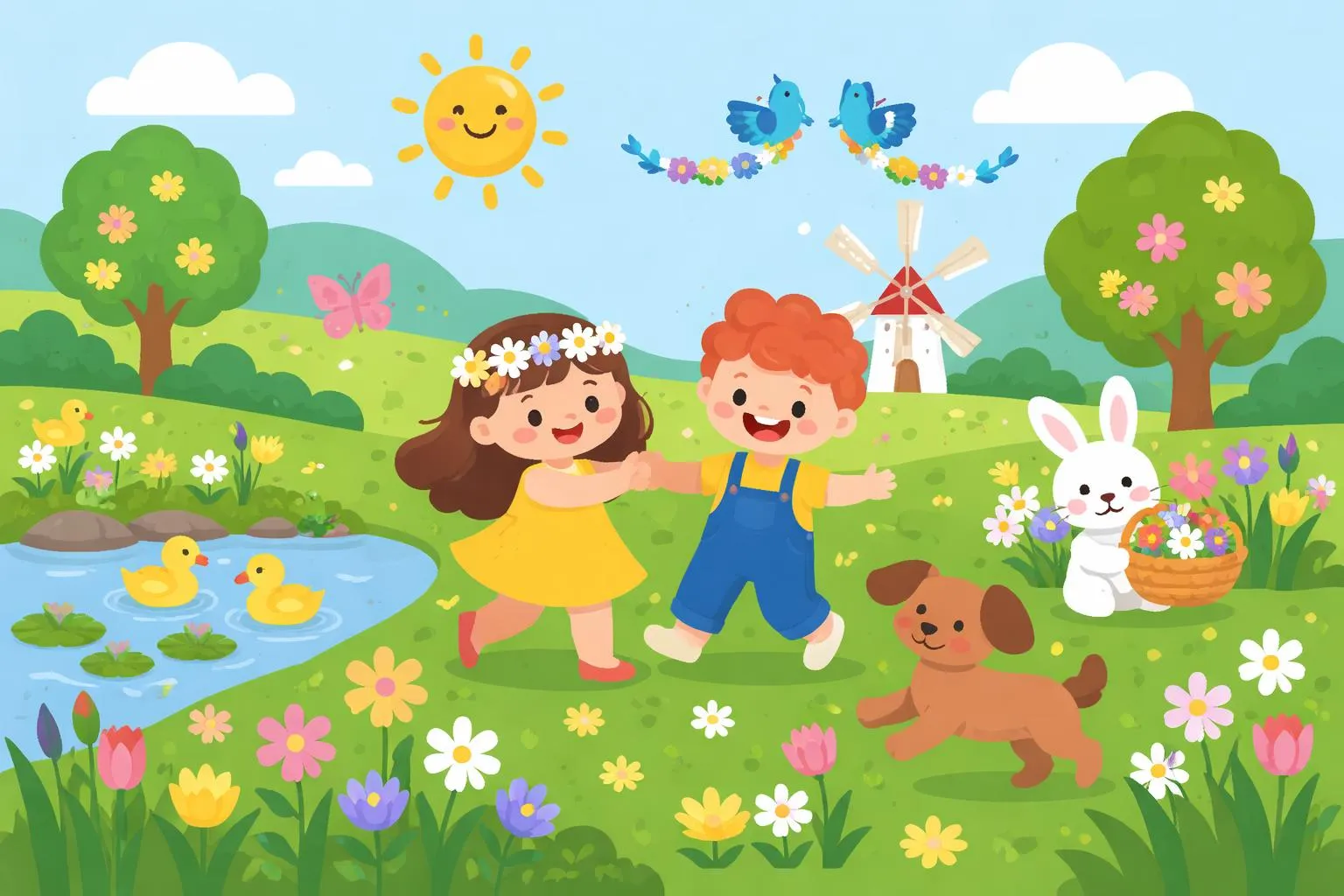
This short poem beautifully captures the joyful spirit of May, a month associated with renewal and growth. The imagery of green leaves beginning to spring symbolizes the arrival of spring, a time when nature awakens from the dormancy of winter. The little lambs skipping like fairies evokes a sense of innocence and playfulness, while the birds coupling, building nests, and singing highlights the natural cycles of life and love.
The poem paints a vivid picture of the harmony and liveliness found in nature during this season. It invites readers, especially children, to appreciate the beauty and energy of springtime, encouraging an emotional connection with the environment.
Background and Author Introduction
This poem is a classic example of simple yet evocative children's poetry that often appears in early education materials. While the specific author is not mentioned here, poems like this are typically written by poets who specialize in children's literature or traditional nursery rhymes. The style is reminiscent of works by poets such as William Blake or early English nursery rhyme authors, who used rhythmic and easy-to-understand language to engage young readers.
The merry month of May has been celebrated in literature and folklore for centuries, often symbolizing fertility, joy, and the awakening of nature. This poem fits within that tradition, making it a timeless piece for teaching children about seasonal changes and the natural world.
Reflection and Personal Response
Reading this poem brings a sense of warmth and happiness. It reminds us of the simple pleasures found in nature and the importance of observing the world around us. For children, it can spark curiosity about animals, plants, and the changing seasons. For adults, it can evoke nostalgia and a reminder to slow down and enjoy the small wonders of life.
Educational Insights and Learning Points
What Children and Students Can Learn
- Seasonal Changes: The poem offers a clear depiction of spring, helping children understand how nature changes with the seasons.
- Nature Vocabulary: Words like spring, skip, couple, and sing enrich children’s vocabulary related to animals and nature.
- Rhythm and Rhyme: The poem’s structure enhances phonemic awareness and helps children develop a sense of rhythm in language.
- Imagery and Imagination: The comparison of lambs to fairies encourages creative thinking and visualization skills.
- Emotional Connection: It fosters appreciation and respect for nature, promoting environmental awareness from an early age.
Practical Applications in Life and Learning
- Science Lessons: Teachers can use the poem to introduce topics about animal behavior in spring, plant growth, and ecosystems.
- Art Activities: Children can draw scenes inspired by the poem, such as lambs skipping or birds building nests.
- Language Development: Reading aloud and memorizing the poem can improve pronunciation, fluency, and confidence in speaking English.
- Environmental Education: It can be a starting point for discussions on caring for animals and plants.
- Seasonal Celebrations: The poem can be part of classroom activities or events celebrating spring.
Learning Challenges and Focus Areas
- Understanding the metaphorical language, such as "skip like fairies," may require explanation for younger children.
- The concept of birds coupling might need clarification in age-appropriate terms.
- Encouraging students to relate the poem to their own experiences with nature can deepen comprehension.
Reading Comprehension Exercises
Questions
- What season is described in the poem?
- What do the little lambs do in May?
- What activities do the birds engage in according to the poem?
- Why do you think the poet compares lambs to fairies?
- How does the poem make you feel about the month of May and nature?
Answers
- The poem describes the spring season, specifically the month of May.
- The little lambs skip like fairies.
- The birds couple, build nests, and sing.
- The poet compares lambs to fairies to emphasize their lightness, playfulness, and magical quality.
- The poem creates a feeling of joy, liveliness, and appreciation for the beauty of nature in May.
This poem is a wonderful resource for young learners to explore language, nature, and emotions, all while enjoying the rhythm and imagery of classic children's poetry.