
Original Story:
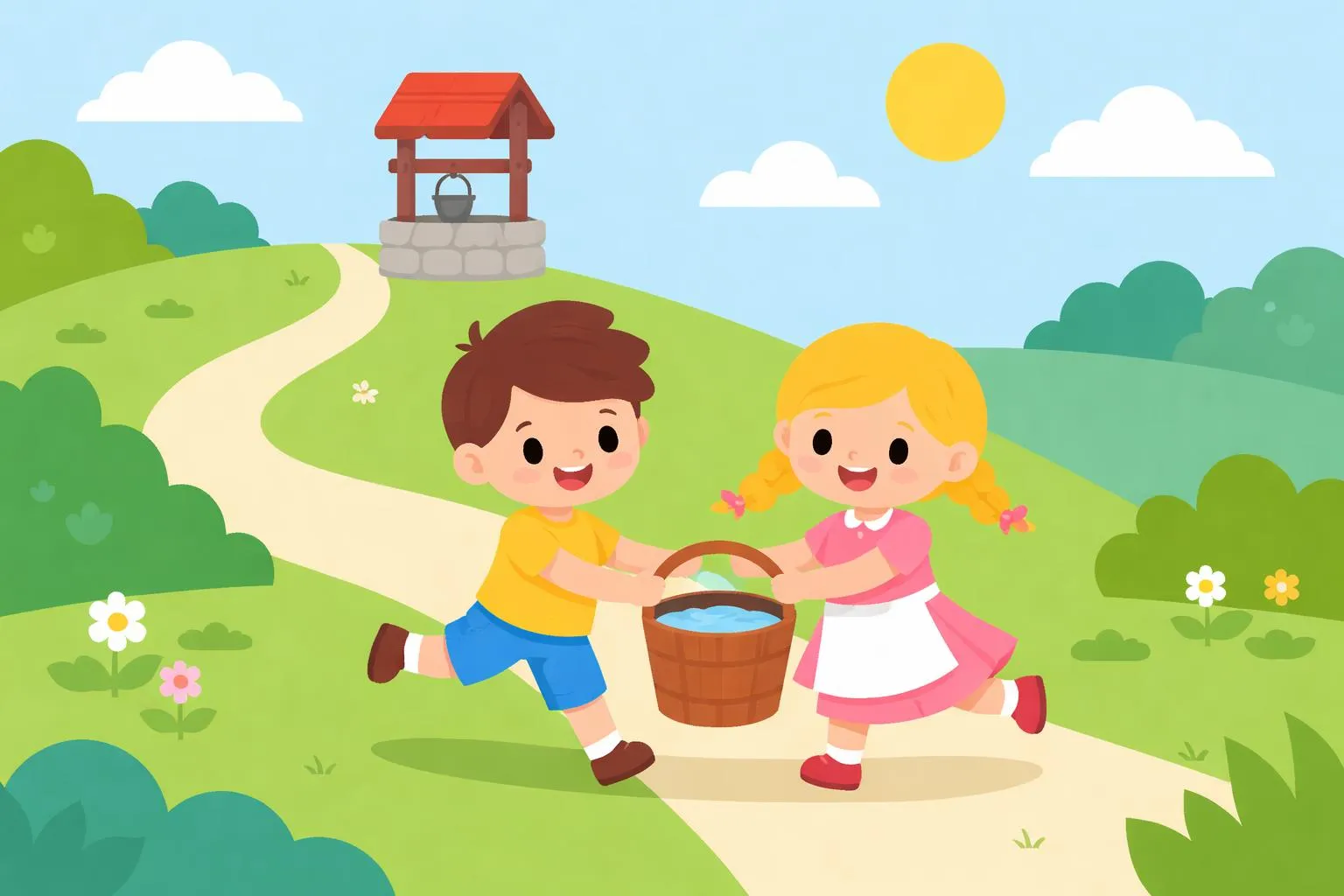
Jack and Jill went up the hill
To fetch a pail of water;
Jack fell down and broke his crown,
And Jill came tumbling after.
Expanded Article
Introduction and Explanation
The nursery rhyme "Jack and Jill" is a classic and well-known English children's poem. It tells a simple story about two children, Jack and Jill, who go up a hill to fetch water. Unfortunately, Jack falls and hurts his head ("broke his crown"), and Jill also falls down after him. The rhyme is short, rhythmic, and easy to remember, making it a favorite among young children.
The meaning of the story is straightforward: it narrates a small accident that happens during a daily chore. However, beyond the literal sense, it can be interpreted as a lesson about caution and the consequences of carelessness. The rhyme's playful tone and repetition help children develop language skills and memory.
Background and Author
The exact origin of "Jack and Jill" is uncertain, but it dates back to the 18th century. It first appeared in print in 1765 in a collection of English nursery rhymes. The rhyme has been passed down through generations, becoming part of traditional English folklore.
There is no single known author of this rhyme; it belongs to the oral tradition where stories and poems were shared verbally before being written down. Some historians believe the rhyme may have political or historical allegories hidden in it, but these interpretations are debated and not confirmed.
Literary Appreciation
The rhyme's rhythm and rhyme scheme (AABB) make it catchy and easy to recite. The use of simple language and repetition is ideal for early childhood education. The imagery of climbing a hill and fetching water reflects everyday life in past rural communities, making it relatable to children.
The poem also uses metaphor in "broke his crown," where "crown" means Jack's head. This figurative language introduces children to poetic devices in a gentle way.
Lessons and Educational Value
From this story, children can learn several important lessons and skills:
- Safety awareness: The story shows the consequences of accidents, encouraging children to be careful when performing tasks.
- Sequence and cause-effect: Understanding the order of events (going up the hill, fetching water, falling) helps develop logical thinking.
- Vocabulary building: Words like "pail," "crown," and "tumbling" enrich children's language.
- Memory and recitation: The rhyme's rhythm aids memorization and oral skills.
Practical Applications and Life Lessons
In daily life, children can apply the lessons from "Jack and Jill" by:
- Being cautious when climbing or walking on uneven surfaces.
- Learning to help others when accidents happen.
- Understanding that sometimes mistakes happen, but it’s important to get back up and try again.
In school, teachers can use the rhyme to:
- Teach phonics and rhyming words.
- Introduce basic storytelling elements.
- Encourage group recitation and confidence in speaking.
Reading Comprehension Exercises
Questions:
- What were Jack and Jill going up the hill to do?
- What happened to Jack when he fell?
- What does "broke his crown" mean in the story?
- Why do you think Jill came tumbling after Jack?
- What lesson can we learn from this story?
Answers:
- They were going up the hill to fetch a pail of water.
- Jack fell down and hurt his head.
- "Broke his crown" means Jack hurt his head.
- Jill came tumbling after because she likely lost her balance after Jack fell.
- We can learn to be careful and watch our steps to avoid accidents.
This simple nursery rhyme offers much more than just entertainment. It helps children develop language, understand basic storytelling, and learn important life lessons about safety and resilience. Through repeated reading and discussion, "Jack and Jill" remains a valuable educational tool for young learners.