
Original Story:
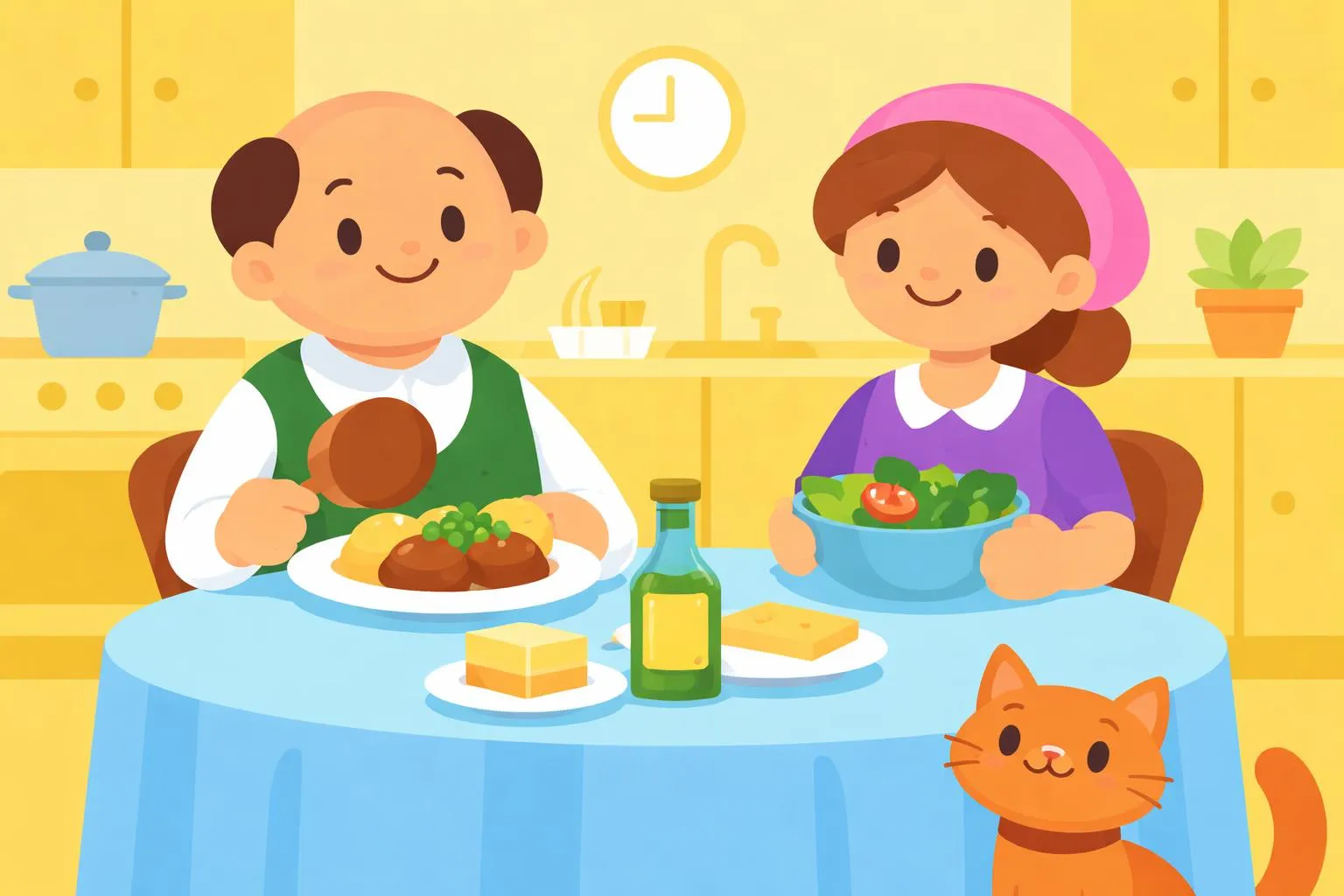
Jack Sprat could eat no fat,
His wife could eat no lean:
And so betwixt them both, you see,
They licked the platter clean.
Expansion and Analysis of "Jack Sprat"
Summary and Explanation
The nursery rhyme "Jack Sprat" is a short and simple poem that tells the story of a couple with very different eating habits. Jack Sprat could eat no fat, meaning he avoided fatty foods, while his wife could eat no lean, meaning she avoided lean meat. Together, their preferences complemented each other perfectly, so they were able to finish all the food on their plate without any waste.
This rhyme is often interpreted as a lesson about cooperation and compromise. Despite their differences, Jack Sprat and his wife work together to achieve a common goal — finishing their meal completely. It highlights how differences in preferences or habits can be balanced out when people work together harmoniously.
Background and Author
"Jack Sprat" is a traditional English nursery rhyme dating back to at least the 17th century. Like many nursery rhymes, the original author is unknown, as it was passed down orally through generations before being recorded in print. Nursery rhymes like this one were often used as simple, memorable verses to entertain children and teach them basic moral lessons or social values.
The rhyme reflects the social and cultural context of its time, where food was precious and wasting it was frowned upon. It also subtly promotes the idea of partnership and mutual respect within a household.
Interpretation and Reflection
This rhyme can be seen as a metaphor for balance and teamwork. Jack Sprat and his wife have opposing tastes, but instead of causing conflict, their differences allow them to complement each other. This teaches children the value of accepting differences and finding ways to work together despite them.
From a literary perspective, the rhyme uses simple language and rhyme scheme to make it catchy and easy to remember. The phrase "licked the platter clean" is a vivid image that children can easily visualize, making the lesson more engaging.
Educational Value and Life Lessons
Children and students can learn several important lessons from "Jack Sprat":
- Cooperation and Compromise: The story shows how people with different preferences can cooperate to achieve a shared goal.
- Respect for Differences: It encourages acceptance of others' likes and dislikes.
- Resourcefulness: The idea of not wasting food is an important lesson in responsibility and respect for resources.
- Language Skills: The rhyme introduces simple vocabulary and rhyme patterns, which help in language development and phonemic awareness.
Practical Applications
- In Daily Life: Children can learn to share and respect others’ choices, whether in food, play, or study habits.
- In School: Teachers can use this rhyme to discuss teamwork and how different strengths can complement each other.
- At Home: Parents can encourage children to try different foods and appreciate diversity in tastes.
Key Vocabulary
- Fat: The oily or greasy part of food.
- Lean: Meat that has little fat.
- Betwixt: An old-fashioned word meaning "between."
- Platter: A large plate used for serving food.
- Licked the platter clean: An expression meaning to finish all the food completely.
Reading Comprehension Questions
- What kind of food could Jack Sprat not eat?
- What kind of food could his wife not eat?
- How did Jack Sprat and his wife manage to finish the food?
- What lesson does this rhyme teach about working together?
- Why is it important not to waste food?
Answers
- Jack Sprat could not eat fat.
- His wife could not eat lean.
- They finished the food by combining their preferences and eating all the different parts together.
- The rhyme teaches that cooperation and compromise help people achieve common goals.
- Not wasting food shows respect for resources and helps everyone have enough to eat.
This simple nursery rhyme, while brief, offers rich lessons in cooperation, respect, and resourcefulness that are valuable for children’s personal development and social skills. It also provides a fun and memorable way to engage young learners in language and moral education.