
Original Story:
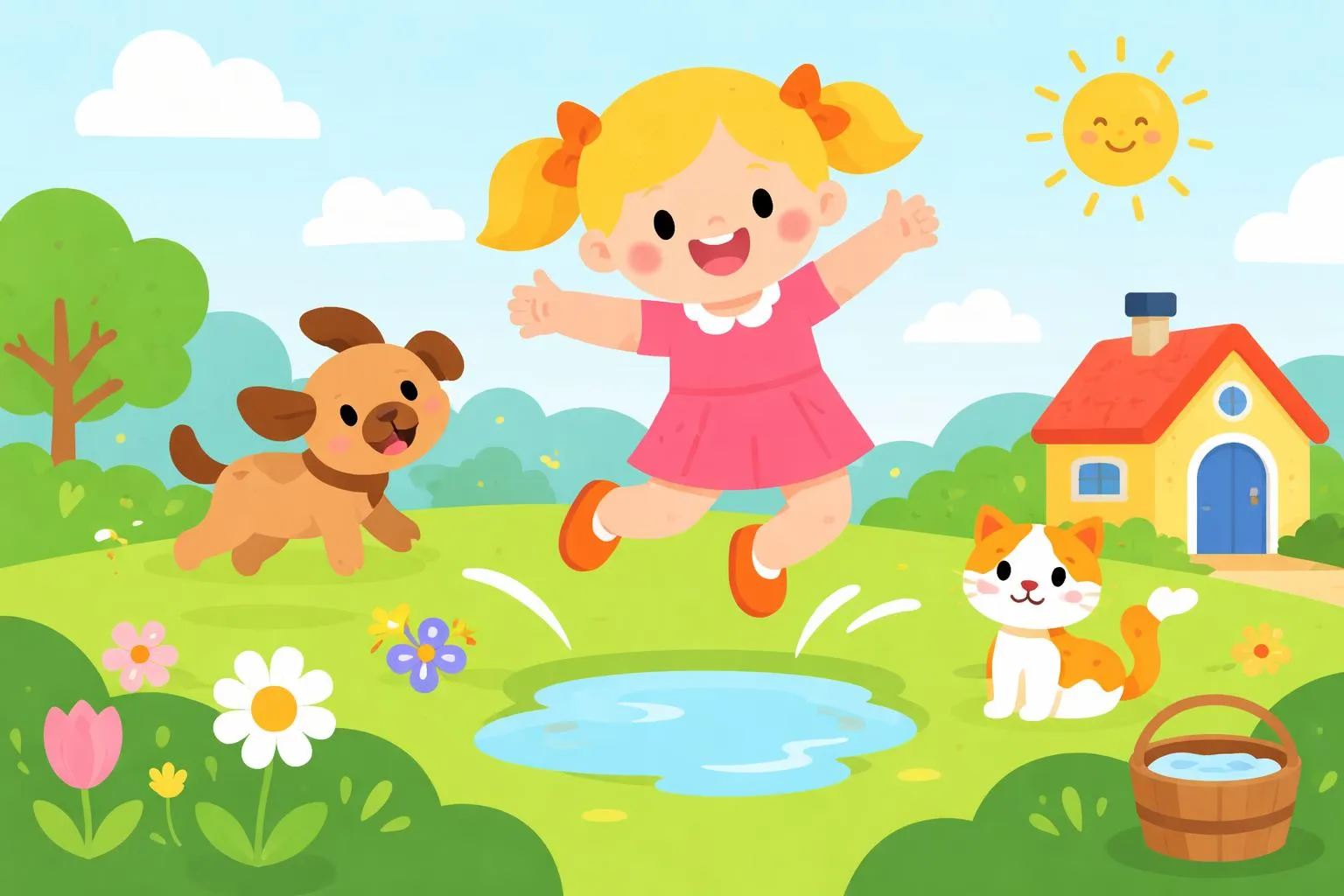
Here am I, little jumping Joan; When nobody’s with me, I am always alone.
Expansion and Analysis
Summary and Interpretation
This short rhyme introduces us to "little jumping Joan," a playful figure who jumps around but feels lonely when no one is with her. The simplicity of the lines captures a child's perspective on play and companionship. The phrase "When nobody’s with me, I am always alone" expresses a universal feeling of loneliness, especially familiar to children who enjoy playing with friends or family.
The story uses personification by giving Joan, presumably a toy or a character, the ability to jump and express feelings. This adds a layer of emotional connection for young readers, helping them relate to the idea of being alone and the joy of having company.
Background and Author Introduction
This rhyme is a classic example of a nursery rhyme or children's verse that has been passed down through generations. Such rhymes often originated as oral traditions before being written down. The author of this particular rhyme is unknown, which is common for many traditional nursery rhymes. These verses were created to entertain children, teach rhythm and language patterns, and sometimes to convey simple life lessons.
The rhyme's brevity and rhythm make it easy for children to memorize and recite, which is essential in early childhood education for developing language skills and memory.
Reflection and Personal Response
Reading this rhyme brings to mind the innocence and simplicity of childhood. It reminds us of the importance of companionship and how even small toys or characters can become friends to children. It also highlights the emotional intelligence of young children who can understand and express feelings like loneliness.
Educational Value and Learning Points
Children and students can learn several things from this rhyme:
- Language Development: The rhyme introduces simple sentence structure and vocabulary, helping young learners improve their English skills.
- Emotional Awareness: It encourages children to recognize and talk about feelings such as loneliness.
- Rhythm and Phonetics: The rhyme's cadence aids in developing phonemic awareness, crucial for reading skills.
- Imagination and Creativity: Imagining a "jumping Joan" sparks creativity and encourages children to invent stories or games.
Practical Applications in Life and Learning
- Social Skills: Teachers and parents can use this rhyme to discuss the importance of friendship and playing together.
- Creative Play: Children can create their own "jumping Joan" toys or puppets, fostering hands-on learning.
- Emotional Expression: It can be a conversation starter about feelings, helping children articulate their emotions.
- Language Exercises: The rhyme can be used in classrooms to practice pronunciation, rhythm, and memorization.
Key Learning Challenges and Focus Areas
- Understanding Personification: Helping children grasp how non-human things can have feelings or actions.
- Vocabulary Building: Explaining words like "jumping" and "alone" in context.
- Emotional Literacy: Encouraging children to connect the rhyme to their own experiences of loneliness or friendship.
Reading Comprehension Exercises
- Who is the main character in the rhyme?
- What does Joan do when nobody is with her?
- How does Joan feel when she is alone?
- Why do you think Joan is called "little jumping Joan"?
- Can you think of a time when you felt like Joan? What did you do?
Answers
- The main character is "little jumping Joan."
- Joan jumps around.
- Joan feels lonely when she is alone.
- Because Joan jumps a lot, she is called "little jumping Joan."
- (Open-ended) Answers will vary; children can share personal experiences related to feeling alone or wanting company.
This simple rhyme, while brief, opens doors to many educational opportunities and emotional insights for children. It encourages language learning, emotional expression, and creative thinking, making it a valuable resource in early childhood education.