
Original Story:
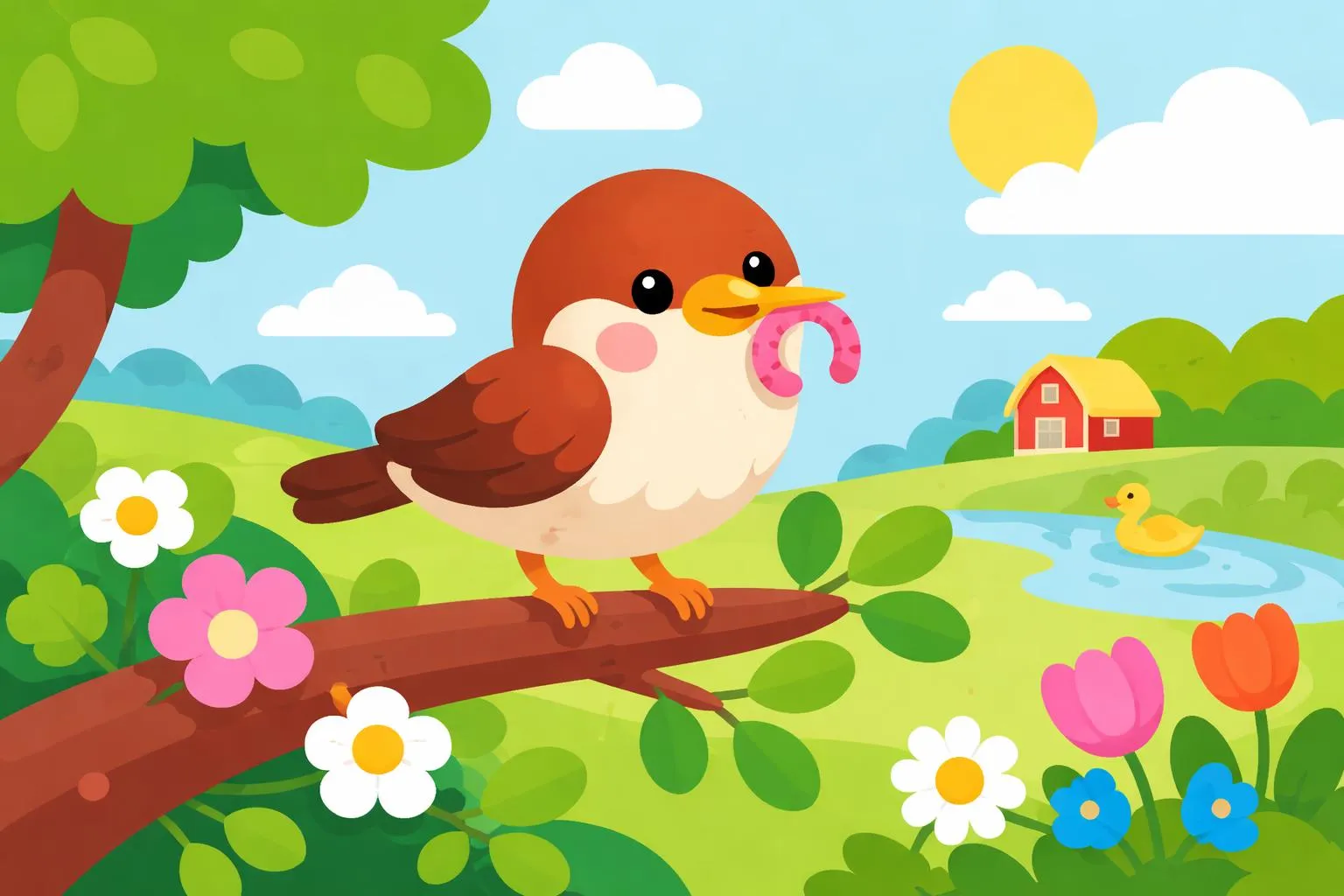
A little cock-sparrow sat on a tree,
Looking as happy as happy could be,
Till a boy came by, with his bow and arrow,
Says he, I will shoot the little cock-sparrow.
His body will make me a nice stew,
And his giblets will make me a little pie, too.
Says the little cock-sparrow, I’ll be shot if I stay,
So he clapped his wings and then flew away.
Story Expansion and Analysis
Summary and Explanation
This charming little story tells about a cock-sparrow who is happily sitting on a tree, enjoying his peaceful moment. Suddenly, a boy appears with a bow and arrow, intending to shoot the bird to use it for food — a stew and a pie. Realizing the danger, the sparrow quickly decides to fly away to save his life.
The story is simple but carries an important message about awareness and quick thinking. The sparrow’s happiness is interrupted by a threat, and instead of being passive, he takes immediate action to protect himself. This teaches children the value of being alert to their surroundings and acting wisely when faced with danger.
Literary Appreciation
The story uses rhyming couplets which make it easy and enjoyable for children to read or listen to. The rhythm and rhyme help in memorization and keep young readers engaged. The imagery of a happy sparrow suddenly threatened by a boy with a bow creates a vivid scene that children can easily picture.
The sparrow’s decision to fly away symbolizes self-preservation and courage. It also subtly hints at the idea that sometimes the best way to solve a problem is to avoid unnecessary risks.
Background and Author Introduction
This story is a classic example of a traditional children’s fable. While the exact author is unknown, such stories have been passed down through generations as part of oral storytelling traditions. They often carry simple morals and lessons designed to teach children about life, nature, and human behavior.
Fables like this one are commonly used in early childhood education because they combine storytelling with ethical teaching. They encourage children to think critically about their actions and the consequences that follow.
Reflections and Personal Thoughts
Reading this story reminds us how important it is to be aware of our environment and to make smart decisions quickly. Just like the sparrow, children can learn that sometimes it is better to avoid danger than to confront it unnecessarily.
Moreover, the story encourages empathy for animals and nature. It gently introduces the idea that animals have their own lives and feelings, and we should respect them.
Educational Value and Learning Points
Children and students can learn several key lessons from this story:
- Awareness and Caution: Understanding when a situation is dangerous and acting accordingly.
- Quick Decision-Making: The importance of thinking fast to protect oneself.
- Respect for Life: Recognizing the value of all living creatures.
- Rhyming and Language Skills: Enhancing vocabulary and phonetic awareness through rhyme.
- Moral Reasoning: Reflecting on right and wrong behavior.
Practical Applications in Life and Learning
- In Daily Life: Children can apply the lesson of being cautious in unfamiliar or unsafe situations, such as crossing the street or dealing with strangers.
- In School: The story can be used to teach rhyming patterns, improve reading fluency, and stimulate discussions about morals.
- Social Skills: Encourages children to think about how their actions affect others, including animals.
- Problem Solving: Helps develop critical thinking by analyzing the sparrow’s choice to fly away instead of confronting the danger.
Reading Comprehension Exercises
-
Who was sitting happily on the tree?
A) A little boy
B) A little cock-sparrow
C) A big bird
D) A rabbit -
What did the boy want to do?
A) Feed the sparrow
B) Shoot the sparrow with a bow and arrow
C) Play with the sparrow
D) Climb the tree -
Why did the boy want to shoot the sparrow?
A) To make a stew and a pie
B) To keep it as a pet
C) To scare other birds
D) To sell it -
What did the sparrow do when it saw the boy?
A) Stayed on the tree
B) Flew away quickly
C) Sang a song
D) Hid in a hole -
What is the main lesson of the story?
A) Always stay happy no matter what
B) Be aware of danger and act quickly to protect yourself
C) Birds are tasty
D) Boys like to shoot animals
Answers:
- B) A little cock-sparrow
- B) Shoot the sparrow with a bow and arrow
- A) To make a stew and a pie
- B) Flew away quickly
- B) Be aware of danger and act quickly to protect yourself
This simple yet powerful story is an excellent tool for teaching children important life lessons while improving their language skills and moral understanding. It encourages them to think critically and act wisely, lessons that are valuable both inside and outside the classroom.