
Original Story:
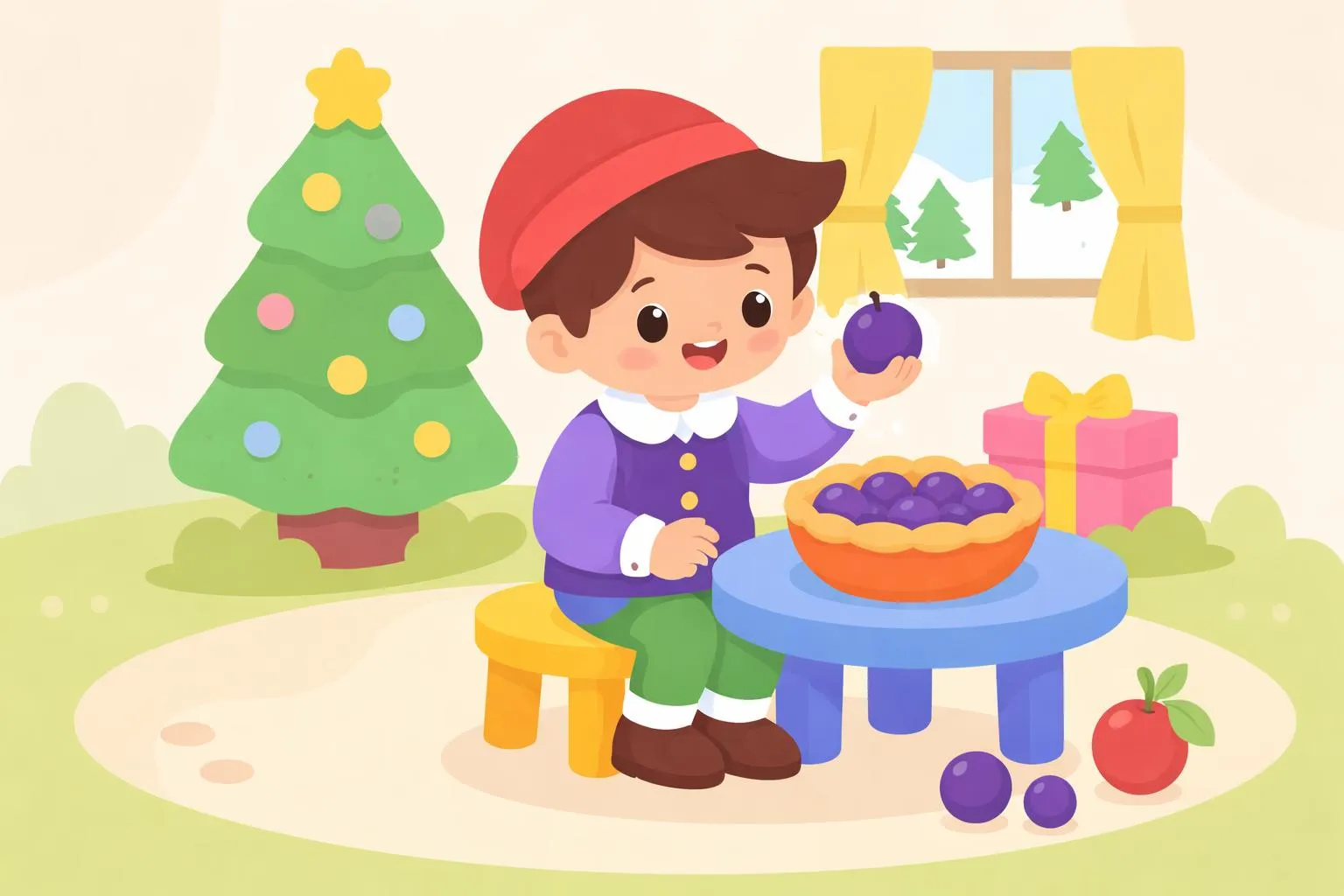
Little Jack Horner
Sat in a corner,
Eating a Christmas pie:
He put in his thumb
And pulled out a plum
And said, “What a good boy am I!”
Expansion and Analysis
Summary and Interpretation
This short nursery rhyme tells the simple story of Little Jack Horner, who is sitting quietly in a corner enjoying a Christmas pie. As he eats, he puts his thumb into the pie and pulls out a plum. Proudly, he declares, "What a good boy am I!" The poem captures a moment of innocent delight and self-congratulation.
The story’s charm lies in its simplicity and rhythm, making it easy for children to remember and recite. It also subtly highlights themes of self-reward and innocent pride. Jack's action of pulling out the plum can be seen as a metaphor for achieving a small success or reward, and his joyful exclamation reflects the satisfaction that comes from such moments.
Background and Author Introduction
The nursery rhyme "Little Jack Horner" dates back to the 18th century and has been a popular English children’s rhyme ever since. Its origins are somewhat unclear, but it is often linked to a traditional English Christmas custom involving pies. The rhyme is anonymous; no single author is credited with its creation. Over time, it has become a staple in early childhood literature due to its catchy rhythm and easy-to-understand narrative.
Historically, the rhyme was sometimes interpreted as a political satire or a moral lesson, but today it is primarily enjoyed as a light-hearted children’s poem.
Reflection and Personal Response
Reading "Little Jack Horner" brings a nostalgic feeling of childhood innocence and simple joys. The image of a child happily enjoying a festive treat reminds us of the importance of appreciating small pleasures in life. It also encourages children to recognize and celebrate their own little achievements, fostering a positive sense of self-worth.
Educational Value and Learning Points
Children and students can learn several things from this nursery rhyme:
- Vocabulary Development: Words like corner, Christmas pie, thumb, and plum help expand basic English vocabulary related to food and body parts.
- Rhythm and Rhyme: The poem’s simple rhyming scheme (AABCCB) helps children understand the concept of rhyme and rhythm in poetry.
- Moral Lesson: It introduces the idea of self-recognition and celebration of small successes, which is important for developing self-confidence.
- Cultural Awareness: The poem gives insight into traditional English customs and festive celebrations, enriching cultural knowledge.
Practical Applications and Life Lessons
- In Daily Life: Children can learn to appreciate small achievements, such as completing homework or helping at home, by celebrating like Jack did.
- In Learning: Teachers can use this rhyme to introduce poetry, rhyme schemes, and vocabulary in a fun and engaging way.
- Social Skills: The poem encourages positive self-talk and pride in one’s efforts, which can improve motivation and emotional well-being.
Key Learning Challenges
- Understanding the metaphorical meaning behind Jack pulling out the plum might be challenging for very young children.
- Recognizing the rhyme scheme and rhythm requires attentive listening and practice.
- Connecting the historical and cultural context to the poem’s content may need guidance from teachers or parents.
Reading Comprehension Questions
- Where was Little Jack Horner sitting?
- What was Little Jack Horner eating?
- What did Jack put into the pie?
- What did he pull out of the pie?
- How did Jack feel after pulling out the plum?
- What can the plum symbolize in this poem?
- Why do you think the poem is popular with children?
Answers
- Little Jack Horner was sitting in a corner.
- He was eating a Christmas pie.
- Jack put his thumb into the pie.
- He pulled out a plum.
- Jack felt proud and said, "What a good boy am I!"
- The plum can symbolize a small reward or success.
- The poem is popular because it is simple, rhythmic, easy to remember, and celebrates small joys.
This nursery rhyme is a wonderful introduction to poetry for children. It combines festive imagery with a playful story that encourages self-appreciation and joy in little achievements. Through this poem, children can build language skills, cultural understanding, and emotional intelligence.