
Original Story:
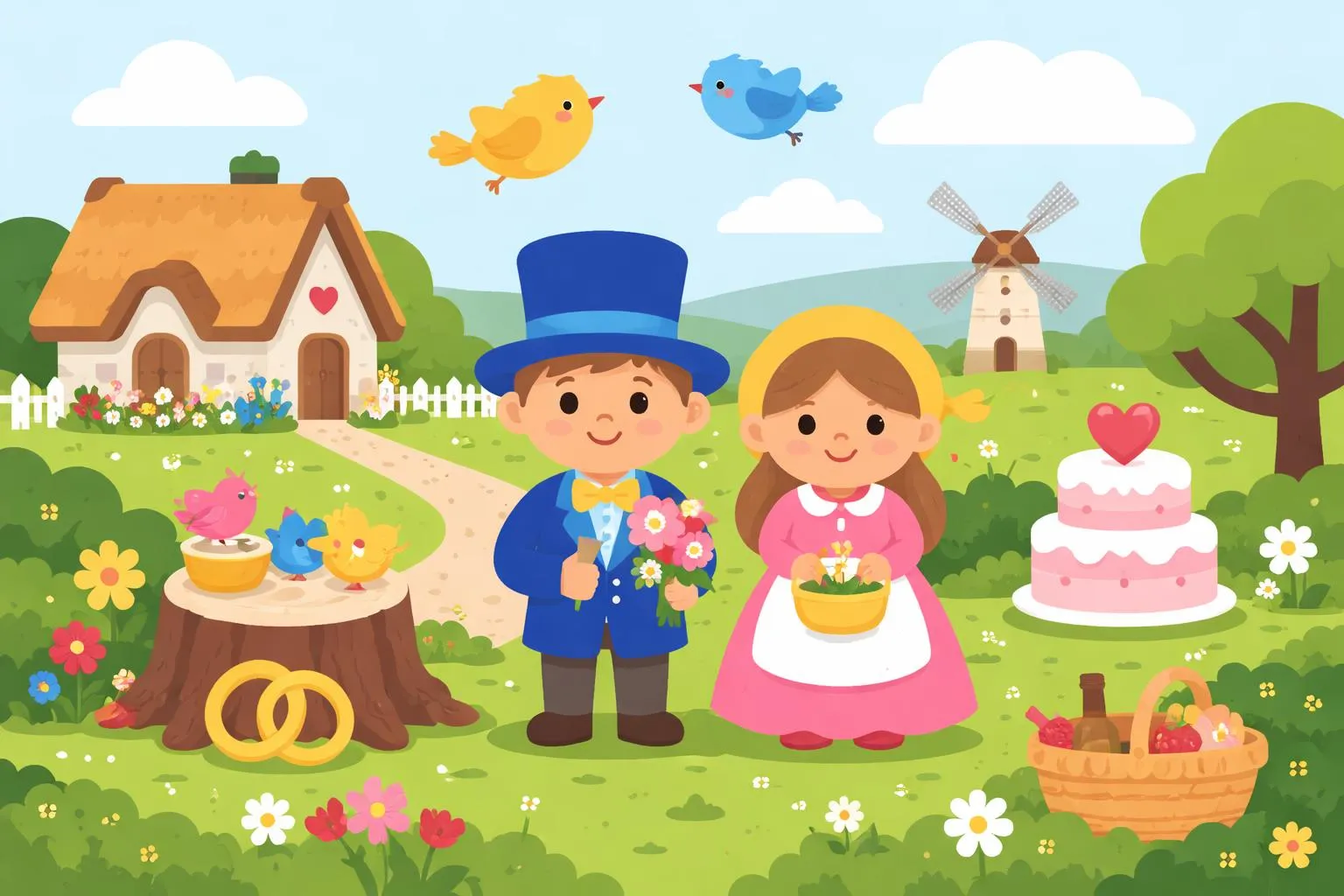
There was a little man
And he woo’d a little maid,
And he said “Little maid will you wed, wed, wed,
I have little more to say,
Than will you, yea or nay,
For the least said soonest men ded, ded, ded.”
The little maid replied (Some say a little sighed)
“ But what shall we have for to eat, eat, eat,
Will the love that you are so rich in
Make a fire in the kitchen,
Or the little God of Love turn the spit, spit, spit.”
Story Explanation and Appreciation
This charming children’s rhyme tells a simple yet meaningful story of a little man proposing marriage to a little maid. The man asks the maid if she will marry him, emphasizing brevity in his proposal with the phrase, "the least said soonest men ded," which suggests that sometimes it's best to be brief and straightforward. The maid’s response is practical and witty; rather than focusing solely on love, she wonders about the practical side of marriage—specifically, what they will eat and who will take care of the household chores, like cooking and turning the spit.
The story humorously contrasts romantic ideals with everyday realities. It highlights the importance of balancing love with practical considerations in relationships. The maid’s question about food and the kitchen shows a grounded approach to marriage, reminding readers that love alone is not always enough to sustain a household.
Background and Author Introduction
This rhyme is a traditional English folk song or nursery rhyme, passed down orally through generations. Its exact origins and author are unknown, as is common with many folk tales and rhymes. Such rhymes were often used to entertain children while subtly teaching social values and norms of the time.
The rhyme reflects the social context of earlier centuries when marriage was not only a romantic union but also a practical arrangement involving shared responsibilities. The playful tone and repetitive structure make it easy for children to remember and recite, which helped preserve it through oral tradition.
Reflection and Insights
Reading this rhyme today, we can appreciate its timeless wisdom. It teaches children that while love is important, responsibility and practicality are equally essential in relationships. It also encourages a sense of humor and realism, showing that marriage and partnerships involve cooperation and everyday tasks.
For adults and educators, the rhyme can be a starting point for discussions about the balance between emotions and duties in life. It also opens up conversations about gender roles and how they have evolved over time.
Learning Points for Children and Students
- Understanding Relationships: The rhyme introduces the concept that relationships involve both emotional connection and practical responsibilities.
- Language Skills: The repetitive and rhythmic nature of the rhyme helps children develop memory, pronunciation, and fluency.
- Cultural Awareness: It offers insight into historical social customs and the role of folk literature in cultural transmission.
- Critical Thinking: Students can analyze the contrast between romantic ideals and real-life expectations.
Practical Applications and Life Lessons
- In Daily Life: Children can learn the importance of sharing responsibilities at home, such as helping with chores, alongside caring for family members.
- In School: Teachers can use this rhyme to teach rhyme schemes, rhythm, and storytelling techniques.
- Social Skills: The rhyme encourages polite conversation and negotiation skills, as seen in the exchange between the man and the maid.
- Values Education: It promotes the idea that love should be accompanied by mutual support and cooperation.
Reading Comprehension Questions
- Who are the two main characters in the rhyme?
- What does the little man ask the little maid?
- How does the little maid respond to the proposal?
- What practical concerns does the maid raise?
- What lesson can we learn about relationships from this rhyme?
Answers
- The two main characters are a little man and a little maid.
- The little man asks the little maid if she will marry him.
- The little maid replies by asking what they will have to eat and if love alone will take care of household tasks.
- The maid is concerned about food and who will cook or manage the kitchen chores.
- The rhyme teaches that love is important, but practical responsibilities and cooperation are also necessary in relationships.
This traditional rhyme remains a delightful and educational piece for children, blending humor with meaningful life lessons that continue to resonate across generations.