
Original Story:
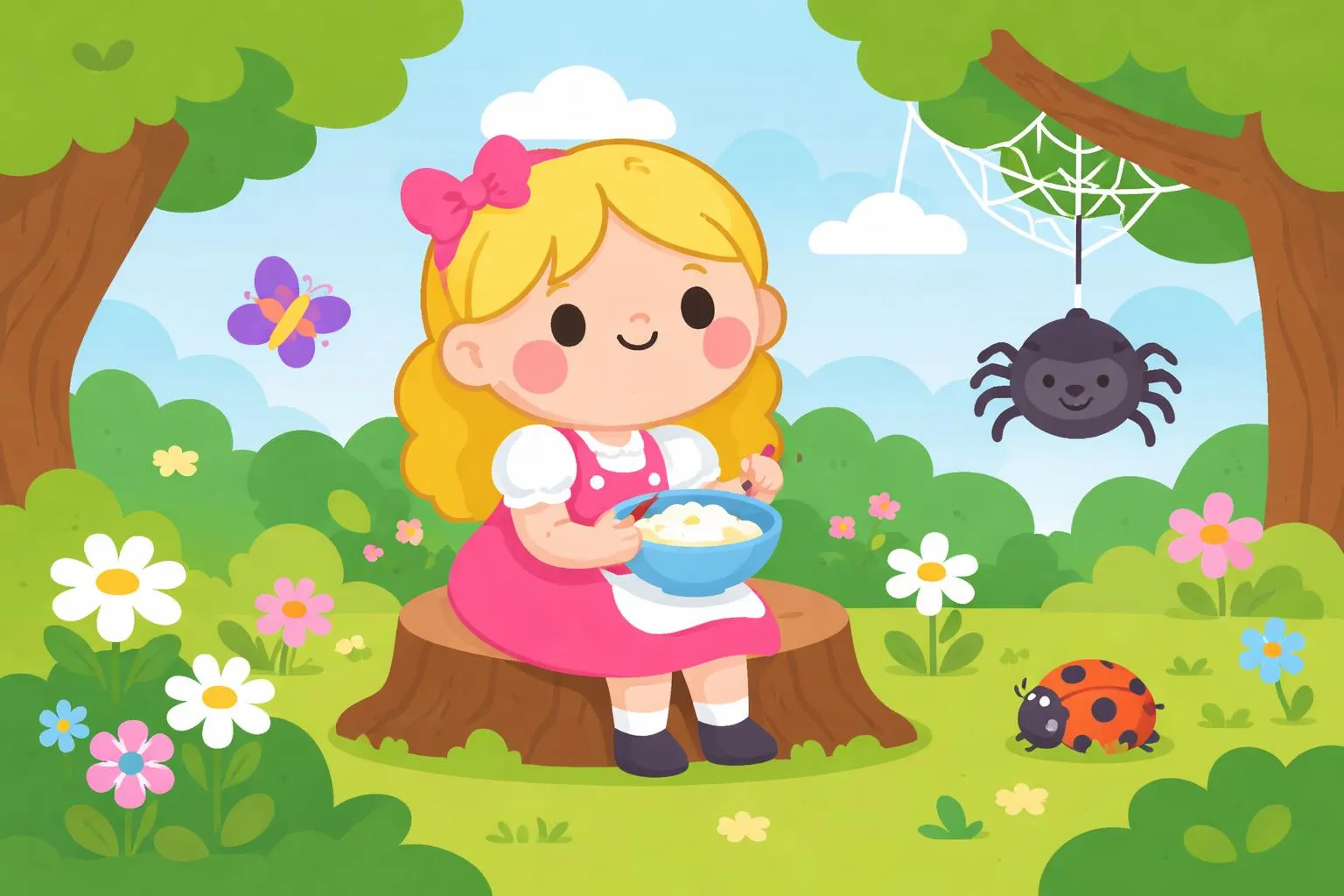
Little Miss Muffet
Sat on a tuffet,
Eating her curds and whey;
Along came a big spider,
Who sat down beside her,
And frightened Miss Muffet away.
Expansion and Analysis of "Little Miss Muffet"
Summary and Interpretation
"Little Miss Muffet" is a classic English nursery rhyme that tells a simple story about a young girl named Miss Muffet who is sitting on a small grassy mound called a tuffet, enjoying her meal of curds and whey—a type of dairy food similar to cottage cheese. Suddenly, a big spider appears and sits next to her, which frightens her so much that she runs away.
The rhyme captures a moment of childhood innocence mixed with a common fear of spiders. It is short and rhythmic, making it easy for children to remember and recite. The story highlights themes of surprise, fear, and the unexpected intrusion of nature into everyday life.
Background and Author
The exact origins of "Little Miss Muffet" are uncertain, and it is considered a traditional nursery rhyme passed down orally over generations. It was first published in the early 19th century, but it likely existed in various forms before then. The rhyme is part of the English-speaking world's rich tradition of oral storytelling and children's literature.
Some theories suggest that the character of Miss Muffet might have been inspired by real people or historical figures, but no definitive author is known. The rhyme's simple structure and catchy rhythm have made it a staple in early childhood education.
Literary Appreciation
The rhyme uses simple language and repetition, which are effective tools for teaching young children about rhythm, rhyme, and phonics. The imagery of a tuffet and the meal of curds and whey evoke a quaint, pastoral setting that connects children to traditional rural life.
The sudden appearance of the spider introduces an element of surprise and mild suspense, which helps engage young listeners. The rhyme also subtly introduces children to the concept of animals and insects in their environment, encouraging curiosity and awareness.
Educational Value and Learning Points
Children and students can learn several things from "Little Miss Muffet":
- Vocabulary: Words like tuffet, curds, and whey introduce children to new and unusual terms related to food and nature.
- Rhythm and Rhyme: The rhyme scheme helps develop phonemic awareness, an essential skill for early reading.
- Emotional Understanding: The story addresses fear and reaction, helping children recognize and talk about their feelings.
- Nature and Environment: The spider's role encourages discussions about insects and their place in the ecosystem.
Practical Applications in Life and Learning
- Reading Practice: Teachers can use the rhyme to help children practice reading aloud with expression and rhythm.
- Creative Activities: Children can draw scenes from the rhyme or act it out, enhancing comprehension and creativity.
- Science Lessons: The spider can be a starting point for lessons about arachnids, their habits, and their importance.
- Emotional Learning: Discussing Miss Muffet's fear can help children learn coping strategies for dealing with fears or surprises.
Challenges and Focus Areas
- Pronunciation: Some words like tuffet and whey may be unfamiliar and require explanation and practice.
- Understanding Context: Children might need help understanding what curds and whey are, as they are less common foods today.
- Emotional Sensitivity: Some children may have a strong fear of spiders; educators should approach the topic sensitively.
Reading Comprehension Questions
- Who is the main character in the story?
- What was Little Miss Muffet doing when the spider appeared?
- What scared Miss Muffet away?
- What kind of food was Miss Muffet eating?
- Where was Miss Muffet sitting?
- Why do you think the spider frightened Miss Muffet?
- Can you describe what a tuffet might be?
- What feelings does the story make you think about?
- How might you react if you saw a spider like Miss Muffet did?
- What can this story teach us about dealing with unexpected situations?
Answers
- Little Miss Muffet
- Eating her curds and whey
- A big spider who sat beside her
- Curds and whey
- On a tuffet
- Because spiders can look scary or unexpected
- A small grassy mound or low seat
- Feelings of surprise, fear, or being startled
- Answers will vary; some might be scared, others curious
- To stay calm and understand that some fears are natural but can be managed
This nursery rhyme remains a beloved piece of children's literature, offering both entertainment and educational value. It introduces young learners to language, rhythm, and emotions in a simple yet effective way, while also connecting them to nature and traditional culture.