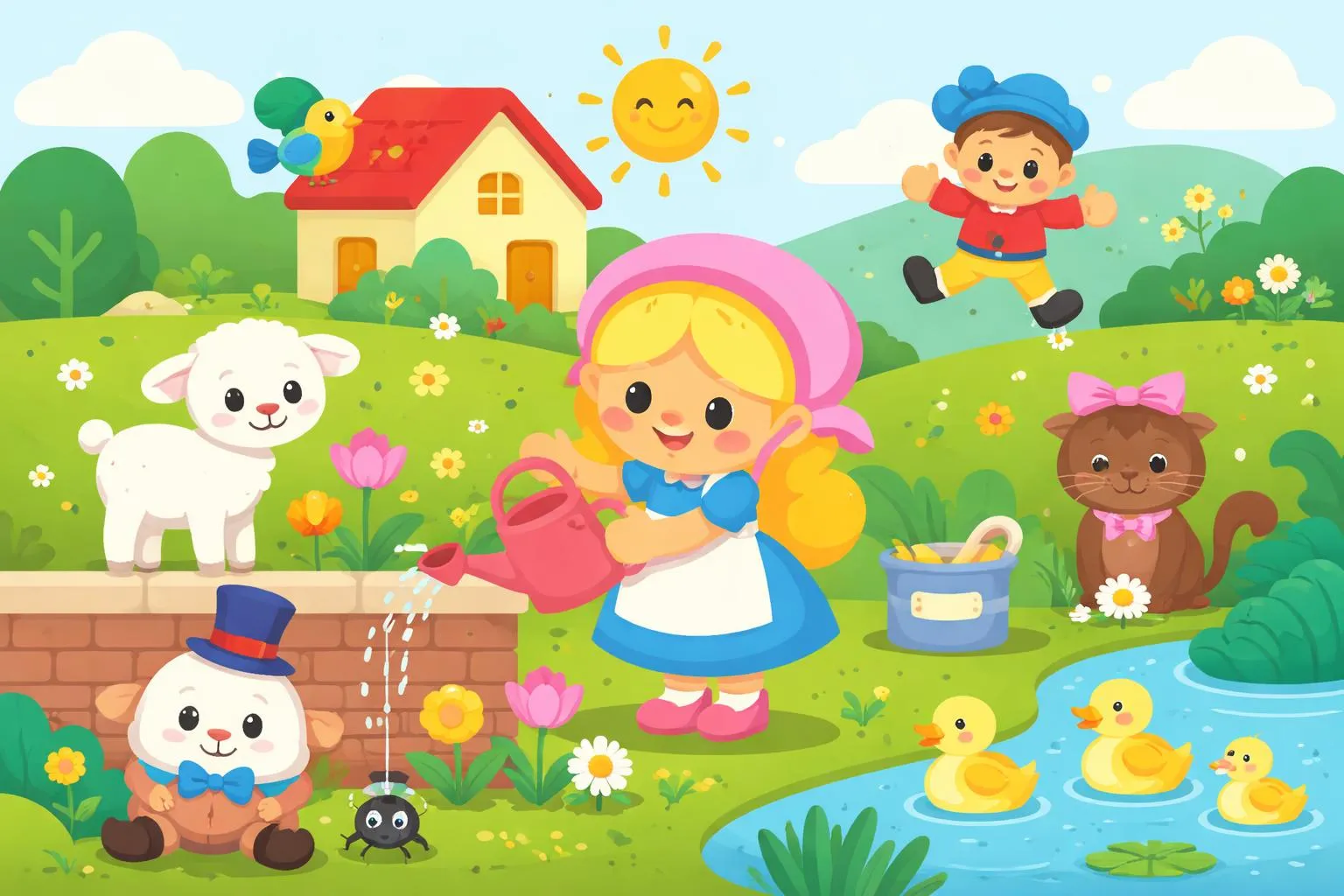

Original Story:
Little Polly Flinders
Sat among the cinders
Warming her pretty little toes!
Her mother came and caught her,
And whipped her little daughter,
For spoiling her nice new clothes.
Expanded Article
Story Explanation and Interpretation
This short nursery rhyme tells the story of Little Polly Flinders, a young girl who sat among the hot ashes or cinders to warm her feet. Unfortunately, her mother caught her and punished her for damaging her new clothes. The story is simple but carries important lessons about obedience, consequences, and carefulness.
The rhyme highlights a common childhood experience: the desire to seek warmth and comfort, sometimes leading to unintended trouble. Polly’s action of sitting among cinders shows her innocent attempt to find warmth, but it also results in her clothes being spoiled, which displeases her mother. This story gently reminds children to be mindful of their surroundings and the potential consequences of their actions.
Background and Author Introduction
This nursery rhyme is a traditional English folk song, often passed down orally through generations. Its exact origin is unclear, but it belongs to a category of nursery rhymes that teach children moral lessons through simple, memorable verses. The rhyme’s brevity and rhythmic structure make it easy for young children to memorize and recite.
The author of this rhyme is unknown, as is common with many traditional nursery rhymes. These rhymes often reflect the social and cultural values of the time they were created, emphasizing discipline and respect for parents.
Reflection and Insights
Reading this rhyme encourages reflection on the balance between curiosity and caution. Children naturally explore their environment but need guidance to understand what is safe and what is not. Polly’s story can open discussions about why parents set rules and the importance of listening to them.
The rhyme also touches on the theme of consequences. Polly’s mother’s reaction, though strict, teaches children that actions have results, and they must take responsibility for their behavior.
Educational Value and Learning Points
From this rhyme, children and students can learn several key lessons:
- Cause and Effect: Understanding how actions lead to consequences.
- Respect for Parents: Recognizing the role of parents in protecting and guiding children.
- Safety Awareness: Learning to be careful in potentially dangerous situations, such as playing near fire or hot ashes.
- Vocabulary Building: Words like cinders, spoiling, and whipped help expand children’s language skills.
- Rhythm and Rhyme: The poem’s structure helps develop phonemic awareness and memory.
Practical Applications in Life and Learning
- At Home: Parents can use this rhyme to teach children about safety around fire and the importance of caring for their belongings.
- In School: Teachers can incorporate this rhyme into lessons on poetry, rhyme schemes, and moral education.
- Social Skills: Children learn about respecting rules and understanding parental guidance.
- Creative Activities: Students can create their own short rhymes about everyday lessons, enhancing creativity and expression.
Reading Comprehension Exercises
Questions:
- Where was Little Polly Flinders sitting?
- Why did Polly’s mother get angry?
- What lesson does this story teach about consequences?
- What does the word “cinders” mean in the story?
- How can children apply the lesson from this rhyme in their daily life?
Answers:
- Little Polly Flinders was sitting among the cinders.
- Polly’s mother got angry because Polly spoiled her nice new clothes.
- The story teaches that actions have consequences and children should be careful.
- “Cinders” means the hot ashes left after a fire.
- Children can apply the lesson by being careful around dangerous things and listening to their parents.
This nursery rhyme, though brief, offers rich opportunities for teaching important values and language skills. It serves as a gentle reminder that curiosity should be balanced with caution and respect for parental guidance.