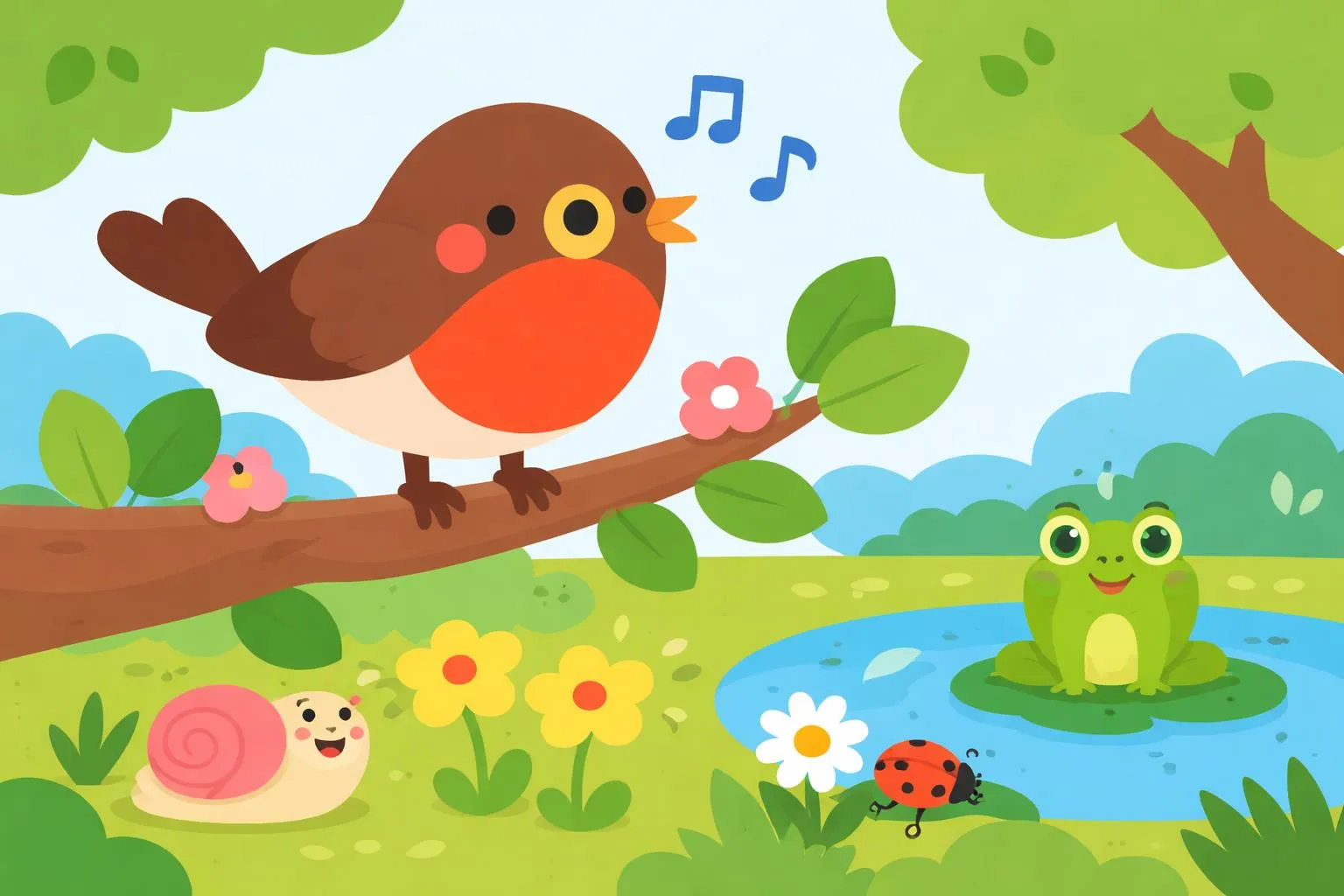

Original Story:
Little Robin Redbreast sat upon a tree,
Up went Pussy-cat, and down went he;
Down came Pussy-cat, and away Robin ran;
Says little Robin Redbreast, “Catch me if you can.”
Little Robin Redbreast flew upon a wall,
Pussy-cat jumped after him, and almost got a fall;
Little Robin chirp’d and sang, and what did Kitty say?
Pussy-cat said “Mew,” and Robin flew away.
Story Expansion and Analysis
Summary and Interpretation
This charming nursery rhyme tells the playful interaction between a little robin redbreast and a curious pussy-cat. The robin perches on a tree, and the cat tries to catch him. However, the robin cleverly escapes each time, teasing the cat with the phrase, “Catch me if you can.” The story captures a lighthearted chase, showing the robin’s agility and wit as it flies away safely, while the cat is left meowing in frustration.
The story symbolizes the classic chase between predator and prey, but in a gentle, non-threatening way suitable for children. It highlights the robin’s cleverness and quick thinking, encouraging children to appreciate nature’s creatures and the playful side of animal behavior.
Background and Author Information
This nursery rhyme is a traditional English folk rhyme, passed down through generations. It is part of a larger collection of children’s rhymes that often feature animals and simple, rhythmic storytelling. The exact author is unknown as it belongs to the oral tradition of English nursery rhymes.
Such rhymes were originally created to entertain children and teach them about animals, sounds, and simple language patterns. They also help develop memory and phonetic skills through repetition and rhyme.
Educational Value and Learning Points
Children and students can learn several important lessons and skills from this story:
- Vocabulary Building: Words like robin, pussy-cat, chirp’d, and mew introduce children to animal names and sounds.
- Rhythm and Rhyme: The rhyme scheme helps children develop phonemic awareness, an essential skill for reading.
- Animal Behavior: The story illustrates natural animal behaviors such as a bird’s flight and a cat’s curiosity.
- Problem-Solving and Agility: The robin’s quick escapes teach children about cleverness and thinking on their feet.
- Listening and Speaking Skills: Reciting the rhyme improves pronunciation and fluency.
Practical Applications and Life Lessons
- In Nature Study: Children can observe birds and cats, comparing real-life behavior to the story.
- In Language Learning: Teachers can use this rhyme to introduce new vocabulary and practice rhyming words.
- In Social Skills: The playful chase can be a metaphor for friendly teasing and learning boundaries.
- In Physical Education: The story encourages agility and quick reflexes, which can be translated into games and exercises.
Reading Comprehension Questions
- Who is sitting on the tree at the beginning of the story?
- What does the pussy-cat try to do?
- What does the robin say to the cat?
- How does the robin escape from the cat?
- What sound does the pussy-cat make?
- What lesson can we learn from the robin’s behavior?
Answers
- The little robin redbreast is sitting on the tree.
- The pussy-cat tries to catch the robin.
- The robin says, “Catch me if you can.”
- The robin flies away each time the cat tries to catch him.
- The pussy-cat says “Mew.”
- We learn that being clever and quick can help us avoid danger.
This simple yet engaging nursery rhyme not only entertains but also educates children about animals, sounds, and the importance of quick thinking. It is an excellent resource for early childhood education and language development.