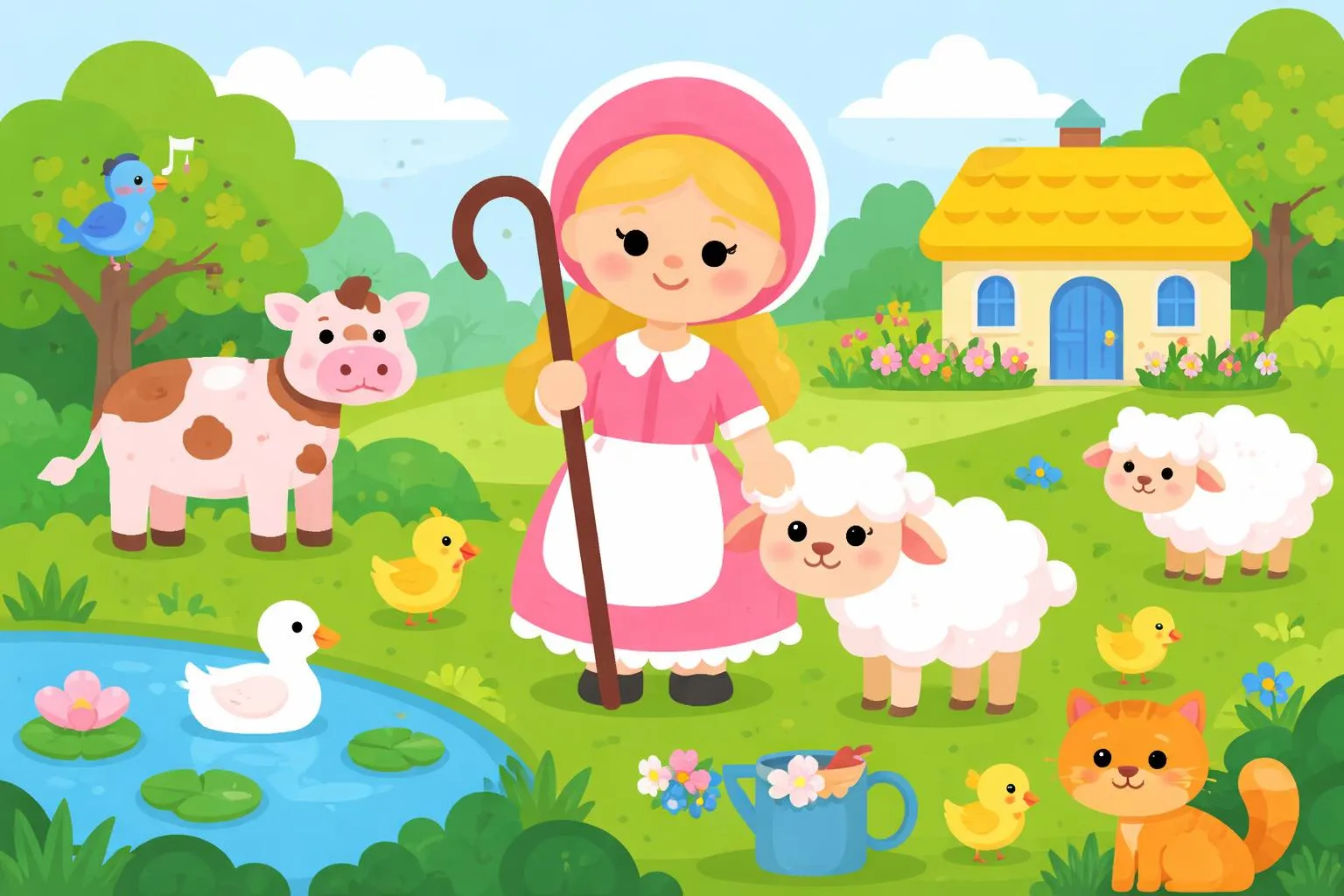

Original Story:
My maid Mary, she minds her dairy,
While I go hoeing and mowing each morn;
Merrily run the reel and the little spinning wheel,
Whilst I am singing and mowing my corn.
Expansion and Analysis
Summary and Interpretation
This short, charming poem depicts a simple rural scene where the speaker’s maid, Mary, attentively takes care of the dairy, while the speaker spends the morning hoeing and mowing the fields. The imagery of the reel and the little spinning wheel running merrily evokes a sense of peaceful, productive domestic life. The speaker’s singing while working suggests a joyful, harmonious connection with nature and labor.
The poem highlights the division of labor in a traditional rural household, where different tasks are managed simultaneously to maintain the household and farm. It also reflects a pastoral ideal, where work is not just toil but a source of happiness and fulfillment.
Background and Author Introduction
This poem is a classic example of pastoral poetry, which celebrates rural life and nature’s simplicity. Such poems were popular in English literature, especially during the 18th and 19th centuries, when industrialization was changing the landscape of work and living. The author of this particular verse is unknown, but it fits well within the tradition of folk songs and nursery rhymes that were passed down orally and later recorded.
The spinning wheel and dairy work were common tasks in historical rural communities, especially for women. The poem captures a snapshot of everyday life, giving modern readers insight into the rhythms and roles of past times.
Literary Appreciation
The poem’s rhythm and rhyme create a musical quality that mirrors the spinning wheel’s motion and the repetitive nature of farm work. The use of alliteration in phrases like “merrily run the reel” adds to the light, cheerful tone. The simplicity of language and imagery makes it accessible to children, while its deeper themes of cooperation, industriousness, and contentment offer valuable lessons.
Educational Value and Learning Points
Children and students can learn several key lessons from this poem:
- Vocabulary Building: Words like dairy, hoeing, mowing, reel, and spinning wheel introduce agricultural and domestic vocabulary.
- Understanding Rural Life: The poem offers a window into traditional farming and household chores, helping students appreciate historical lifestyles.
- Rhythm and Rhyme: It demonstrates poetic devices such as rhyme, meter, and alliteration.
- Cultural Appreciation: Encourages respect for work and the value of cooperation within a household or community.
- Listening and Singing Skills: The poem’s musicality makes it suitable for reading aloud or singing, enhancing phonetic awareness.
Practical Applications and Life Lessons
- Teamwork: The poem shows how different people contribute to a common goal, a lesson applicable in school projects and family responsibilities.
- Work Ethic: It encourages a positive attitude toward work, showing that labor can be joyful and fulfilling.
- Connection to Nature: Promotes awareness of agricultural processes and the importance of caring for animals and crops.
- Time Management: Demonstrates how tasks can be divided and managed efficiently.
Reading Comprehension Questions
- What is Mary’s role in the poem?
- What activities is the speaker doing in the morning?
- What do the reel and spinning wheel symbolize in the poem?
- How does the speaker feel about the work they are doing?
- What can we learn about rural life from this poem?
Answers
- Mary minds the dairy, meaning she takes care of the dairy work.
- The speaker is hoeing and mowing the fields each morning.
- The reel and spinning wheel symbolize domestic work and the continuous, rhythmic nature of rural chores.
- The speaker feels happy and sings while working, showing enjoyment and contentment.
- We learn that rural life involves cooperation, division of labor, and a close relationship with nature and daily work.
This poem serves as a delightful introduction to pastoral life and poetry for children, blending simple language with rich cultural and educational content. It encourages young learners to appreciate the value of work, teamwork, and the beauty in everyday tasks.