
Original Story:
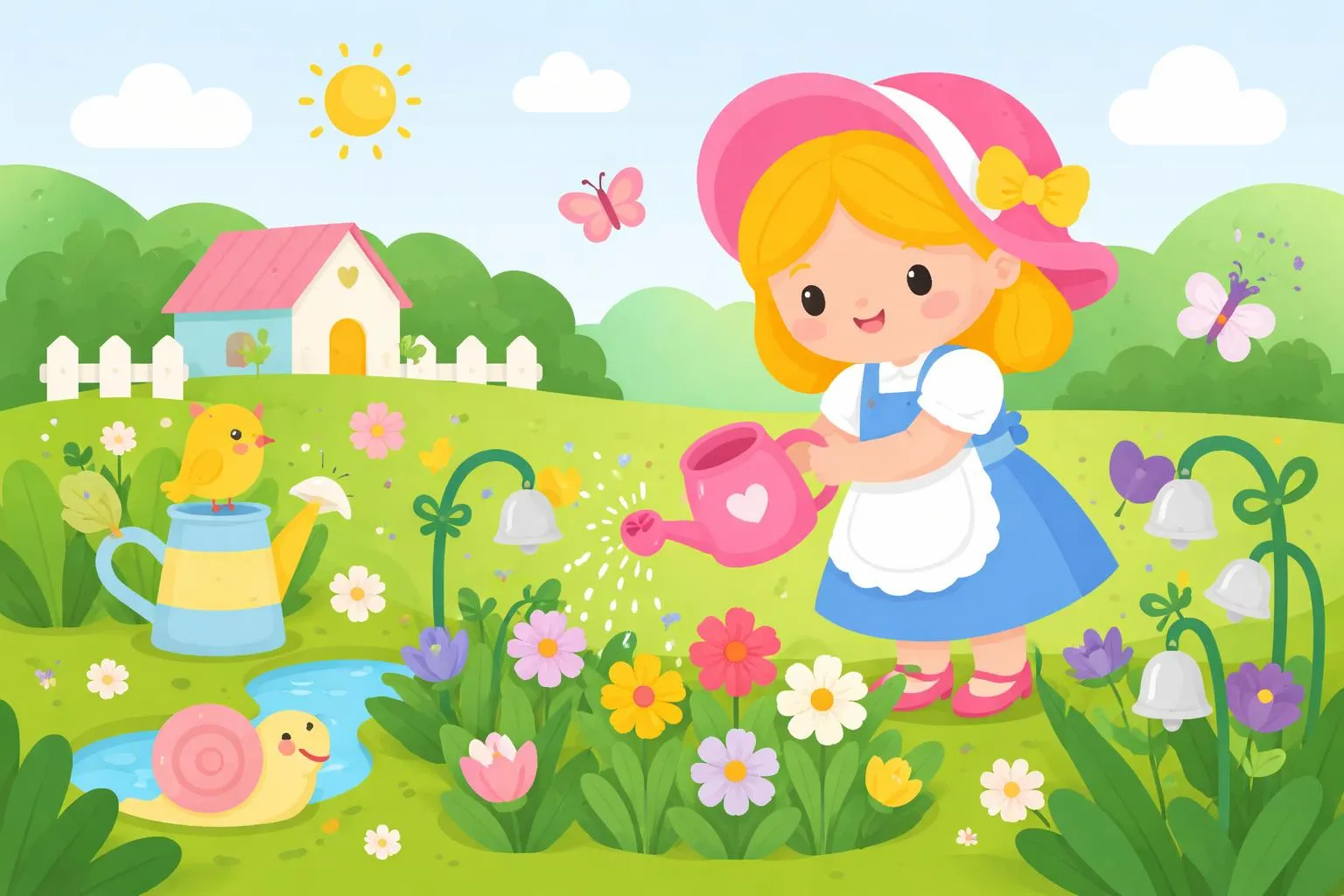
Mary, Mary, quite contrary,
How does your garden grow?
Silver bells, and cockle shells
and pretty maids all in a row.
Expansion and Analysis of "Mary, Mary, Quite Contrary"
Introduction and Meaning
The nursery rhyme "Mary, Mary, quite contrary" is a classic English rhyme often recited to young children. At first glance, it appears to be a simple and whimsical question about Mary's garden and the curious items that grow there. The "silver bells," "cockle shells," and "pretty maids all in a row" evoke a vivid image of a garden filled with charming and mysterious objects.
Though the rhyme is short and playful, it invites readers to imagine a magical or unusual garden. The phrase "quite contrary" suggests that Mary might be a person who is a bit rebellious or different from others, which adds a layer of intrigue to the story.
Interpretation and Appreciation
This rhyme can be interpreted in several ways. One common interpretation is that the garden represents a place of creativity and imagination, where unusual and beautiful things grow. The "silver bells" might symbolize delicate flowers or even small bells that ring in the breeze, while "cockle shells" could hint at seaside treasures or decorative elements. The "pretty maids all in a row" might refer to flowers arranged neatly or perhaps to figurines or decorations.
The rhyme’s rhythm and repetitive structure make it easy to remember and enjoyable to recite, which is why it has remained popular for generations. Its simplicity allows children to engage with language playfully while also sparking curiosity about nature and beauty.
Historical Background and Author
The exact origins of "Mary, Mary, quite contrary" are unclear, and the author is unknown. It is believed to date back to the 18th century or earlier, passed down orally through generations. Some historians speculate that the rhyme might have political or historical symbolism, possibly referring to Mary I of England, also known as "Bloody Mary," and her reign, but this remains a theory rather than a confirmed fact.
The rhyme’s longevity and adaptability have made it a staple in English-speaking cultures, often included in collections of nursery rhymes and used in early childhood education.
Reflections and Personal Thoughts
Reading "Mary, Mary, quite contrary" reminds us of the power of simple language and rhythm to create memorable and meaningful experiences. It encourages imagination and invites children to explore the world around them with wonder. The rhyme’s mysterious elements also teach us that stories and poems can have multiple layers of meaning, which can be uncovered through curiosity and learning.
Educational Value and Learning Points
Children and students can learn several important lessons and skills from this nursery rhyme:
- Language Skills: The rhyme’s repetitive and rhythmic structure helps young learners develop phonemic awareness and memory.
- Vocabulary Building: Words like "contrary," "silver bells," and "cockle shells" introduce children to descriptive language and new vocabulary.
- Imagination and Creativity: The rhyme encourages children to visualize and imagine a garden filled with unusual and beautiful things.
- Cultural Knowledge: Understanding nursery rhymes helps children connect with cultural traditions and history.
- Critical Thinking: Discussing the possible meanings behind the rhyme fosters analytical skills and interpretation.
Practical Applications and Insights
- In the Classroom: Teachers can use this rhyme to introduce poetry, rhythm, and rhyme schemes. It can also be a starting point for creative writing or art projects where children design their own "contrary" gardens.
- In Daily Life: Parents can use the rhyme as a fun bedtime story or a language game to improve their child’s listening and speaking skills.
- Learning Challenges: Some children might find the older or less common vocabulary challenging, so guided explanation and visual aids can help.
- Inspirational Use: The rhyme inspires curiosity about nature and encourages children to observe and describe the world around them in creative ways.
Reading Comprehension Exercises
Questions:
- Who is the main character in the rhyme?
- What question is asked about Mary’s garden?
- Name three things mentioned that grow in Mary’s garden.
- What does the phrase “quite contrary” suggest about Mary?
- Why do you think this rhyme is popular among children?
Answers:
- The main character is Mary.
- The question asked is, "How does your garden grow?"
- The three things mentioned are silver bells, cockle shells, and pretty maids all in a row.
- The phrase suggests that Mary might be different or rebellious.
- Because it has a simple, rhythmic structure and sparks imagination.
This nursery rhyme is a wonderful example of how short, rhythmic verses can engage children’s minds, teach language skills, and connect them with cultural heritage. It remains a timeless piece for early childhood learning and creative exploration.