
Original Story:
The November sun invites me,
And although the chill wind smites me,
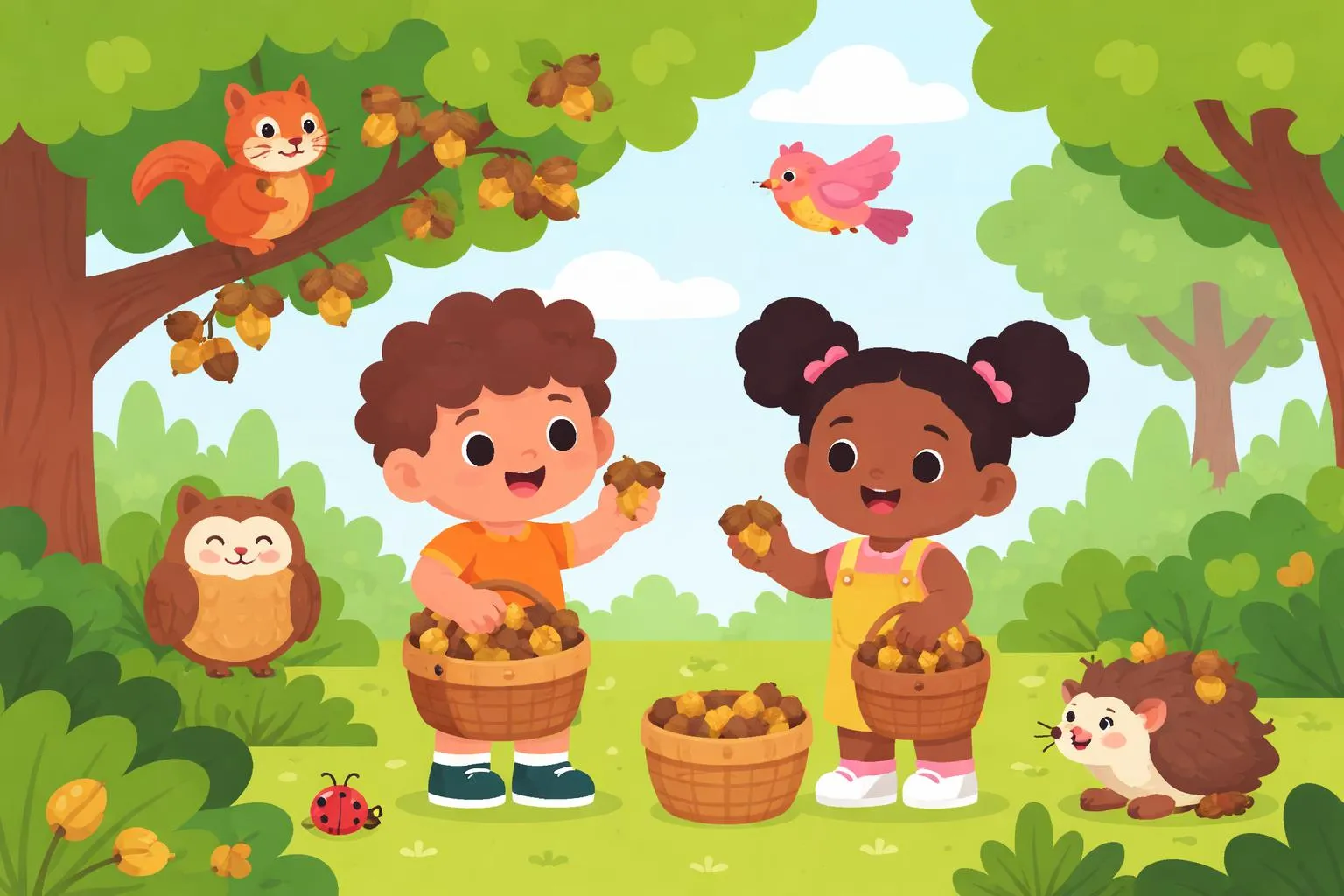
I will wander to the woodland
Where the laden trees await;
And with loud and joyful singing
I will set the forest ringing,
As if I were king of Autumn,
And Dame Nature were my mate,—
While the squirrel in his gambols
Fearless round about me ambles,
As if he were bent on showing
In my kingdom he’d a share;
While my warm blood leaps and dashes,
And my eye with freedom flashes,
As my soul drinks deep and deeper
Of the magic in the air.
There’s a pleasure found in nutting,
All life’s cares and griefs outshutting,
That is fuller far and better
Than what prouder sports impart.
Who could help a carol trilling
As he sees the baskets filling?
Why, the flow of song keeps running
O’er the high walls of the heart.
So when I am home returning,
When the sun is lowly burning,
I will once more wake the echoes
With a happy song of praise,—
For the golden sunlight blessing,
And the breezes’ soft caressing,
And the precious boon of living
In the sweet November days.
Expansion and Analysis
Summary and Interpretation
This poem beautifully captures the essence of November and the joy found in embracing the autumn season. The speaker describes how, despite the cold wind, the inviting November sun inspires a walk through the woods. The trees are heavy with fruit, and the speaker imagines himself as the "king of Autumn," sharing this magical kingdom with nature itself. The playful squirrel symbolizes the lively spirit of the forest, and the speaker’s heart is filled with freedom and joy. The act of gathering nuts ("nutting") is portrayed as a simple yet profound pleasure, offering relief from life’s worries. The poem ends with a thankful song praising the golden sunlight, gentle breezes, and the gift of life during these sweet November days.
Background and Author Introduction
This poem reflects the Romantic tradition of celebrating nature’s beauty and the emotional connection humans share with the natural world. The author, though not explicitly named here, likely belongs to a group of poets who found inspiration in the changing seasons and rural landscapes. Such poems were often written in the 19th or early 20th century when nature was a central theme in literature, symbolizing freedom, renewal, and spiritual awakening.
Literary Appreciation
- Imagery: The poem uses vivid imagery to paint a lively picture of the woodland in November—the laden trees, the playful squirrel, the golden sunlight, and the soft breezes.
- Personification: Autumn is personified as a kingdom with the speaker as its king and Dame Nature as his companion, creating a magical and intimate relationship between humans and nature.
- Mood: The mood is joyful, peaceful, and reflective, evoking a deep appreciation for simple pleasures and the natural world.
- Structure and Rhythm: The poem’s flowing rhythm and rhymes enhance the musical quality, mirroring the "carol trilling" and "flow of song" mentioned in the text.
Life Lessons and Educational Value
Children and students can learn several important lessons from this poem:
- Appreciation of Nature: The poem encourages young readers to observe and enjoy the natural world, fostering environmental awareness and respect.
- Finding Joy in Simplicity: It teaches that happiness can be found in simple activities like walking in the woods or gathering nuts, rather than in material or competitive pursuits.
- Emotional Expression: Through the speaker’s joyful singing and freedom, children learn the value of expressing emotions and connecting deeply with their surroundings.
- Seasonal Awareness: The poem introduces the concept of seasons and their unique characteristics, helping children understand natural cycles.
Practical Applications and Insights
- In Education: Teachers can use this poem to introduce topics such as seasons, nature, poetry analysis, and creative writing. It can inspire students to write their own poems about nature or their favorite season.
- In Daily Life: Children can be encouraged to spend time outdoors, observe seasonal changes, and engage in activities like nut gathering or nature walks, promoting physical health and mental well-being.
- In Emotional Development: The poem’s themes can help children recognize and celebrate feelings of joy, freedom, and gratitude.
Key Vocabulary and Concepts
- Chill wind: cold, biting wind
- Woodland: a forested area
- Laden trees: trees heavy with fruit or nuts
- Gambols: playful leaps or runs
- Nutting: gathering nuts
- Caroling: singing joyfully
- Boon: a blessing or benefit
Reading Comprehension Questions
- What season is described in the poem?
- How does the speaker feel about the November sun and wind?
- What does the speaker imagine himself to be in the forest?
- What animal is mentioned, and what does it symbolize?
- Why does the speaker enjoy "nutting"?
- What emotions does the poem evoke?
- How does the poem describe the relationship between the speaker and nature?
- What is the overall message of the poem?
Answers
- The poem describes the autumn season, specifically November.
- The speaker feels invited by the sun but acknowledges the chill of the wind.
- The speaker imagines himself as the king of Autumn.
- A squirrel is mentioned, symbolizing playfulness and the lively spirit of the forest.
- The speaker enjoys nutting because it brings pleasure and helps forget life’s cares.
- The poem evokes feelings of joy, freedom, peace, and gratitude.
- The poem shows a close, almost magical relationship where nature is a companion and the speaker feels part of the natural kingdom.
- The overall message is to appreciate the beauty and gifts of nature, find joy in simple pleasures, and be thankful for life.
This poem is a wonderful resource for children and students to deepen their understanding of nature, poetry, and emotional expression, while also encouraging outdoor exploration and mindfulness.