
Original Story:
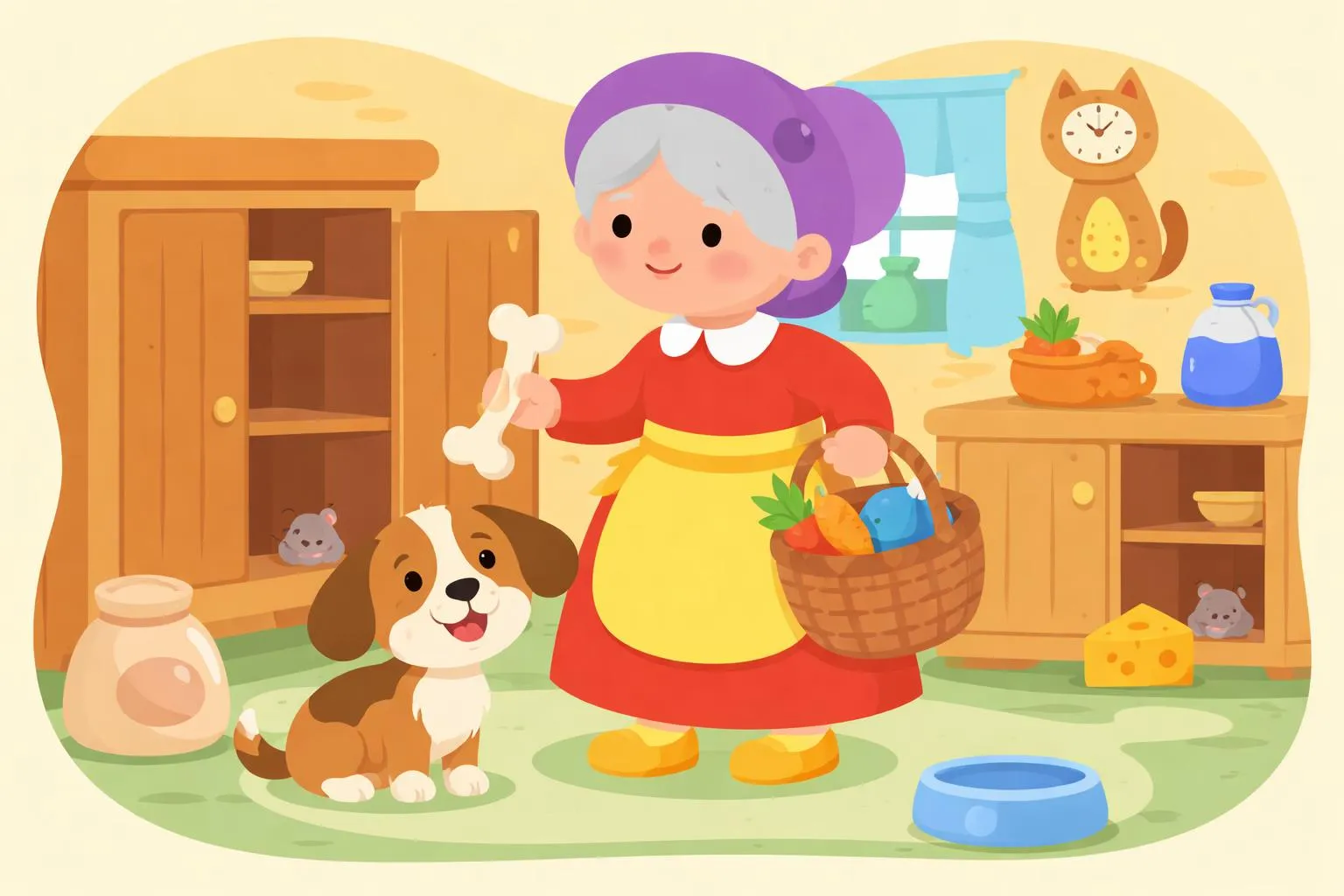
Old Mother Hubbard
Went to the cupboard
To get her poor dog a bone;
But when she got there,
The cupboard was bare,
And so the poor dog had none.
She went to the baker’s
To buy him some bread;
And when she came back,
The poor dog was dead.
She went to the joiner’s
To buy him a coffin;
And when she came back,
The doggy was laughin’.
She went to the butcher’s
To buy him some tripe;
And when she came back,
He was smoking his pipe.
She went to the hatter’s
To buy him a hat;
And when she came back,
He was feeding the cat.
She went to the barber’s
To buy him a wig;
And when she came back,
He was dancing a jig.
She went to the tailor’s
To buy him a coat;
And when she came back,
He was riding a goat.
She went to the cobbler’s
To buy him some shoes;
And when she came back,
He was reading the news.
Story Explanation and Appreciation
This classic nursery rhyme, "Old Mother Hubbard," tells a whimsical and humorous story about an elderly woman trying to care for her dog. At first, she goes to the cupboard to get a bone for her dog, but finds it empty. Then, she tries to buy bread, only to find the dog has died by the time she returns. However, the story takes a playful turn as the dog appears alive and well in the following verses, engaging in various amusing activities like laughing, smoking a pipe, feeding the cat, dancing, riding a goat, and even reading the news.
The poem's charm lies in its rhythmic flow, simple language, and unexpected twists, which make it entertaining for children. It uses repetition and rhyme to create a memorable and engaging narrative. The story also subtly introduces children to different trades and shops—baker, joiner, butcher, hatter, barber, tailor, and cobbler—helping them learn about community roles.
Background and Author
"Old Mother Hubbard" was written by Sarah Catherine Martin in the early 19th century, first published in 1805. It became one of the most popular nursery rhymes and was widely read by children in English-speaking countries. The poem reflects the Victorian era's fondness for moralistic and entertaining children's literature. Although the story seems simple, it carries a playful tone that has helped it endure as a beloved classic.
Sarah Catherine Martin was known for her contributions to children's literature, and "Old Mother Hubbard" remains her most famous work. The poem was illustrated by various artists over time, adding visual appeal to the text and helping children connect with the story.
Reflections and Insights
Reading "Old Mother Hubbard" offers more than just entertainment. It encourages children to think creatively and enjoy the unexpected. The dog's surprising activities after being presumed dead teach kids to expect the unexpected and to use imagination.
The story also highlights the importance of caring and responsibility, as Old Mother Hubbard tries repeatedly to look after her dog. It can spark conversations about kindness to animals and the value of persistence when faced with challenges.
Learning Points for Children and Students
- Vocabulary Building: The poem introduces words related to shops and professions, such as baker, joiner, butcher, hatter, barber, tailor, cobbler.
- Rhyming and Rhythm: Children can learn about rhyme schemes and rhythm, which are essential in poetry and language arts.
- Sequencing Skills: The story follows a clear sequence of events, helping children understand order and cause-effect relationships.
- Imaginative Thinking: The playful and unexpected events encourage children to think outside the box.
- Moral Lessons: It subtly teaches about care, kindness, and persistence.
Practical Applications and Learning Scenarios
- Language Arts Classes: Teachers can use this poem to teach rhyme, rhythm, and narrative structure.
- Community and Social Studies: The poem introduces children to different community helpers and their roles.
- Creative Writing: Students can be encouraged to write their own imaginative stories inspired by the poem’s style.
- Animal Care Discussions: The story can be a starting point for talking about pet care and responsibility.
- Memory and Recitation: Its rhythmic and repetitive structure makes it ideal for memorization exercises.
Reading Comprehension Questions
- What did Old Mother Hubbard first try to get for her dog?
- What happened to the dog when she came back from the baker’s?
- Name three shops Old Mother Hubbard visited.
- What surprising thing was the dog doing when she returned from the joiner’s?
- What lesson can we learn from Old Mother Hubbard’s actions?
Answers
- She tried to get a bone from the cupboard.
- The dog was dead when she came back from the baker’s.
- Examples: baker’s, butcher’s, hatter’s (others include joiner’s, barber’s, tailor’s, cobbler’s).
- The dog was laughing.
- We learn about caring for others and persistence in trying to help someone.
This timeless nursery rhyme remains a valuable educational tool, blending fun with learning and imagination. It invites children to explore language, community, and empathy in a lighthearted and memorable way.