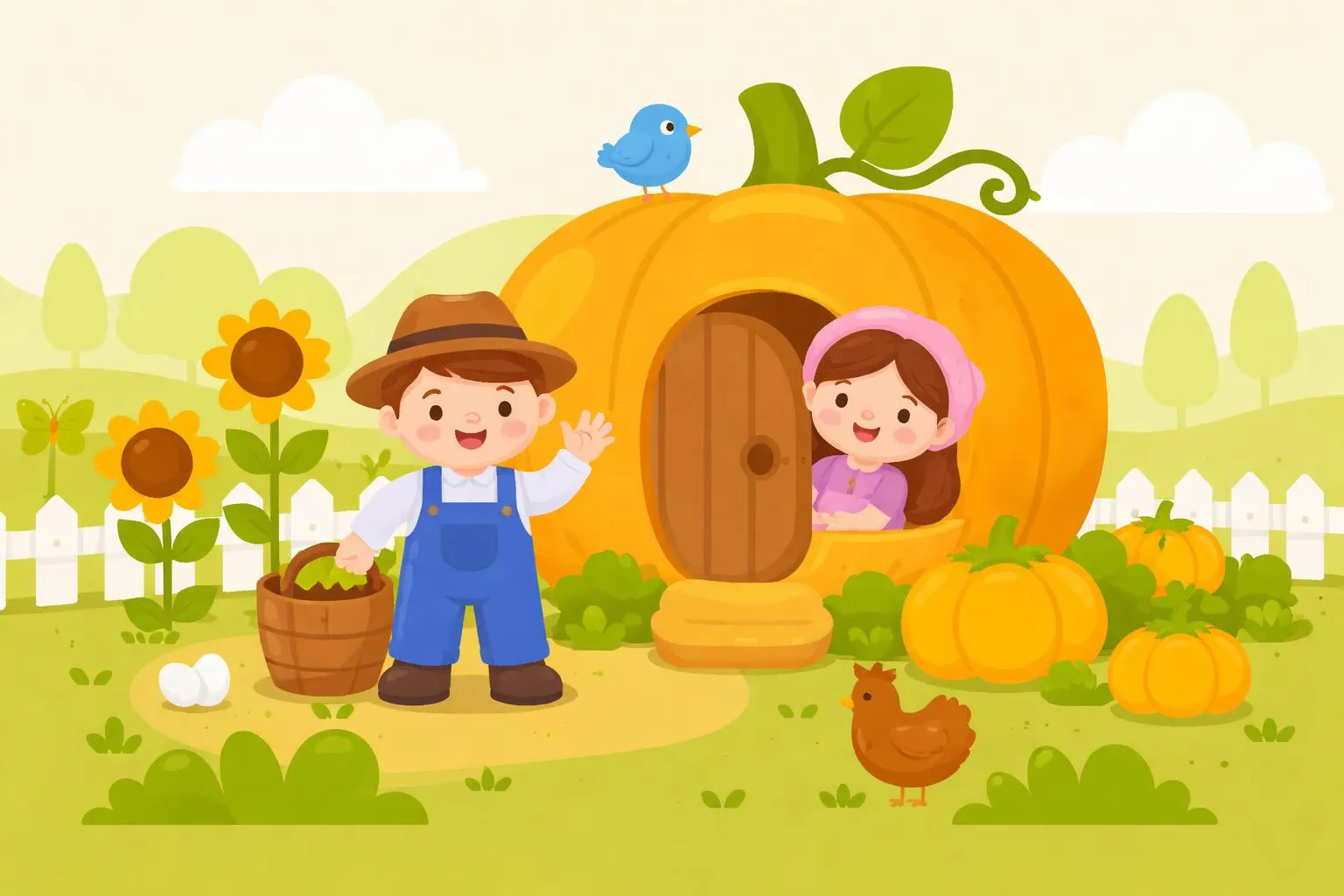

Original Story:
Peter, Peter, pumpkin eater,
Had a wife and couldn’t keep her.
He put her in a pumpkin shell,
And there he kept her very well.
Analysis and Explanation
The nursery rhyme "Peter, Peter, pumpkin eater" is a short and memorable verse that has been passed down through generations. At first glance, it tells a simple story about a man named Peter who had a wife but was unable to keep her, so he confined her inside a pumpkin shell. While the literal meaning may seem strange or even unsettling by modern standards, nursery rhymes often use metaphorical language and symbolism to convey deeper messages or to entertain children with rhythmic and catchy phrases.
The story likely reflects themes of control, confinement, and relationships, which can be interpreted in various ways depending on the cultural and historical context. The pumpkin shell could symbolize a protective or restrictive environment, and Peter’s inability to "keep" his wife might refer to challenges in maintaining relationships or commitments.
Background and Author Information
The exact origins of "Peter, Peter, pumpkin eater" are uncertain, as is the case with many traditional nursery rhymes. It is believed to have originated in England during the 18th or 19th century. Like many nursery rhymes, it was passed down orally before being written down, which means the original author is unknown.
Nursery rhymes served multiple purposes historically: they entertained children, helped with language development, and sometimes encoded social or political commentary. This rhyme fits into the category of simple, rhythmic verses designed to be easy to remember and recite.
Reflection and Interpretation
Reading this rhyme today, one might reflect on the importance of freedom and respect in relationships. The idea of confining someone, even metaphorically, highlights the need for mutual understanding and trust rather than control or restriction.
For children, the rhyme can be a starting point to discuss feelings, relationships, and the importance of kindness and respect. It also encourages curiosity about language, rhyme, and rhythm, which are foundational for literacy development.
Educational Value and Learning Points
Children and students can learn several things from this nursery rhyme:
- Language and phonics: The rhyme’s repetitive and rhythmic structure helps children develop phonemic awareness and memory skills.
- Vocabulary: Words like "pumpkin" and "shell" introduce simple nouns and imagery.
- Storytelling: Even a short rhyme tells a story, encouraging children to think about narrative structure.
- Critical thinking: Older students can analyze the meaning behind the words and discuss themes like freedom, control, and relationships.
- Cultural history: Understanding nursery rhymes connects children to cultural traditions and historical contexts.
Practical Applications and Life Lessons
In everyday life and learning environments, this rhyme can be used to:
- Enhance reading fluency through repeated practice.
- Stimulate creative writing by asking children to imagine what happens next or create their own verses.
- Encourage discussions about emotions and relationships, promoting social-emotional learning.
- Teach rhyme and rhythm as foundations for poetry and music.
- Introduce historical perspectives on how stories and songs evolve over time.
Reading Comprehension Exercises
- Who is the main character in the rhyme?
- What did Peter do with his wife?
- What is a "pumpkin shell" in the context of the rhyme?
- Why do you think Peter "couldn't keep" his wife?
- What lessons can we learn from this rhyme about relationships?
Answers
- The main character is Peter.
- Peter put his wife in a pumpkin shell.
- The "pumpkin shell" is a metaphorical place where Peter kept his wife; it could mean a confined or protected space.
- The rhyme does not explain why Peter couldn’t keep his wife, but it suggests difficulties in their relationship.
- We can learn that relationships require respect, freedom, and understanding rather than control or confinement.
This simple nursery rhyme, while brief, opens up many avenues for learning and discussion. It serves as a valuable tool to develop language skills, critical thinking, and social awareness in children and students alike.