
Original Story:
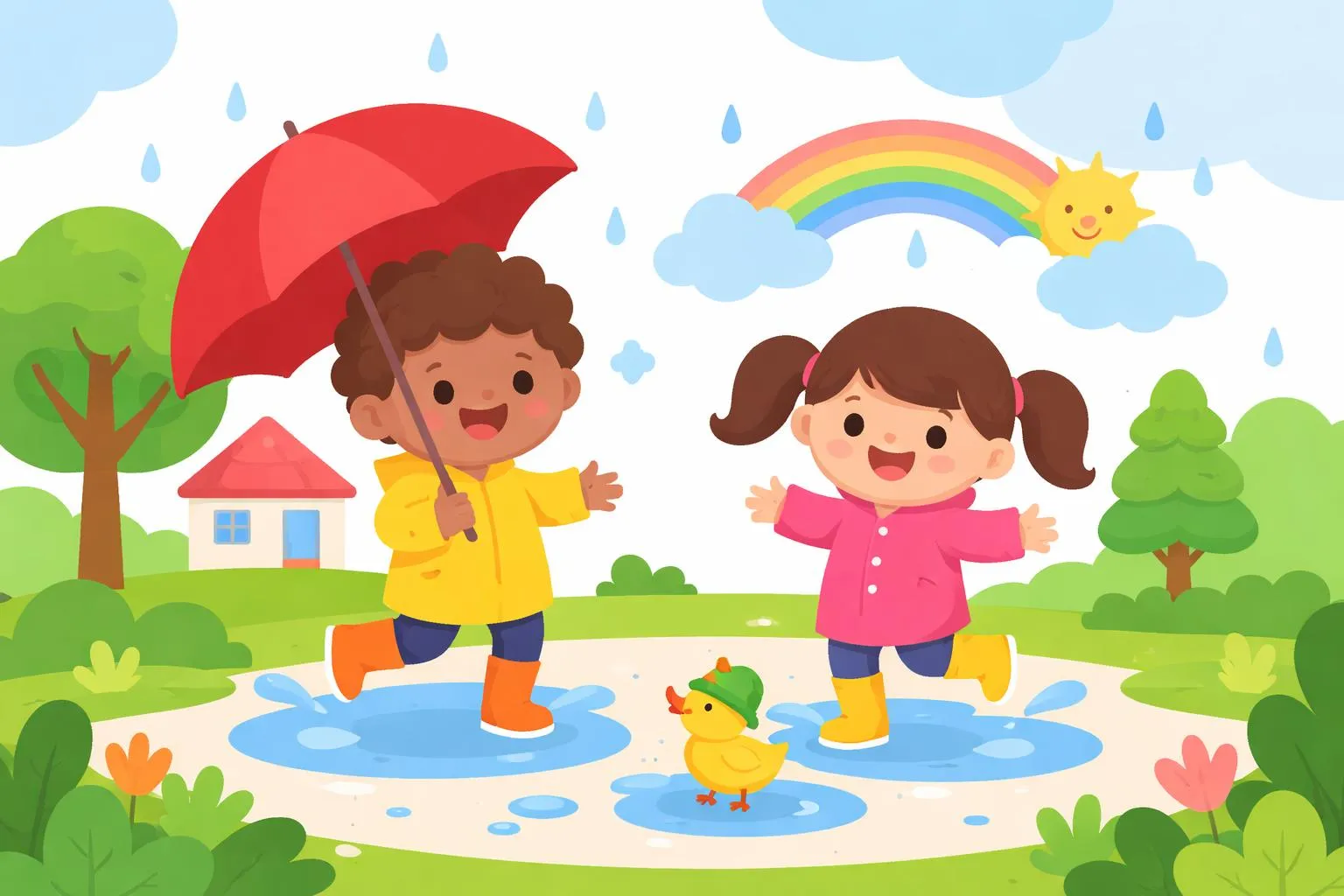
Rain, rain go away,
Come again some April day,
Little Johnny wants to play.
Expansion and Analysis
Introduction and Explanation
The short and simple rhyme "Rain, rain go away" is a classic English nursery rhyme that children have recited for generations. At its core, the rhyme expresses a child's wish for the rain to stop so that they can enjoy outdoor playtime. The line "Come again some April day" suggests a hope that the rain will return at a more convenient time, specifically in April, which is often associated with spring showers and growth.
This rhyme is a perfect example of how children use language to express their feelings and desires in a playful and rhythmic way. It is easy to remember and often sung or chanted, making it a popular choice for young learners.
Meaning and Appreciation
The rhyme captures a universal childhood experience: the frustration of being stuck indoors due to bad weather. It reflects the innocence and straightforwardness of a child's perspective. The simplicity of the words and the repetitive structure make it accessible and engaging for children, helping to develop their language skills and memory.
Moreover, this rhyme introduces children to the concept of seasons and weather patterns. The mention of "April day" subtly teaches about the natural cycle of rain and the anticipation of better weather, which can be linked to the growth and renewal associated with spring.
Background and Author Introduction
The origins of "Rain, rain go away" are somewhat unclear, as it is a traditional nursery rhyme passed down orally through generations. It is part of the rich heritage of English folk rhymes that have been used to entertain and educate children. Such rhymes often have no single author but are collective creations that evolve over time.
Nursery rhymes like this one have been studied by folklorists and educators for their role in early childhood development. They help with phonemic awareness, rhythm, and social bonding when children recite them together.
Reflection and Personal Response
Reading this rhyme reminds us of the simple joys of childhood and the universal desire to play and explore the outdoors. It encourages empathy by helping adults recall their own childhood experiences and understand children's feelings better. For children, it can be a comforting and familiar phrase that connects them to a larger community of learners and storytellers.
Learning Points and Educational Value
Children and students can learn several things from this rhyme:
- Vocabulary: Words like rain, away, come, again, and play are basic yet essential for early language learners.
- Rhythm and Rhyme: The rhyme scheme and rhythmic pattern support phonological awareness, which is crucial for reading development.
- Weather and Seasons: The rhyme introduces the concept of weather changes and seasonal cycles, encouraging curiosity about nature.
- Emotional Expression: It models how to express feelings and wishes in a simple, poetic form.
Practical Applications and Insights
- In the Classroom: Teachers can use this rhyme to start discussions about weather, seasons, and outdoor activities. It can be part of a larger unit on nature or poetry.
- At Home: Parents can sing or recite this rhyme with children during rainy days to make the experience more enjoyable.
- Language Learning: ESL students can practice pronunciation, intonation, and memorization with this rhyme.
- Social Skills: Reciting nursery rhymes together promotes group participation and listening skills.
Challenges and Focus Areas for Learners
- Pronunciation: Young learners may need practice with the "r" sound in rain and the "w" sound in away.
- Comprehension: Understanding the metaphorical meaning behind wishing the rain away can be explored with guided questions.
- Memory: The repetitive structure helps with memorization but requires attention to rhythm and pacing.
Reading Comprehension Exercises
1. What does Little Johnny want?
A) To stay inside
B) To play outside
C) To sleep
2. When does the rhyme say the rain should come again?
A) Tomorrow
B) Some April day
C) Never
3. Why do you think Little Johnny wants the rain to go away?
A) Because he likes rain
B) Because he wants to play outside
C) Because he is sad
4. What season is mentioned in the rhyme?
A) Winter
B) Summer
C) April (Spring)
5. What is the main feeling expressed in the rhyme?
A) Happiness
B) Frustration and hope
C) Fear
Answers
- B) To play outside
- B) Some April day
- B) Because he wants to play outside
- C) April (Spring)
- B) Frustration and hope
This simple nursery rhyme not only entertains but also offers valuable lessons in language, nature, and emotional expression, making it a timeless tool for early childhood education.