
Original Story:
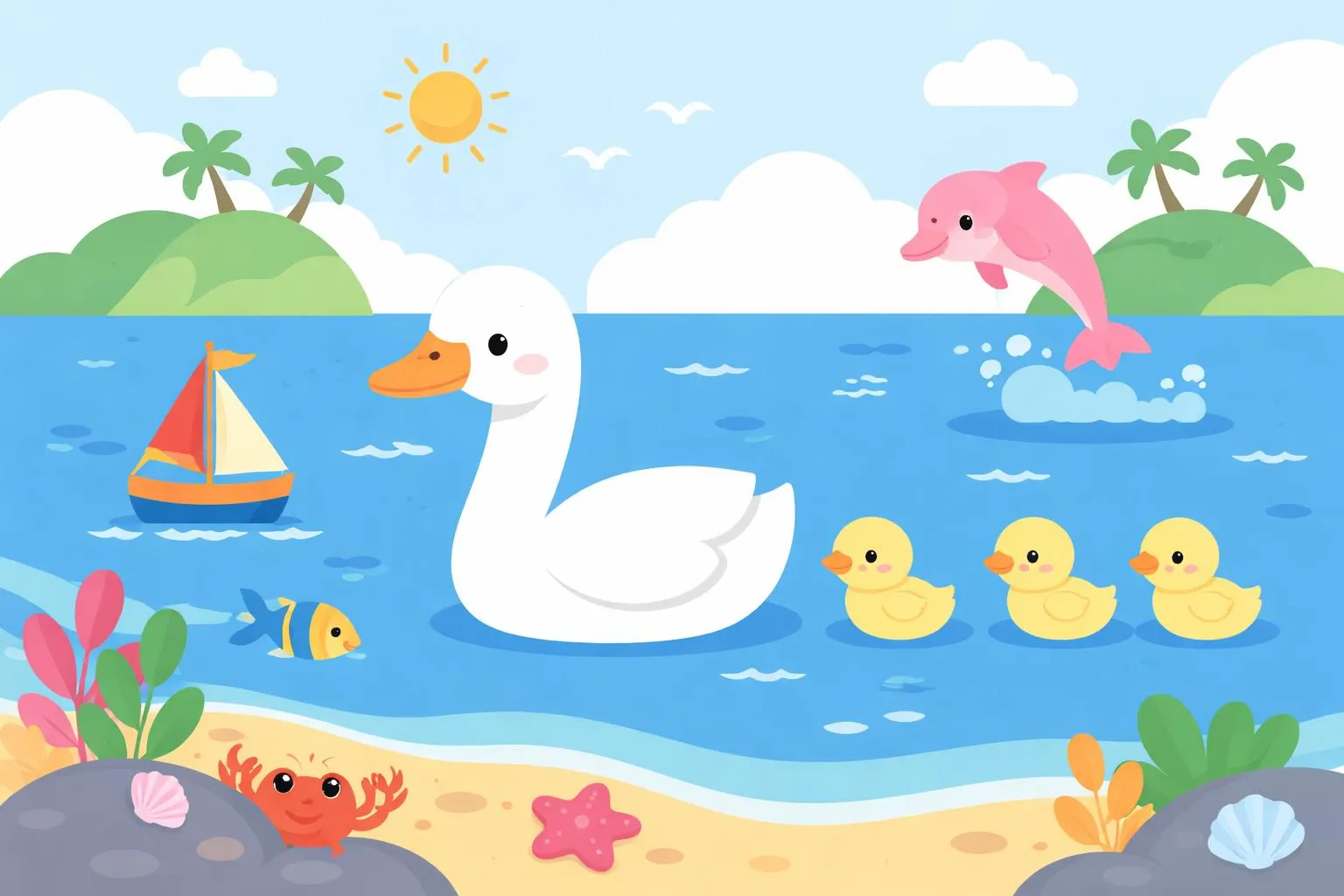
Swan swam over the sea,
Swim, swan, swim;
Swan swam back again,
Well swum, swan.
Expansion and Analysis of the Story
Summary and Interpretation
This short and rhythmic story tells us about a swan swimming across the sea and then returning back. The repetition of the phrase "Swim, swan, swim" encourages the swan to keep going, and the final line "Well swum, swan" praises the swan for its effort. Although simple, this story highlights themes of perseverance, encouragement, and achievement.
The story uses repetition and a rhythmic structure that makes it easy for children to follow and remember. It also introduces young readers to the concept of movement and journey, symbolized by the swan’s swim across the sea and back.
Creative Background and Author Introduction
This story is a classic example of a nursery rhyme or children’s verse that has been used for generations to entertain and educate young children. Such rhymes are often created to help children develop language skills, memory, and phonetic awareness through repetition and rhythm.
The author of this particular rhyme is unknown, as it belongs to the tradition of oral storytelling and nursery rhymes passed down through time. These types of stories are often created by communities or educators who understand the importance of simple, engaging language for early childhood development.
Reflection and Personal Response
Reading this story reminds us of the importance of encouragement and support in learning and growth. Just like the swan is cheered on to swim across the sea, children need positive reinforcement to face challenges and keep trying. The story also shows that success comes from effort and persistence, a valuable lesson for young learners.
Learning Points and Educational Value
Children and students can learn several key lessons and skills from this story:
- Language Development: The repetitive structure helps with vocabulary building and pronunciation practice.
- Rhythm and Phonetics: The rhyme and rhythm enhance phonemic awareness, an essential skill for reading.
- Perseverance: The swan’s journey symbolizes persistence and the ability to overcome obstacles.
- Encouragement: The story models positive reinforcement, which is important in both learning and social interactions.
Practical Applications in Life and Learning
- In the classroom: Teachers can use this rhyme to introduce concepts of rhythm and rhyme in poetry. It can also be a fun way to practice speaking and listening skills.
- At home: Parents can encourage children to recite the rhyme to improve memory and language skills.
- In life lessons: The story can be used to teach children about setting goals, trying hard, and celebrating achievements.
- In physical education: The story can inspire activities related to swimming or movement, linking physical activity with storytelling.
Key Learning Challenges
- Understanding the metaphorical meaning behind the swan’s journey might be challenging for very young children.
- Some children might need additional support to grasp the concept of encouragement and how it applies to their own experiences.
- Pronunciation of the word “swan” and the rhythm of the rhyme may require practice.
Reading Comprehension Questions
- Who is the main character in the story?
- What action does the swan do in the story?
- What words are repeated in the story? Why do you think the author repeats these words?
- How do you think the swan feels when it swims back?
- What lesson can we learn from the story?
Answers
- The main character is the swan.
- The swan swims over the sea and then swims back again.
- The words "Swim, swan, swim" are repeated to encourage the swan and to create a rhythmic pattern that is easy to remember.
- The swan probably feels proud and happy because it is praised with "Well swum, swan."
- We learn the lesson of perseverance and the importance of encouragement when facing challenges.
This simple yet meaningful story serves as a wonderful tool for early childhood education, encouraging language development, positive attitudes, and the joy of learning through rhythm and repetition.