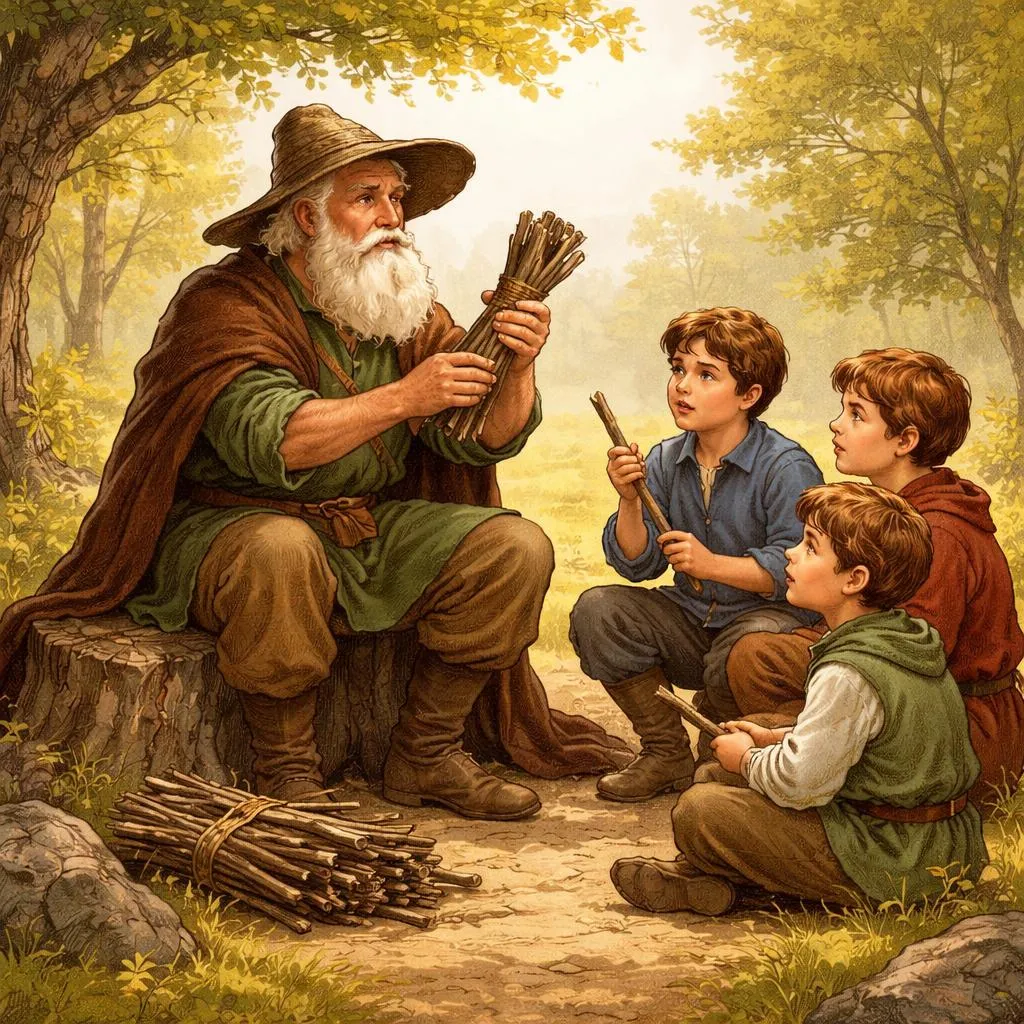

An old man on the point of death summoned his sons around him to give them some parting advice. He ordered his servants to bring in a faggot of sticks, and said to his eldest son: “Break it.” The son strained and strained, but with all his efforts was unable to break the Bundle. The other sons also tried, but none of them was successful. “Untie the faggots,” said the father, “and each of you take a stick.” When they had done so, he called out to them: “Now, break,” and each stick was easily broken. “You see my meaning,” said their father.
Union gives strength.
Background and Origin of the Story
This story is a classic folk tale that has been told in many cultures around the world, often known as "The Bundle of Sticks" or "The Strength of Unity." Its origins are ancient, and it has been passed down through generations as a simple yet powerful lesson about the importance of unity and cooperation. Although the exact author is unknown, the story has been included in numerous collections of fables and moral tales, often attributed to Aesop or similar storytellers who used animals and simple objects to teach ethical lessons.
Detailed Interpretation and Meaning
At its core, the story uses a vivid metaphor: a single stick is easy to break, but a bundle of sticks tied together is very hard to break. The father’s demonstration to his sons is a practical illustration of how individuals, when united, become stronger and more resilient. The father’s dying advice is not only about physical strength but also about the power of family, teamwork, and solidarity.
The message “Union gives strength” emphasizes that people are stronger when they work together rather than when they act alone. This principle applies to families, communities, schools, and even nations. The story teaches that cooperation and mutual support can help overcome challenges that seem impossible for one person alone.
What Students and Children Can Learn
-
The Value of Cooperation: The story encourages young readers to understand that working together with others can achieve greater results than working alone. It helps develop a mindset that values teamwork and collaboration.
-
Family and Social Bonds: The tale highlights the importance of maintaining strong relationships with family and friends. It teaches that unity within a group can provide emotional strength and support in difficult times.
-
Problem-Solving Skills: By seeing how the father uses a simple object to teach a complex lesson, students can learn to think creatively and use practical examples to solve problems.
-
Resilience and Strength: The story inspires children to be resilient by relying on their community and loved ones. It shows that strength is not just physical but also emotional and social.
Applications in Daily Life
- In School: Students can apply this lesson by collaborating on group projects, helping classmates, and understanding that collective effort leads to success.
- In Social Settings: The story encourages young people to build friendships, support peers, and work together to solve conflicts or challenges.
- At Home: Children can appreciate the importance of family unity and learn to support siblings and parents, fostering a loving and cooperative home environment.
How to Cultivate the Spirit of Unity
- Practice Teamwork: Engage in team sports, group activities, or community service to experience firsthand the benefits of working together.
- Communicate Openly: Encourage open dialogue within families and peer groups to strengthen bonds and resolve misunderstandings.
- Celebrate Differences: Recognize that each person brings unique strengths to a group, and unity does not mean uniformity but harmony in diversity.
- Encourage Empathy: Teach children to understand and share the feelings of others, which builds trust and cooperation.
Reflection and Appreciation
After reading this story, students can reflect on times when they felt stronger because of their friends or family. They can write about how unity helped them overcome a challenge or how they might work better with others in the future. Appreciating the simple yet profound message of the story helps cultivate values that are essential for personal growth and social harmony.
In conclusion, this timeless fable not only entertains but also educates young minds about the power of unity. By embracing its lessons, students can grow into compassionate, cooperative, and resilient individuals ready to face the world together.