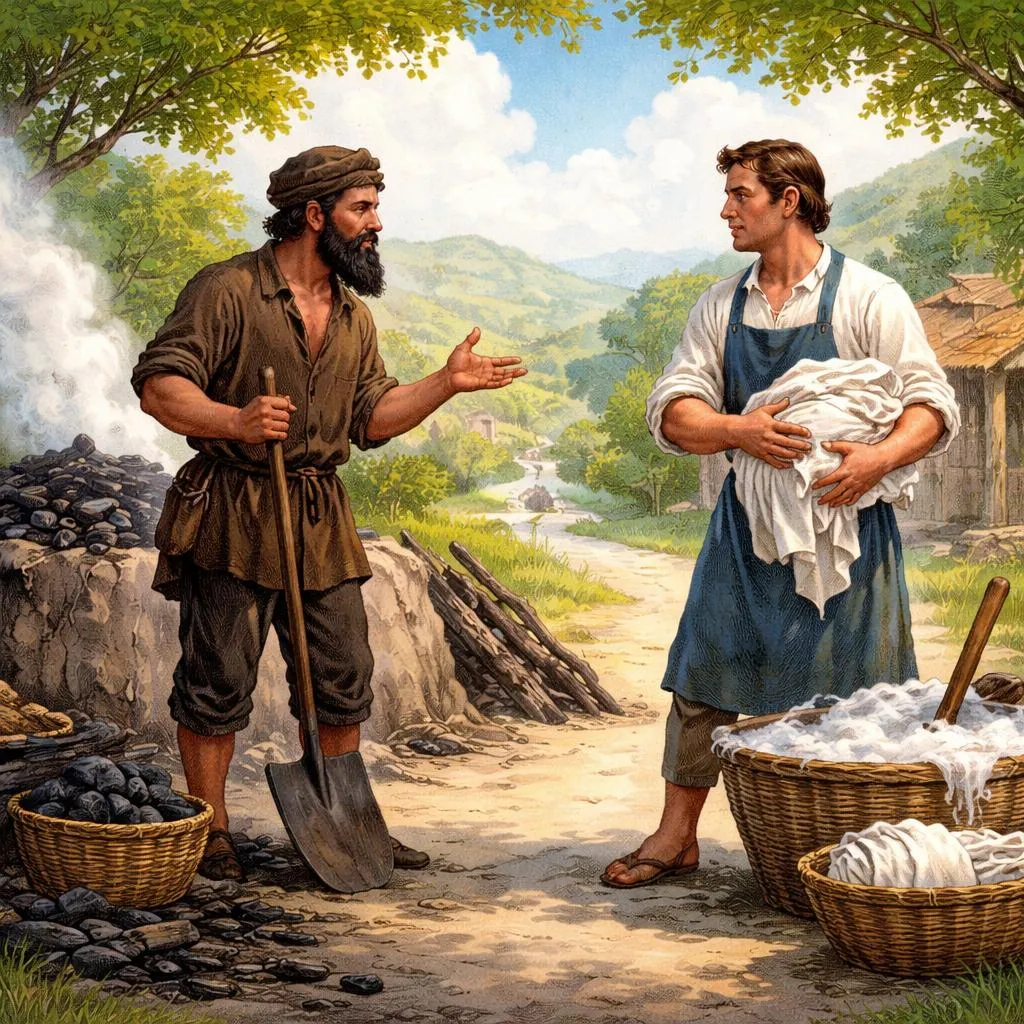

A CHARCOAL-BURNER carried on his trade in his own house. One day he met a friend, a Fuller, and entreated him to come and live with him, saying that they should be far better neighbors and that their housekeeping expenses would be lessened. The Fuller replied, “The arrangement is impossible as far as I am concerned, for whatever I should whiten, you would immediately blacken again with your charcoal.”
Like will draw like.
Background and Author Introduction
This short fable is a classic example of a moral story that has been passed down through generations, often attributed to Aesop, the ancient Greek storyteller known for his collection of fables. These fables use simple characters and situations to teach important life lessons. The charcoal-burner and the fuller represent two tradespeople with opposing roles: the charcoal-burner produces black soot, while the fuller cleans and whitens cloth. Their interaction symbolizes the difficulty of maintaining harmony when fundamental differences exist.
Detailed Interpretation and Meaning
At its core, this story illustrates the idea that people with opposing natures or habits often find it hard to coexist peacefully. The charcoal-burner invites the fuller to live with him, hoping for mutual benefit and reduced expenses. However, the fuller declines, recognizing that their contrasting ways would cause constant conflict—whatever the fuller cleans, the charcoal-burner’s soot would soil again. The concluding proverb, “Like will draw like,” suggests that individuals tend to be drawn to those similar to themselves, and that differences can create friction.
This fable highlights the importance of understanding compatibility in relationships, whether in friendship, family, or community. It also reflects on how some differences may be irreconcilable, and that harmony requires either similarity or mutual respect and effort to overcome differences.
Lessons and Insights for Students and Young Readers
-
Understanding Differences: This story teaches that people have different habits, values, and ways of living. Recognizing and respecting these differences is crucial in maintaining peaceful relationships.
-
Choosing Friends Wisely: Just as the fuller declined to live with the charcoal-burner due to their incompatible trades, students can learn to choose friends and companions who support their growth and well-being.
-
Conflict Awareness: The story shows how certain conflicts are inevitable when people’s behaviors or values clash. Awareness of potential conflicts can help young people navigate social situations more thoughtfully.
-
The Power of Environment: The fable implies that our surroundings and the people we live with influence us. Choosing a positive environment can help one thrive, while a negative one can hinder progress.
Application in Daily Life, Learning, and Social Settings
-
In School: Students can apply this lesson by forming study groups with peers who share similar goals and work ethics. This can create a supportive environment that encourages learning rather than distraction or conflict.
-
In Friendships: Understanding that not all friendships will work out helps young people avoid unnecessary stress. They can focus on cultivating relationships that bring out the best in them.
-
At Home and in Communities: Recognizing different personalities and habits within families or communities can foster tolerance and patience, reducing misunderstandings.
Cultivating Positive Traits from the Story
-
Respect for Others: Even if people are different, showing respect and empathy is essential.
-
Self-awareness: Knowing one’s own nature and how it interacts with others helps in making better choices about relationships.
-
Conflict Resolution: Learning to manage disagreements by understanding underlying differences rather than reacting negatively.
-
Choosing Positive Influences: Surrounding oneself with people who encourage good habits and values.
Reflection and Appreciation
This fable encourages readers to reflect on their own relationships and environments. It invites young people to think critically about who they spend time with and how those relationships affect their lives. The story’s simple yet profound message remains relevant across cultures and ages, reminding us that harmony often depends on shared values and mutual understanding.
By studying this story, students develop critical thinking about social dynamics, empathy for others, and the wisdom to make thoughtful choices in their personal and social lives. It also inspires them to cultivate positive behavior and avoid situations that may lead to unnecessary conflict.