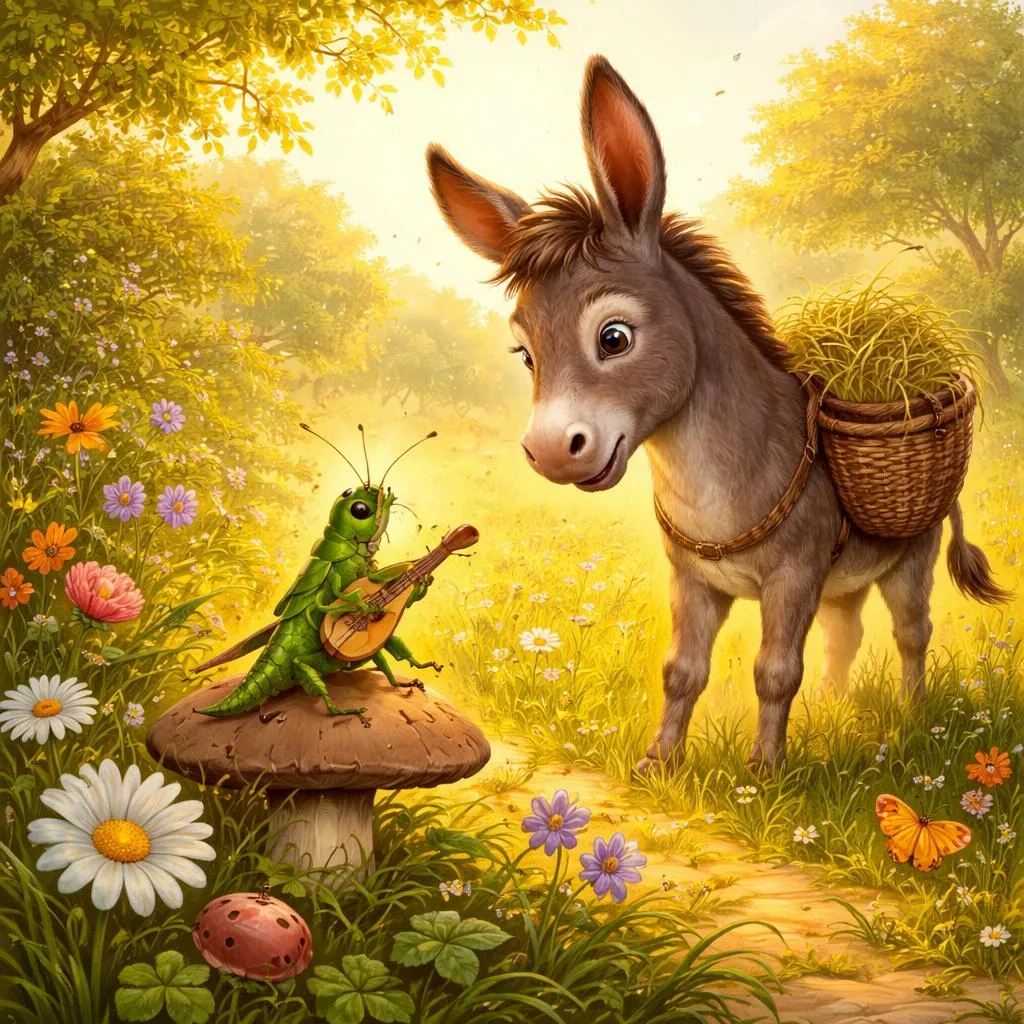

A Donkey having heard some Grasshoppers chirping, was highly enchanted; and, desiring to possess the same charms of melody, demanded what sort of food they lived on to give them such beautiful voices. They replied, “The dew.” The Donkey resolved that he would live only upon dew, and in a short time died of hunger.
Background and Author Introduction
This fable is one of Aesop's famous tales, attributed to Aesop, a storyteller believed to have lived in ancient Greece around the 6th century BCE. Aesop's fables are short stories that use animals as characters to teach moral lessons. These stories have been passed down through generations and are still widely read and appreciated today for their simple yet profound insights into human nature and behavior.
Detailed Interpretation and Meaning
The story of the Donkey and the Grasshoppers is a classic example of a fable that teaches the dangers of envy and unrealistic expectations. The donkey, enchanted by the beautiful chirping of the grasshoppers, desires to have the same talent without understanding the reality behind it. When the grasshoppers say they live on dew, the donkey naively assumes that simply eating dew will give him their musical ability. However, this leads to his downfall, as he ignores the need for proper nourishment and ultimately dies of hunger.
This tale highlights the importance of understanding the true nature of things rather than being misled by appearances or desires. It warns against blindly imitating others without considering one's own needs and circumstances.
Lessons for Students and Young Readers
-
Understanding Reality vs. Appearance: Students learn to look beyond surface-level attractions and understand the deeper truths behind success or talent. Just because something seems appealing does not mean it is suitable or achievable in the same way for everyone.
-
Avoiding Envy and Impatience: The donkey's envy leads him to make a foolish decision. Young readers can learn the value of patience and self-acceptance, recognizing that everyone has unique strengths and that success requires effort and the right conditions.
-
Critical Thinking: The story encourages questioning and critical thinking. Instead of accepting information at face value, students should analyze and evaluate before making decisions.
-
The Importance of Proper Nourishment and Care: Metaphorically, this can be extended to the importance of taking care of one's body and mind. Just as the donkey needed proper food to survive, students need a balanced lifestyle to thrive.
Application in Daily Life, Learning, and Social Interaction
-
In Learning: Students can apply the lesson by setting realistic goals and understanding that shortcuts or copying others without effort will not lead to success. They should focus on their own strengths and work steadily toward improvement.
-
In Social Situations: The story teaches empathy and respect for individual differences. Instead of envying others, students can appreciate diverse talents and learn from them without losing their own identity.
-
In Personal Growth: The fable encourages self-awareness and self-care. Recognizing one's needs and limits is essential for healthy development.
Cultivating Positive Attitudes and Behaviors
-
Patience and Perseverance: Encourage students to be patient with themselves and persistent in their efforts, understanding that growth takes time.
-
Self-Reflection: Foster habits of reflection to help students evaluate their goals and methods critically.
-
Appreciation of Diversity: Promote respect for different abilities and paths, helping students to celebrate their unique qualities.
-
Balanced Lifestyle: Teach the importance of taking care of physical and mental health, as neglect can lead to negative consequences, just as the donkey's neglect of proper nourishment led to his demise.
Conclusion
The story of the Donkey and the Grasshoppers is more than a simple fable; it is a timeless lesson on the dangers of envy, the importance of understanding reality, and the value of self-care and critical thinking. For students and young readers, it offers a meaningful guide to personal growth, learning, and social interaction, encouraging them to develop positive attitudes and behaviors that will serve them throughout life.