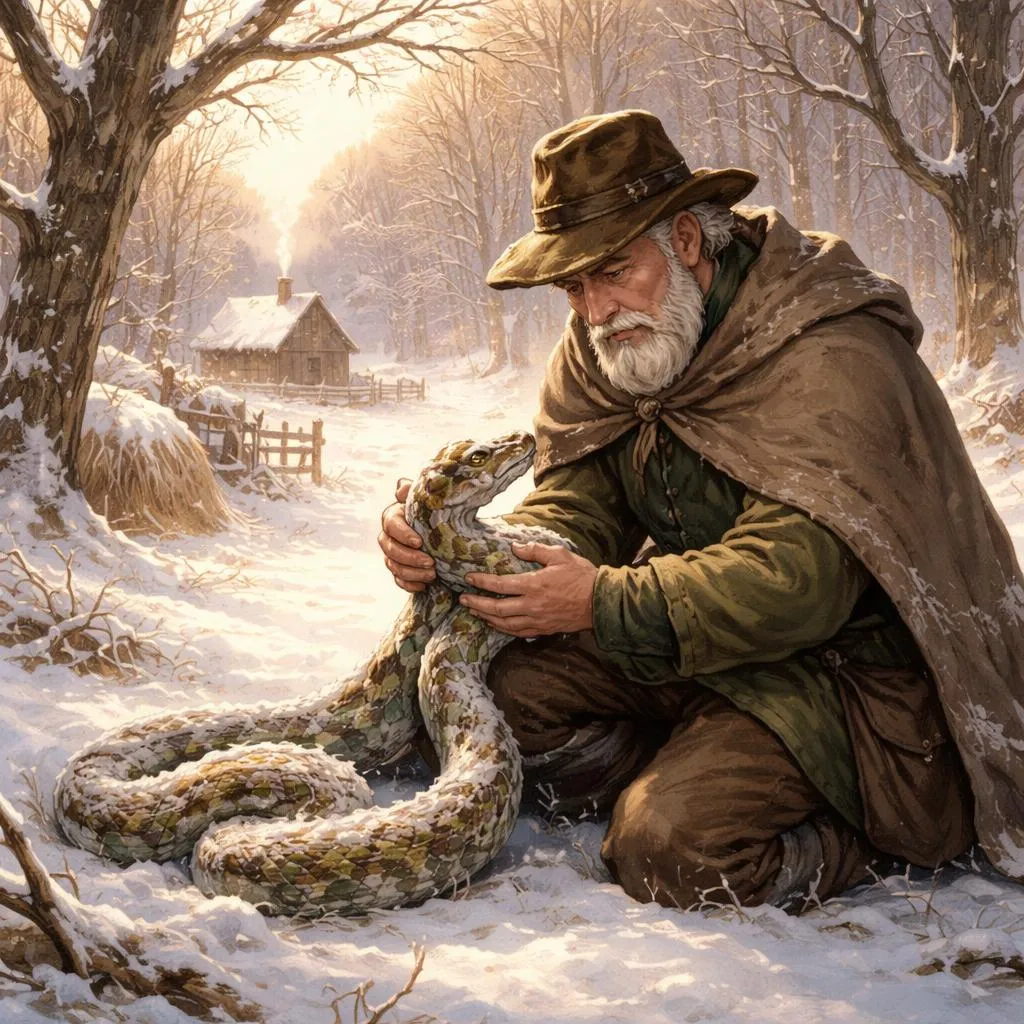

ONE WINTER a Farmer found a Snake stiff and frozen with cold. He had compassion on it, and taking it up, placed it in his bosom. The Snake was quickly revived by the warmth, and resuming its natural instincts, bit its benefactor, inflicting on him a mortal wound. “Oh,” cried the Farmer with his last breath, “I am rightly served for pitying a scoundrel.”
The greatest kindness will not bind the ungrateful.
Background and Author Introduction
This story is a classic fable often attributed to Aesop, a storyteller believed to have lived in ancient Greece around 600 BCE. Aesop’s fables are short tales that use animals or inanimate objects to convey moral lessons. These stories have been passed down through generations and translated into many languages, becoming an essential part of children’s literature worldwide. The fable of the Farmer and the Snake is one of many that teach about human nature and ethical behavior through simple yet powerful narratives.
Detailed Interpretation and Meaning
At its core, this story illustrates the dangers of misplaced trust and the harsh reality that kindness is not always rewarded. The farmer’s act of compassion toward the frozen snake is a symbol of human generosity and empathy. However, the snake’s instinctual response to bite the farmer despite being saved reflects the idea that some beings are inherently ungrateful or dangerous, regardless of how much kindness they receive.
The moral, “The greatest kindness will not bind the ungrateful,” warns readers to be cautious about whom they choose to help. It suggests that while kindness is a virtue, it should not be given blindly or without consideration of the recipient’s nature.
Lessons and Insights for Students and Children
-
Understanding Human Nature: The story encourages young readers to recognize that not everyone will respond to kindness with gratitude. This awareness helps in developing emotional intelligence and realistic expectations in relationships.
-
The Importance of Wisdom in Helping Others: While compassion is important, this fable teaches that one should also use wisdom and discernment. Helping others is good, but it should be done thoughtfully, especially when dealing with people who may harm you.
-
Consequences of Naivety: The farmer’s fate serves as a cautionary tale about naivety and the risks of ignoring warning signs. Students can learn to balance kindness with caution in their social interactions.
-
Moral Reflection: The story promotes reflection on the nature of kindness and ingratitude, prompting readers to think about their own behavior and how they treat others.
Applications in Daily Life
-
In School: Students can apply this lesson by being kind to classmates but also recognizing when someone might take advantage of their kindness. It’s important to set boundaries and protect oneself from harm.
-
In Friendships: Understanding that not all friends will appreciate or reciprocate kindness can help young people develop healthier and more balanced relationships.
-
In Family and Community: The story encourages children to show compassion but also to be aware that sometimes, despite their best efforts, others may not respond positively.
Cultivating Positive Traits from the Story
-
Empathy with Caution: Students should learn to be empathetic but also to assess situations wisely. Empathy does not mean ignoring red flags or allowing oneself to be hurt.
-
Critical Thinking: Encourage children to think critically about people’s actions and motives, which helps them make better decisions about whom to trust.
-
Resilience: The farmer’s story, while tragic, can inspire resilience. Even if kindness is not always rewarded, it remains a valuable quality worth cultivating.
-
Moral Courage: The story can be used to discuss moral courage—standing up for what is right while being aware of potential risks.
Conclusion
The fable of the Farmer and the Snake is a timeless story that offers profound lessons on kindness, trust, and human nature. For students and young readers, it serves as both a moral guide and a practical lesson in navigating social relationships. By understanding the story’s deeper meanings, children can learn to be kind and compassionate while also protecting themselves and making wise choices in their interactions with others. This balance is essential for personal growth, social harmony, and emotional well-being.