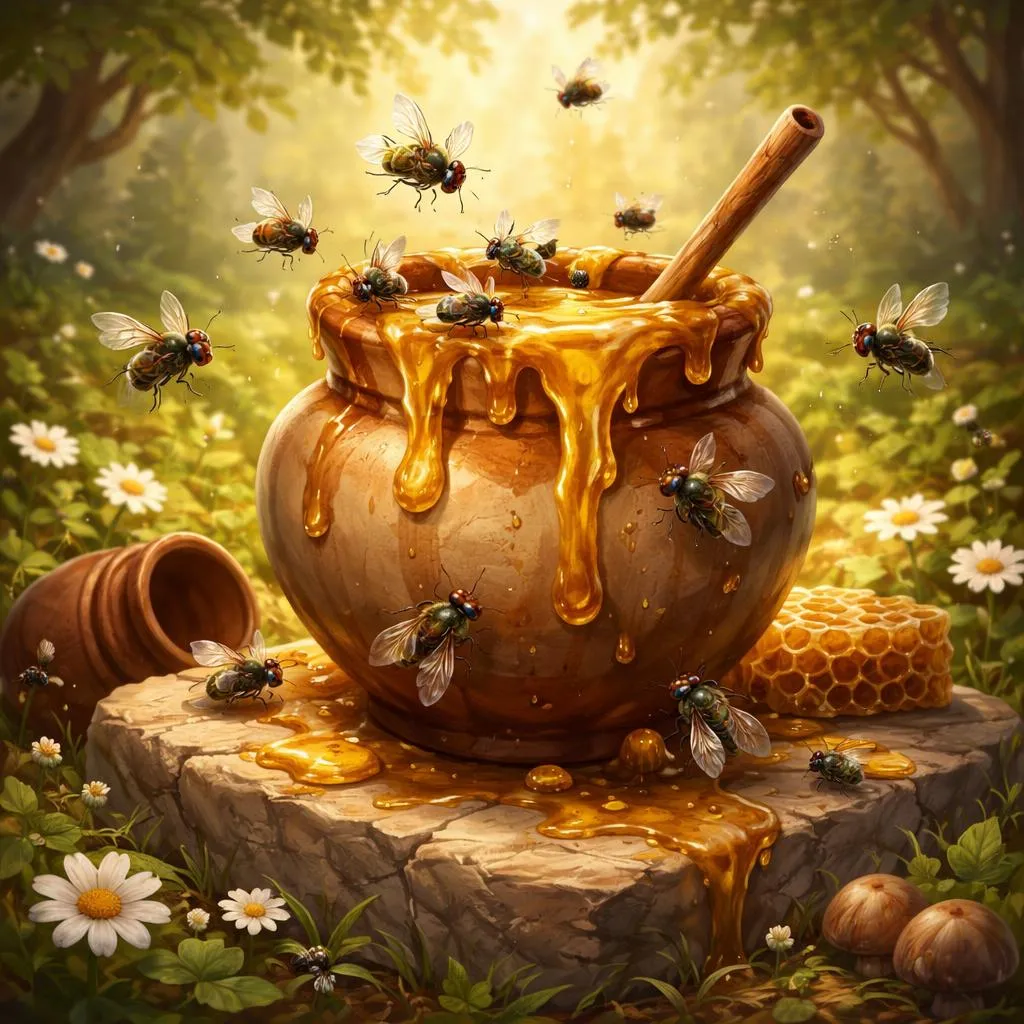

A NUMBER of Flies were attracted to a jar of honey which had been overturned in a housekeeper’s room, and placing their feet in it, ate greedily. Their feet, however, became so smeared with the honey that they could not use their wings, nor release themselves, and were suffocated. Just as they were expiring, they exclaimed, “O foolish creatures that we are, for the sake of a little pleasure we have destroyed ourselves.”
Pleasure bought with pains, hurts.
Background and Author Introduction
This brief yet powerful fable belongs to the rich tradition of Aesop's Fables, a collection of stories credited to Aesop, a storyteller believed to have lived in ancient Greece around the 6th century BCE. These fables use animals and simple narratives to teach moral lessons that remain relevant across cultures and generations. The story of the flies and the honey jar is a classic example of how a simple tale can convey deep truths about human behavior and consequences.
Detailed Interpretation and Significance
At first glance, the story appears to be about flies and honey, but it is a metaphor for human nature and the dangers of unchecked desire. The flies, attracted by the sweetness of the honey, indulge themselves without caution. Their greed blinds them to the risks, leading to their demise. The honey represents short-term pleasure or temptation, while the flies’ fate warns of the potential harm caused by pursuing immediate gratification without thinking about the consequences.
The phrase “Pleasure bought with pains, hurts” encapsulates the moral: sometimes, what seems enjoyable or rewarding at first can lead to suffering if approached recklessly. This story teaches the importance of self-control, foresight, and the ability to evaluate risks before acting.
Lessons and Insights for Students and Young Readers
-
Understanding Consequences:
The story encourages young readers to think about the outcomes of their actions. Just like the flies, people often face situations where they must choose between instant pleasure and long-term wellbeing. Learning to pause and consider the consequences is a valuable life skill. -
The Danger of Greed:
Greed can cloud judgment. The flies’ greed led them to ignore the danger of being trapped in the honey. In real life, excessive desire for things like money, success, or even social approval can lead to harmful decisions. -
Self-Control and Patience:
The fable highlights the virtue of self-discipline. Sometimes, resisting temptation or delaying gratification can prevent harm and lead to better rewards in the future. -
Critical Thinking:
Students can learn to analyze situations critically rather than acting impulsively. This story is a reminder to evaluate risks and benefits carefully.
Applications in Daily Life
-
In Learning:
When studying, it’s tempting to take shortcuts or procrastinate for immediate comfort. However, like the flies, giving in to short-term pleasure can harm long-term success. Developing discipline and planning ahead leads to better academic outcomes. -
In Social Interactions:
Peer pressure can be a form of temptation. Understanding the story’s lesson helps young people resist harmful influences and make wise choices in friendships and social settings. -
In Personal Growth:
The fable encourages reflection on personal desires and goals. It promotes mindfulness about what truly matters and the importance of making decisions that align with one’s values and wellbeing.
Cultivating Positive Traits from the Story
-
Mindfulness:
Encourage students to be aware of their impulses and the reasons behind their choices. -
Responsibility:
Teach them to take responsibility for their actions and understand the ripple effects on themselves and others. -
Resilience:
Learning to delay gratification and face challenges patiently builds resilience, a key trait for success. -
Moral Reflection:
Use the story as a starting point for discussions about ethics, consequences, and the importance of making thoughtful decisions.
Conclusion
Though short, the story of the flies and the honey jar offers timeless wisdom. It reminds young readers that not all pleasures are harmless and that wisdom lies in balancing desire with caution. By reflecting on this fable, students can develop important life skills such as self-control, critical thinking, and ethical judgment, which will serve them well in their academic journey and beyond.