
Original Story:
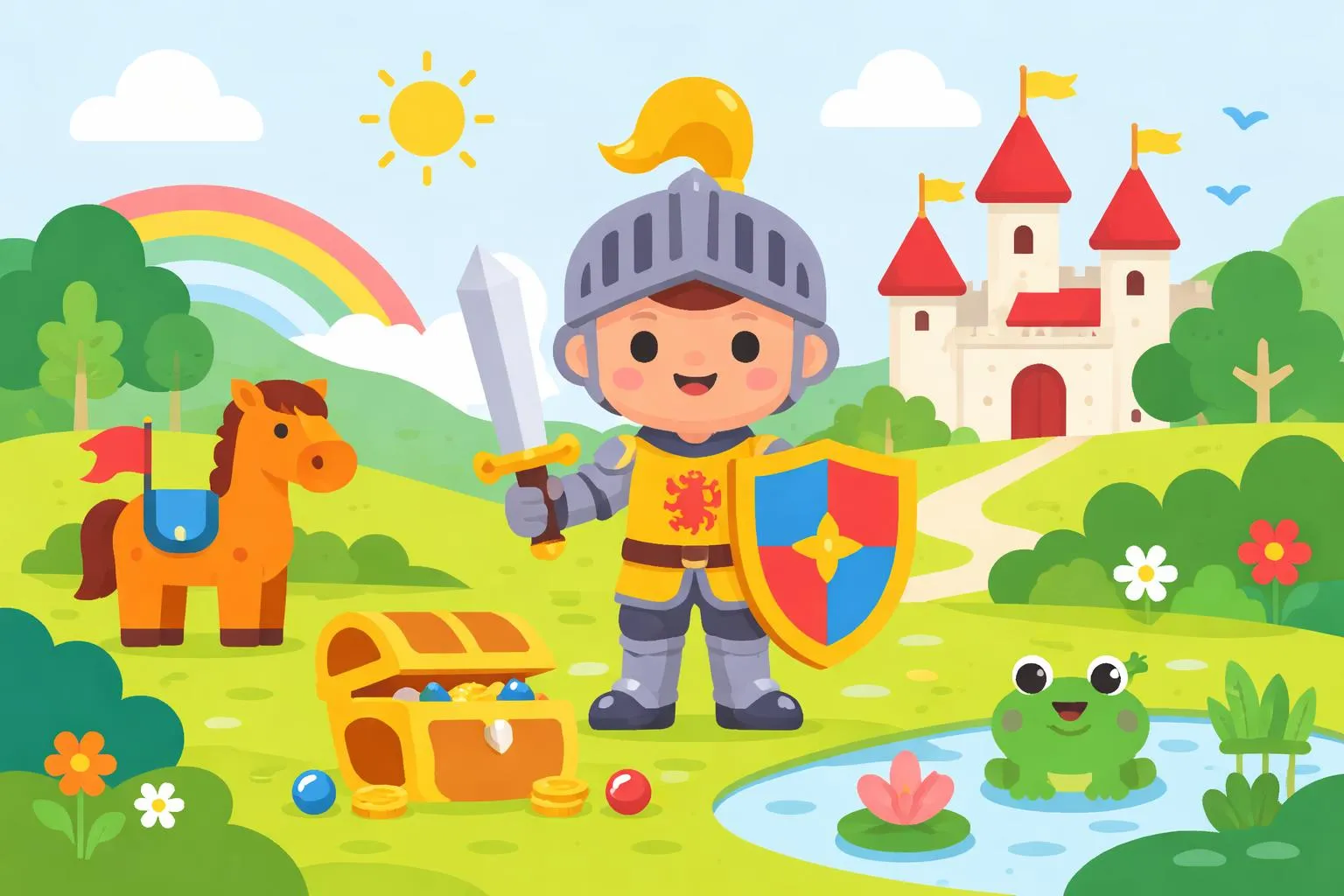
Our good knight, Ted, girds his broadsword on (And he wields it well, I ween);
He ’s on his steed, and away has gone
To the fight for king and queen.
What tho’ no edge the broadsword hath?
What tho’ the blade be made of lath?
‘T is a valiant hand
That wields the brand,
So, foeman, clear the path!
He prances off at a goodly pace;
‘T is a noble steed he rides,
That bears as well in the speedy race
As he bears in battle–tides.
What tho’ ‘t is but a rocking–chair
That prances with this stately air?
‘T is a warrior bold
The reins doth hold,
Who bids all foes beware!
Story Explanation and Appreciation
This charming poem tells the story of a brave young knight named Ted who prepares for battle with great enthusiasm and courage. Although his sword is not sharp and his horse is actually a rocking chair, Ted’s spirit and determination make him a valiant warrior. The poem uses playful imagery and lighthearted humor to celebrate imagination, bravery, and the power of pretend play.
The story highlights that true courage and heroism come not from the tools one holds but from the heart and spirit behind the actions. Ted’s readiness to fight for his king and queen, despite the fanciful nature of his equipment, shows a noble and fearless attitude. The poem’s rhythm and rhyme create a lively, engaging feel that captures the excitement of adventure and the innocence of childhood.
Background and Author Introduction
This poem is a classic example of children’s literature that combines fantasy with moral lessons. It likely originates from a tradition of storytelling where knights and heroic quests symbolize virtues such as bravery, loyalty, and honor. The author’s identity is not specified here, but the style suggests a writer who values imagination and the encouragement of children’s creativity.
The use of a rocking chair as a “noble steed” and a wooden sword (“blade made of lath”) reflects a common childhood experience—turning ordinary objects into magical tools for adventure. This approach encourages children to see the world with wonder and inventiveness, promoting imaginative play as a vital part of learning and development.
Reflection and Insights
Reading this poem encourages children and adults alike to appreciate the value of courage and imagination. It reminds us that even when circumstances or tools are imperfect, our determination and spirit can make us heroes in our own stories. The poem also gently teaches that appearances can be deceiving—what matters most is the intent and bravery behind actions.
For children, this story can inspire confidence and creativity. It shows that play is not just fun but also a way to practice important life skills like problem-solving, leadership, and resilience. For parents and educators, the poem is a useful tool to discuss themes of bravery, loyalty, and the importance of inner strength.
Learning Points and Practical Applications
From this story, children can learn several key lessons:
- Imagination and Creativity: Using everyday objects to create stories and adventures fosters creativity and cognitive development.
- Courage and Determination: True bravery comes from within, not from external tools or appearances.
- Loyalty and Honor: Fighting for a cause or standing up for others is a noble act.
- Play as Learning: Pretend play helps develop social skills, emotional understanding, and strategic thinking.
In daily life and learning scenarios, children can apply these lessons by:
- Engaging in imaginative play to build problem-solving skills.
- Facing challenges with confidence, even if they feel unprepared.
- Understanding the value of loyalty to friends, family, and community.
- Using storytelling and role-playing to express emotions and practice social interactions.
Reading Comprehension Exercises
-
Who is the main character in the poem?
A) A king
B) A knight named Ted
C) A queen
D) A horse -
What is unusual about Ted’s sword?
A) It is very sharp
B) It is made of metal
C) It has no edge and is made of lath (wood)
D) It is magical -
What does Ted ride instead of a real horse?
A) A real horse
B) A bicycle
C) A rocking chair
D) A car -
What is the main message of the poem?
A) Only real weapons can make a warrior
B) Imagination and courage are more important than real weapons
C) Knights are always serious and never playful
D) Fighting is always dangerous -
How does Ted feel about his adventure?
A) Scared and unsure
B) Brave and ready to fight
C) Sad and lonely
D) Tired and sleepy
Answers
- B) A knight named Ted
- C) It has no edge and is made of lath (wood)
- C) A rocking chair
- B) Imagination and courage are more important than real weapons
- B) Brave and ready to fight
This poem beautifully combines humor, imagination, and a lesson about bravery, making it an excellent resource for children’s education and personal growth.