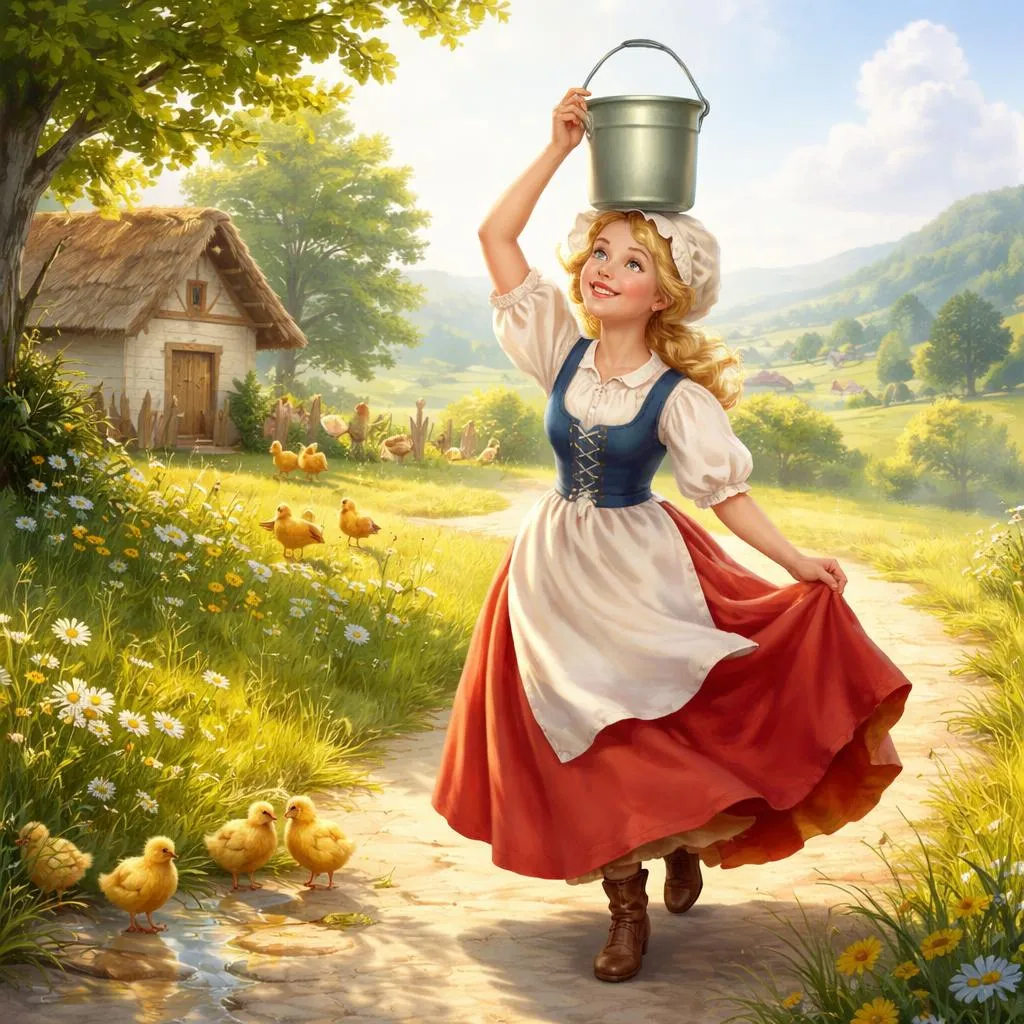

Patty the Milkmaid was going to market carrying her milk in a Pail on her head. As she went along she began calculating what she would do with the money she would get for the milk. “I’ll buy some fowls from Farmer Brown,” said she, “and they will lay eggs each morning, which I will sell to the parson’s wife. With the money that I get from the sale of these eggs I’ll buy myself a new dimity frock and a chip hat; and when I go to market, won’t all the young men come up and speak to me! Polly Shaw will be that jealous; but I don’t care. I shall just look at her and toss my head like this. As she spoke she tossed her head back, the Pail fell off it, and all the milk was spilt. So she had to go home and tell her mother what had occurred.
“Ah, my child,” said the mother,
“Do not count your chickens before they are hatched.”
Background and Author Introduction
This story, often known as "The Milkmaid and Her Pail," is a classic fable attributed to Aesop, a storyteller believed to have lived in ancient Greece around the 6th century BCE. Aesop’s fables are short tales that use animals or human characters to teach moral lessons. Although the exact origins of this particular story are unclear, it has been passed down through generations as a cautionary tale warning against premature expectations.
Detailed Interpretation and Meaning
The story revolves around Patty, a milkmaid who dreams about the wealth and admiration she will gain from selling her milk and buying chickens that will lay eggs. She imagines the chain of events that will follow, from selling eggs to buying new clothes and attracting attention. However, her daydreaming distracts her, causing her to spill the milk and lose everything.
The moral, “Do not count your chickens before they are hatched,” is a proverb that advises against assuming success or rewards before they actually happen. It warns us to be practical and cautious, reminding us that plans and hopes must be grounded in reality.
Lessons and Insights for Students and Young Readers
-
The Danger of Overconfidence and Daydreaming
Patty’s mistake was focusing too much on what might happen rather than what was actually happening. Students can learn that while it’s good to have dreams and goals, it’s equally important to stay grounded and attentive to the present moment. -
Planning vs. Reality
Planning for the future is a valuable skill, but it should be balanced with an understanding that things may not always go as expected. This teaches resilience and adaptability, important traits for life and learning. -
Consequences of Carelessness
Patty’s carelessness in tossing her head caused the milk to spill. This reminds young readers that actions have consequences, and being mindful and careful in daily tasks is essential.
Application in Daily Life, Learning, and Social Interactions
-
In School: Students can apply this lesson by focusing on their studies and not assuming they will automatically succeed without effort. For example, preparing well for exams rather than assuming they will do well without study.
-
In Social Settings: The story encourages humility and patience in relationships. Instead of expecting immediate admiration or popularity, students should build genuine friendships through kindness and respect.
-
In Personal Goals: When setting goals, students should make realistic plans and be prepared for setbacks. This helps build perseverance and problem-solving skills.
Cultivating Positive Attitudes and Behaviors
-
Mindfulness: Encourage students to be present and attentive in their tasks, whether at school or home, to avoid mistakes caused by distraction.
-
Patience: Teach that success often takes time and that waiting for results is part of the process.
-
Resilience: Help students understand that failures or setbacks are learning opportunities, not reasons to give up.
-
Balanced Optimism: Foster a healthy balance between hope for the future and practical action in the present.
Reflection and Appreciation
Reading this story invites students to reflect on their own habits of thinking and planning. It encourages them to appreciate the value of careful preparation and realistic expectations. The simple narrative and clear moral make it accessible and memorable, helping young readers internalize important life lessons.
By understanding Patty’s experience, students can better navigate their own challenges, learning to dream wisely and act responsibly. This timeless fable continues to be relevant, teaching that while hope and ambition are important, they must be paired with caution and effort to truly succeed.