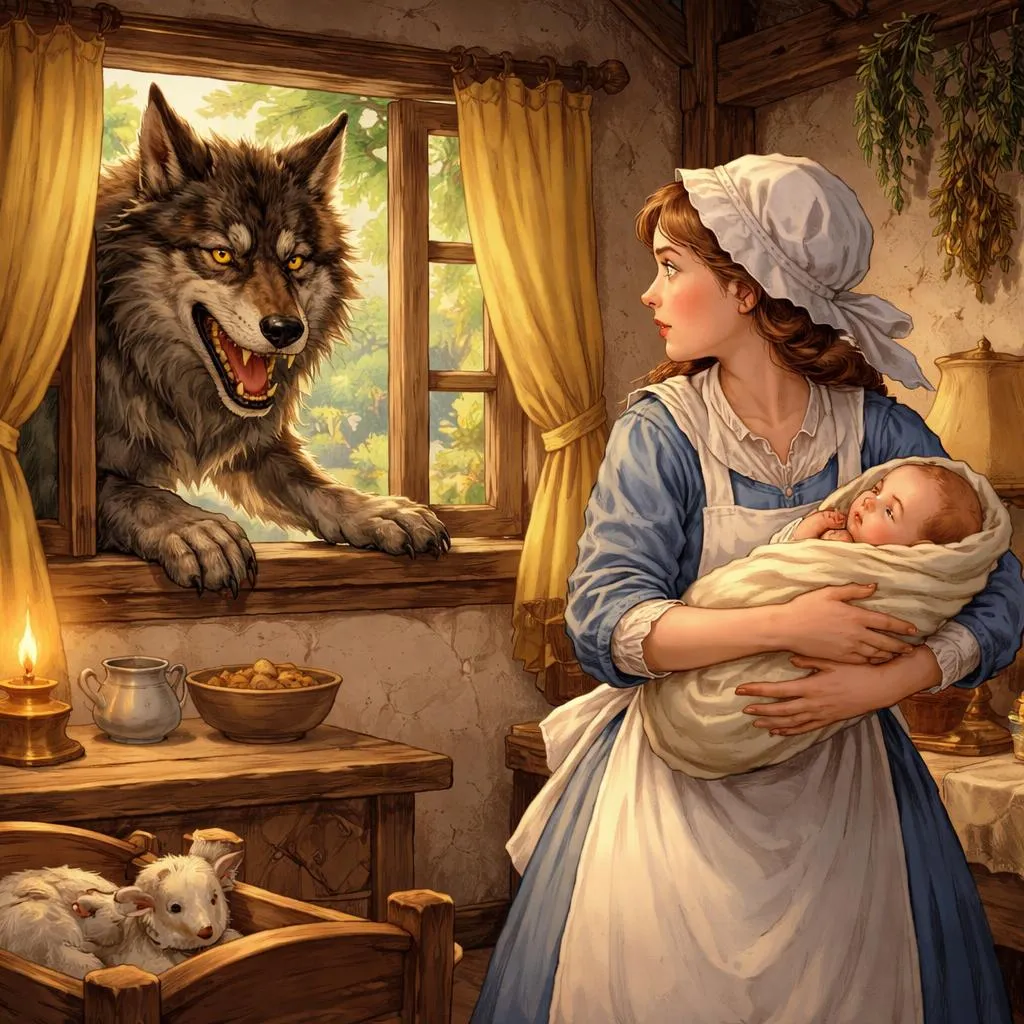

“Be quiet now,” said an old Nurse to a child sitting on her lap. “If you make that noise again I will throw you to the Wolf.”
Now it chanced that a Wolf was passing close under the window as this was said. So he crouched down by the side of the house and waited. “I am in good luck to-day,” thought he. “It is sure to cry soon, and a daintier morsel I haven’t had for many a long day.” So he waited, and he waited, and he waited, till at last the child began to cry, and the Wolf came forward before the window, and looked up to the Nurse, wagging his tail. But all the Nurse did was to shut down the window and call for help, and the dogs of the house came rushing out. “Ah,” said the Wolf as he galloped away,
“Enemies’ promises were made to be broken.”
Background and Author Introduction
This short story is a classic example of traditional European folklore, often passed down through oral storytelling before being written down. The tale centers on a cunning Wolf and a clever Nurse, illustrating themes of danger, deception, and wit. While the exact author is unknown, this story belongs to the rich tradition of fables and cautionary tales that have been told to children for centuries to teach moral lessons. Such stories often involve animals acting with human traits to convey important messages about behavior and consequences.
Detailed Interpretation and Meaning
At its core, this story highlights the theme of trust and betrayal. The Nurse uses the threat of the Wolf to silence the child, but the Wolf himself is a real, lurking danger. The Wolf’s expectation of an easy meal is thwarted by the Nurse’s quick thinking and the protection of the household dogs. The Wolf’s final remark, “Enemies’ promises were made to be broken,” reflects the idea that those who are untrustworthy cannot be relied upon, and that threats or promises from such figures are often empty or deceptive.
This tale also explores the idea of vigilance and protection. The Nurse, despite her harsh words, ultimately protects the child by shutting the window and calling for help. The presence of the dogs symbolizes safety and loyalty, reinforcing the importance of guardianship and community in protecting the vulnerable.
Lessons and Insights for Children and Students
-
Understanding Trust and Caution: Children learn that not everyone who threatens or promises something can be trusted. It is important to be cautious around strangers or those who seem dangerous.
-
The Power of Quick Thinking: The Nurse’s calm and decisive action shows the value of staying composed in difficult situations and using intelligence to protect oneself and others.
-
The Role of Protectors: The story teaches the importance of having protectors—whether family, friends, or community members—who look out for our safety.
-
Recognizing Deception: The Wolf’s behavior reminds students that some people may use false promises or threats to manipulate others, and it is important to be aware of such tactics.
Application in Daily Life, Learning, and Social Situations
- In School: Students can apply the lesson of vigilance by being aware of their surroundings and making safe choices, such as not trusting strangers easily and seeking help when needed.
- In Social Settings: The story encourages children to build trustworthy friendships and to be cautious of those who might not have their best interests at heart.
- In Personal Growth: By learning from the Nurse’s example, children can develop problem-solving skills and the ability to stay calm under pressure.
- In Family Life: The story reinforces the role of parents and caregivers as protectors and guides, encouraging children to listen to their advice even when it seems strict.
Cultivating Positive Values and Behaviors
- Respect for Authority: Understanding that adults often have reasons for their warnings and rules can help children appreciate guidance.
- Bravery and Caution: Balancing courage with carefulness is a valuable trait, as shown by the Nurse’s protective actions.
- Empathy and Care: Recognizing the Nurse’s protective role encourages children to care for others who may be vulnerable.
- Critical Thinking: Questioning threats and promises, and analyzing situations carefully, helps develop critical thinking skills.
Reflection and Appreciation
This story, though brief, offers a rich tapestry of lessons about human nature, safety, and morality. Students can reflect on times when they have faced fears or challenges and consider how they might use quick thinking and seek help to overcome difficulties. The Wolf’s failure reminds us that bad intentions often lead to failure, while the Nurse’s success shows the power of wisdom and protection.
By engaging with this tale, children and young readers can develop a deeper understanding of the importance of trust, caution, and community support. These lessons are timeless and universally applicable, helping young people navigate the complexities of life with greater confidence and awareness.