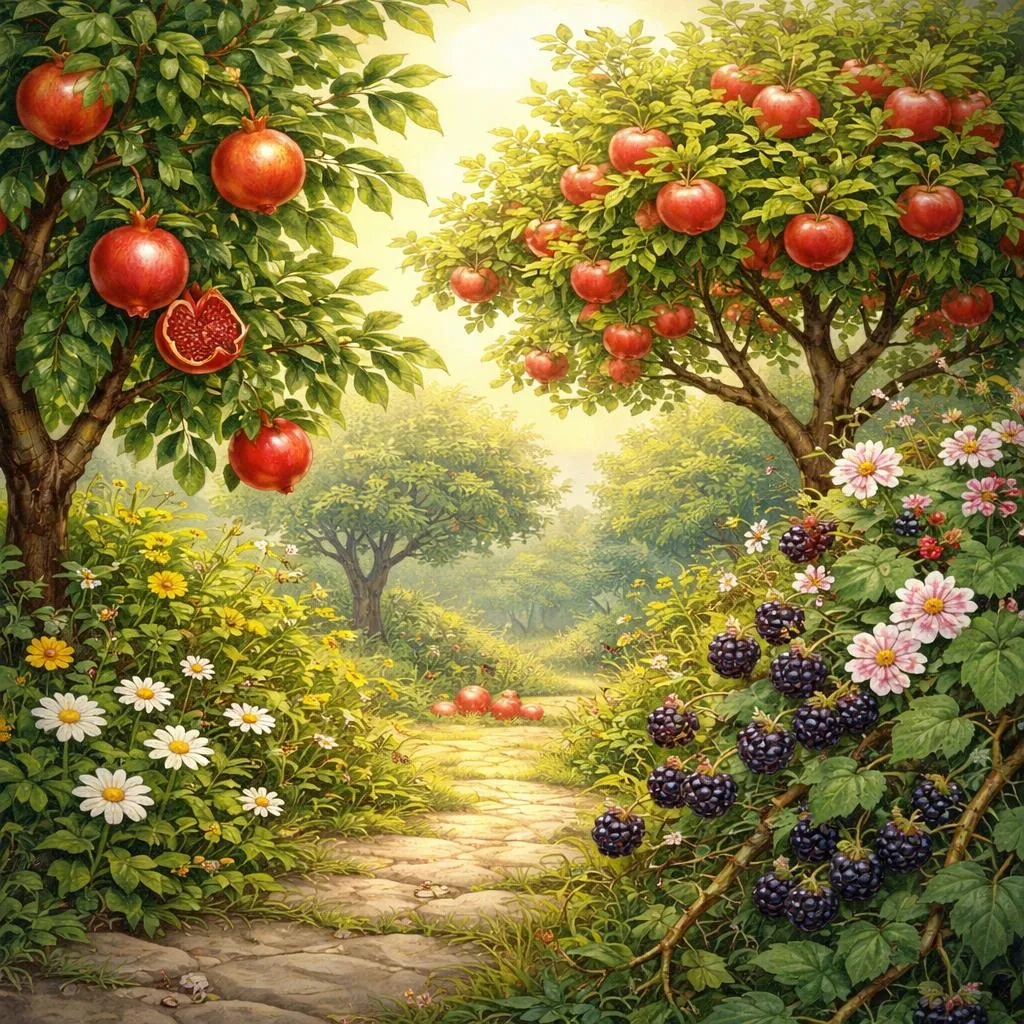

THE POMEGRANATE and Apple-Tree disputed as to which was the most beautiful. When their strife was at its height, a Bramble from the neighboring hedge lifted up its voice, and said in a boastful tone: “Pray, my dear friends, in my presence at least cease from such vain disputings.”
Background and Author Introduction
This brief fable is a classic example of Aesop’s Fables, a collection of stories attributed to Aesop, a storyteller believed to have lived in ancient Greece around the 6th century BCE. These fables are known for using animals, plants, and inanimate objects as characters to teach moral lessons. The story of the pomegranate and apple-tree is one such tale that uses personification to explore themes of beauty, pride, and humility.
Detailed Interpretation and Meaning
In this story, the pomegranate and the apple-tree argue over which one is more beautiful, reflecting a common human tendency to compare and compete over external qualities. The bramble, a thorny shrub, interrupts their quarrel with a boastful remark, highlighting the irony that even something less admired can claim superiority in its own way. This fable invites readers to reflect on the nature of true beauty and the futility of vanity. It suggests that outward appearances are not the only measure of worth and that boasting or pride can be unproductive or even harmful.
Lessons and Insights for Students
Students can learn several important lessons from this story:
-
The Value of Humility: The quarrel between the pomegranate and apple-tree shows how pride and competition over superficial qualities can lead to conflict. Humility helps us appreciate others without feeling the need to compare ourselves constantly.
-
Understanding True Beauty: True beauty is more than skin-deep. It includes qualities like kindness, generosity, and inner strength. This story encourages young readers to look beyond appearances.
-
The Danger of Boasting: The bramble’s boastful interruption serves as a warning that pride can make one appear foolish. It teaches the importance of modesty and self-awareness.
Applications in Daily Life
-
In School: Students often compare grades, talents, or popularity. This story reminds them to focus on their own strengths and to appreciate the unique qualities of their classmates rather than competing unnecessarily.
-
In Social Situations: The story encourages respectful communication and discourages boastfulness or putting others down.
-
In Personal Growth: By embracing humility and focusing on inner qualities, students can build stronger friendships and develop a positive self-image.
How to Cultivate Positive Traits from the Story
-
Practice Gratitude: Encourage students to recognize and be thankful for their own abilities and the qualities of others.
-
Reflect on Inner Qualities: Activities like journaling about kindness, patience, or courage can help students value these traits.
-
Role-Playing Exercises: Simulate scenarios where students practice humility and avoid boasting, reinforcing respectful behavior.
Conclusion
The story of the pomegranate, apple-tree, and bramble is a timeless fable that offers valuable lessons on humility, beauty, and pride. By understanding and applying these lessons, students can develop a more balanced view of themselves and others, leading to healthier relationships and personal growth. This story not only entertains but also serves as a guide for living harmoniously with others and appreciating the deeper qualities that make each person unique.