
Original Story:
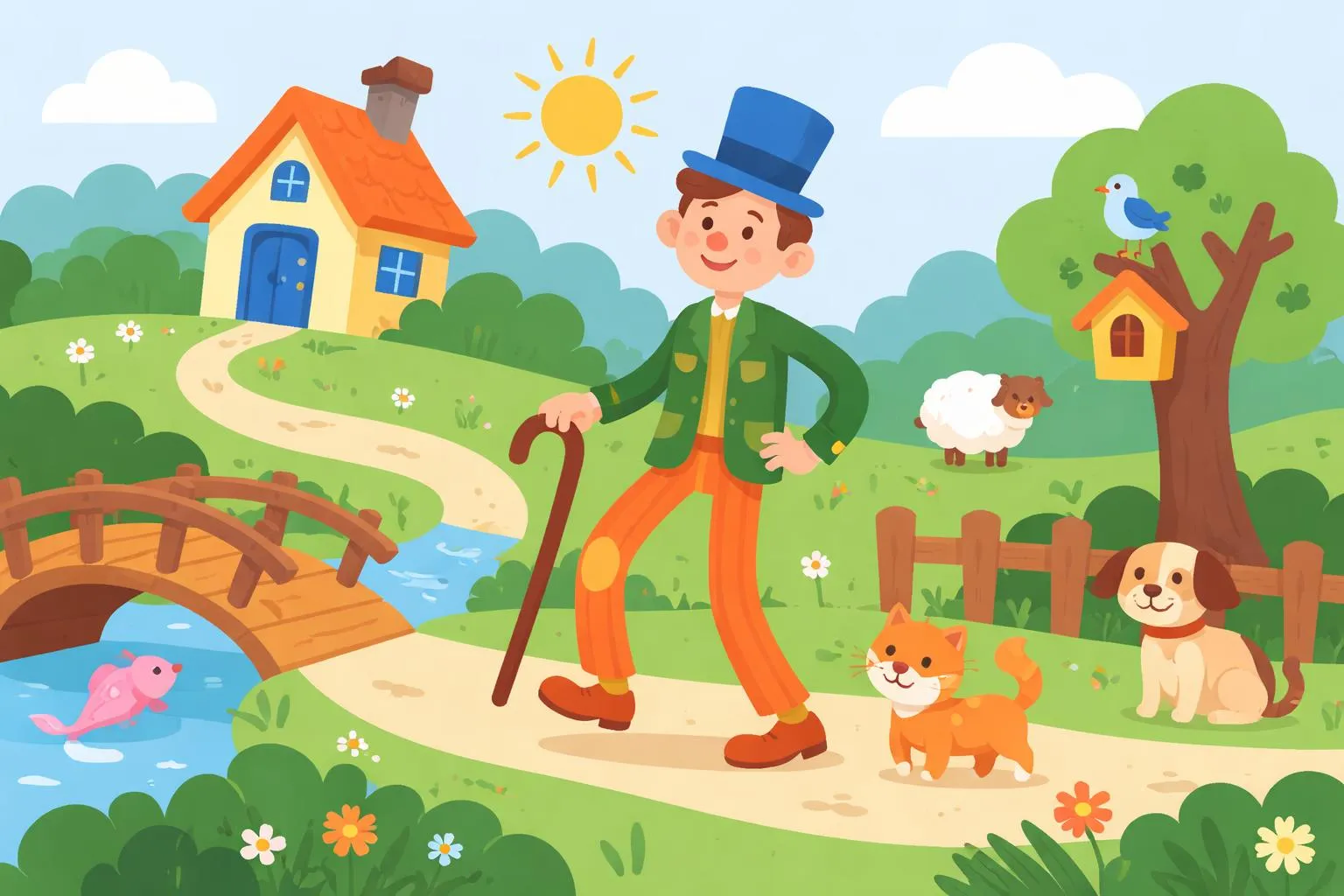
There was a crooked man, and he went a crooked mile,
He found a crooked sixpence against a crooked stile;
He bought a crooked cat, which caught a crooked mouse,
And they all lived together in a little crooked house.
Expansion and Analysis of the Story
Summary and Interpretation
This short and charming nursery rhyme tells the tale of a crooked man who travels along a crooked path and encounters various crooked things—a sixpence, a cat, a mouse, and a house. The repetition of the word "crooked" emphasizes the unusual and whimsical nature of the story. Although the story is simple, it creates a vivid, imaginative world where everything is delightfully askew.
The rhyme can be interpreted as a playful exploration of imperfection and uniqueness. The crooked man and his crooked possessions live happily together, suggesting that being different or imperfect is not only acceptable but can also be a source of charm and happiness.
Background and Author Information
The "Crooked Man" rhyme is a traditional English nursery rhyme, dating back to at least the 19th century. Like many nursery rhymes, its exact origins and author are unknown, but it has been passed down through oral tradition and printed collections of children’s rhymes.
The rhyme may have been inspired by historical or cultural references to crooked paths or roads, or it may simply be a playful use of alliteration and rhyme to entertain children. Nursery rhymes like this one often served as mnemonic devices to help children learn language and rhythm.
Literary Appreciation
This rhyme is notable for its rhythmic repetition and alliteration, which make it easy for children to remember and recite. The use of the word "crooked" in every line creates a strong sense of cohesion and musicality. The imagery of the crooked man and his crooked world sparks imagination and encourages children to think creatively about the world around them.
The rhyme also subtly introduces the concept of accepting differences and finding joy in imperfection, which is an important lesson for young learners.
Lessons and Knowledge Points for Children and Students
- Vocabulary Development: The word "crooked" is repeated throughout, helping children learn and remember this descriptive adjective.
- Rhythm and Rhyme: The rhyme scheme and rhythm help children develop phonemic awareness, an important skill for early reading.
- Imagination and Creativity: The story encourages children to visualize a whimsical world, fostering creative thinking.
- Acceptance and Diversity: The theme of living happily despite being different can teach children about acceptance and diversity.
- Story Structure: The simple, repetitive structure is a good example for children learning how stories and poems are built.
Practical Applications and Life Lessons
- In Education: Teachers can use this rhyme to introduce concepts of rhyme, rhythm, and descriptive language. It can also be a starting point for creative writing exercises where children invent their own "crooked" stories.
- In Social Development: The story’s message about embracing differences can be used in discussions about diversity, inclusion, and kindness.
- In Daily Life: Parents can use the rhyme to encourage children to appreciate uniqueness in themselves and others, promoting self-esteem and empathy.
Reading Comprehension Exercises
-
What did the crooked man find on his crooked mile?
a) A straight coin
b) A crooked sixpence
c) A crooked cat
d) A crooked mouse -
What did the crooked man buy?
a) A crooked dog
b) A crooked cat
c) A crooked house
d) A crooked stile -
Who did the crooked cat catch?
a) A crooked bird
b) A crooked mouse
c) A crooked fish
d) A crooked man -
Where did the crooked man and his crooked cat and mouse live?
a) In a big crooked house
b) In a little crooked house
c) In a crooked castle
d) In a crooked tree -
What is the main theme of the story?
a) Adventure
b) Friendship
c) Embracing uniqueness and imperfection
d) Danger
Answers
- b) A crooked sixpence
- b) A crooked cat
- b) A crooked mouse
- b) In a little crooked house
- c) Embracing uniqueness and imperfection
This simple yet imaginative nursery rhyme offers much more than a playful tune; it provides valuable lessons in language, creativity, and social values that children can carry with them into their learning and daily lives.