
Original Story:
This little mouse got caught in a trap,
And this little mouse she heard it snap,
This little mouse did loudly squeak out,
And this little mouse did run all about,
This little mouse said, “Do not bewail
And let us take hold and pull him out by the tail.”
Story Explanation and Appreciation
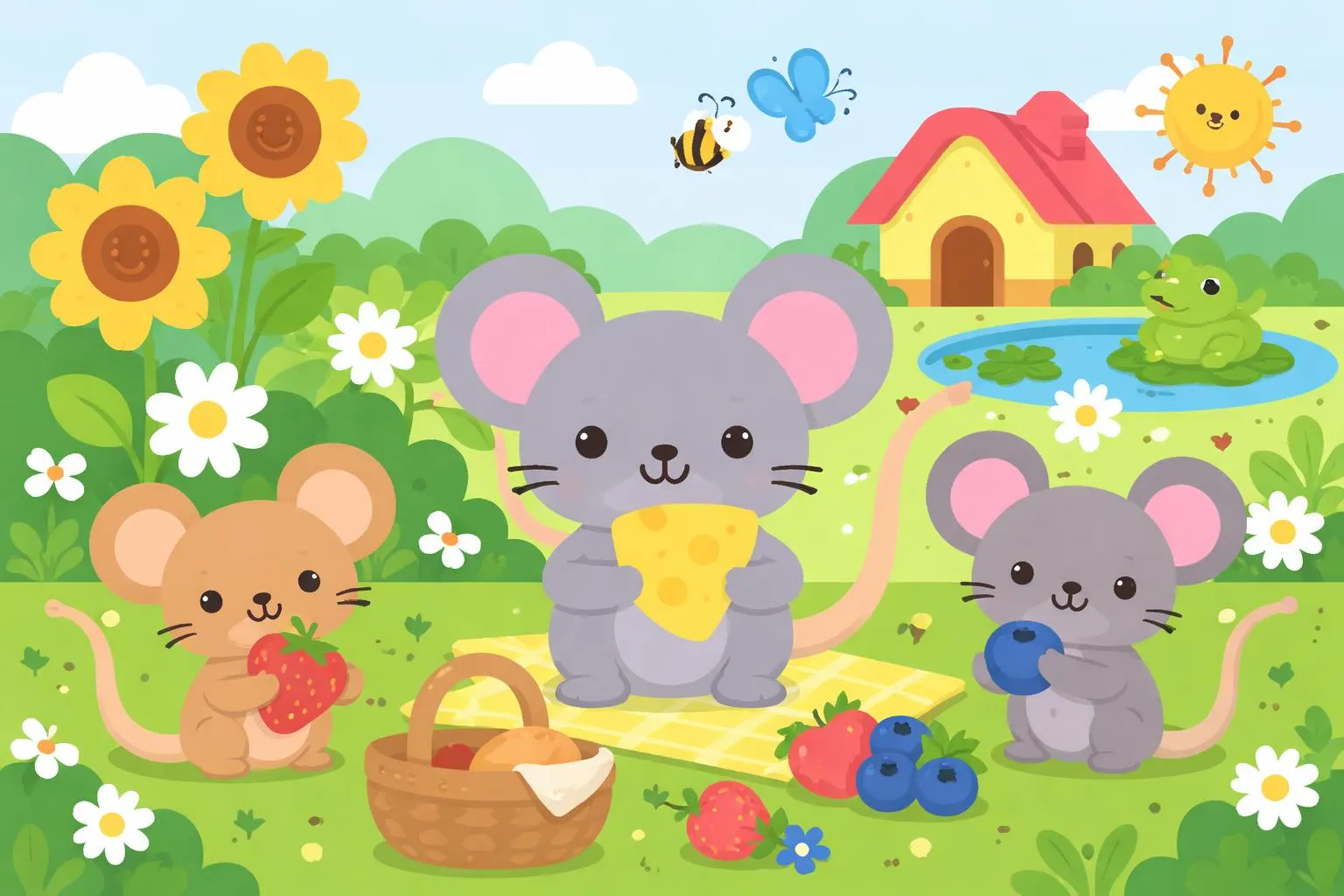
This charming little story centers around a group of mice and their response when one of them gets caught in a trap. The narrative begins with one mouse falling victim to a trap, which immediately alerts the others through the snapping sound. The trapped mouse squeaks loudly, signaling distress, and the other mice quickly react by running around in concern. Instead of despairing, one mouse encourages the others not to bewail or mourn but to take action by pulling their trapped friend out by the tail.
The story conveys important themes such as friendship, teamwork, and courage. It highlights how in difficult situations, it is better to act together rather than give in to sadness or fear. The mice symbolize a community that supports one another, emphasizing the value of cooperation and mutual aid.
Background and Author Introduction
This story is a traditional nursery rhyme or folk tale commonly told to children. Such stories have been passed down through generations and often serve to teach moral lessons in simple and memorable ways. The author of this particular rhyme is unknown, as it belongs to the collective oral tradition of children’s literature.
Nursery rhymes like this one were historically used to entertain children while also instilling social values. They often feature animals with human traits to make the lessons more relatable and engaging for young audiences.
Reflection and Insights
Reading this story reminds us of the importance of community support and problem-solving in the face of adversity. It encourages children to be brave and proactive rather than passive when a friend is in trouble. The story also teaches that even the smallest creatures can make a difference when they work together.
For adults, it serves as a gentle reminder that empathy and cooperation are fundamental to overcoming challenges, whether in personal relationships, school, or work environments.
Learning Points for Children and Students
From this story, children and students can learn:
- The importance of helping others in need.
- How teamwork can solve problems more effectively than working alone.
- The value of courage and not giving up when faced with difficulties.
- Understanding the meaning of words like bewail (to express deep sorrow).
Practical Applications
- In school: Students can practice working in groups to solve problems or complete projects, learning to support each other just like the mice.
- In life: Children can be encouraged to help friends or family members who are struggling, fostering kindness and empathy.
- In learning: Teachers can use this story to introduce vocabulary and discuss moral lessons, enhancing both language skills and character education.
Reading Comprehension Exercises
- What happened to the little mouse at the beginning of the story?
- How did the other mice react when they heard the trap snap?
- What advice did one mouse give to the others?
- What is the main lesson this story teaches?
- Why is teamwork important according to the story?
Answers:
- The little mouse got caught in a trap.
- The other mice ran all about in concern and heard the mouse squeak loudly.
- The mouse advised not to bewail but to pull their friend out by the tail.
- The story teaches the importance of helping friends and working together in difficult times.
- Teamwork is important because it allows friends to solve problems and help each other effectively.
This simple yet powerful story offers timeless lessons for children and adults alike. By encouraging cooperation, bravery, and compassion, it helps build a foundation for positive social behavior and emotional intelligence.