
Original Story:
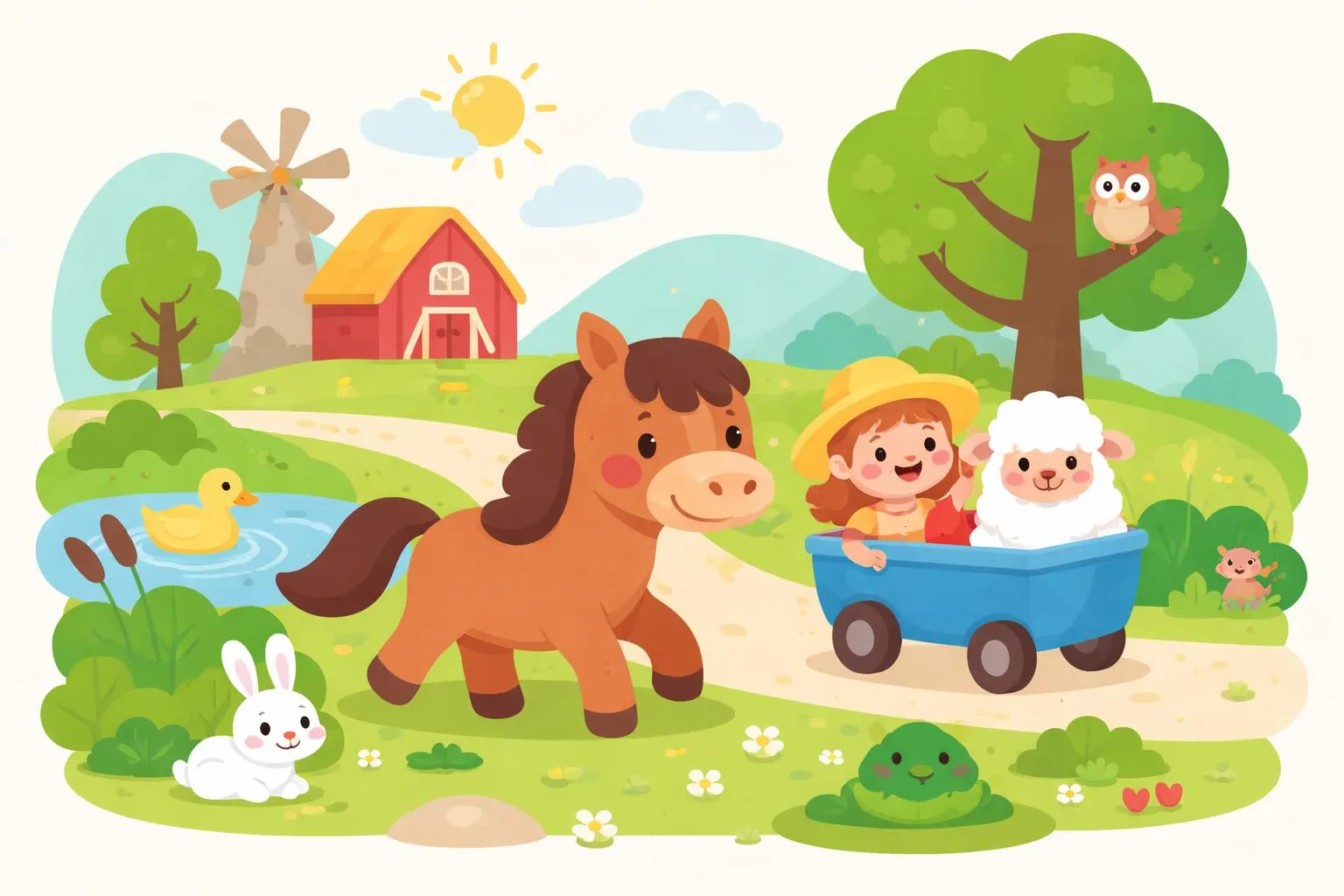
Trit-trot, trit-trot,
To buy a penny cake;
Home again, home again,
I met a black-snake.
Pick up a stone
And breaky backy-bone
Trit-trot, trit-trot
All the way home.
Expansion and Analysis
Story Explanation and Interpretation
This short and rhythmic poem tells a simple story of a child’s journey to buy a penny cake and the encounter with a black snake on the way back home. The repetitive sounds "Trit-trot, trit-trot" mimic the sound of footsteps, creating a lively and engaging rhythm that appeals to children. The narrative is straightforward: the child goes out, meets a danger (the black snake), and bravely reacts by picking up a stone to protect themselves before continuing safely home.
The story’s main theme revolves around courage and quick thinking in the face of danger. It also highlights the innocence and adventurous spirit of childhood, where even a small errand like buying a penny cake can turn into an exciting adventure.
Background and Author Introduction
This nursery rhyme is a traditional English children’s verse, often passed down orally through generations. Its origins are not attributed to a specific author but rather to folk culture. Such rhymes were created to entertain children, teach them rhythm and language skills, and sometimes impart simple moral lessons.
The rhyme’s simplicity and repetitive structure make it easy for children to memorize and recite, which was especially important in times when printed books were less accessible. The use of animal imagery, like the black snake, connects children to nature and helps them understand the concept of caution.
Reflection and Personal Response
Reading this rhyme reminds us of the timeless nature of children’s literature. Despite its simplicity, it captures essential childhood experiences—curiosity, fear, bravery, and the comfort of returning home. It encourages children to be brave when facing challenges and reassures them that they can overcome difficulties with quick thinking.
Educational Value and Learning Points
Children and students can learn several important lessons and skills from this rhyme:
- Language Development: The rhyme’s repetitive and rhythmic structure helps children develop phonemic awareness and vocabulary.
- Moral Lesson: It teaches the importance of being cautious and brave when encountering danger.
- Cultural Knowledge: It introduces children to traditional nursery rhymes, an essential part of English literary heritage.
- Memory Skills: Memorizing and reciting the rhyme enhances memory and concentration.
- Sound and Rhythm: The poem’s rhythm helps children appreciate the musicality of language, which is foundational for reading and speaking skills.
Practical Applications in Life and Learning
- In the Classroom: Teachers can use this rhyme to introduce children to poetry, rhythm, and storytelling. It can be acted out or used in role-play to build confidence.
- At Home: Parents can use the rhyme to bond with children, encouraging them to speak clearly and confidently.
- Safety Education: The story can be a gentle introduction to discussing safety and how to react in potentially dangerous situations.
- Creative Writing: Older students can be inspired to write their own short rhymes or stories based on everyday experiences.
Reading Comprehension Exercises
1. What was the child going to buy?
a) A penny cake
b) A black snake
c) A stone
2. What did the child meet on the way home?
a) A dog
b) A black snake
c) A cat
3. How did the child respond to meeting the black snake?
a) Ran away
b) Picked up a stone
c) Called for help
4. What sound does "Trit-trot" imitate?
a) The sound of a snake
b) The sound of footsteps
c) The sound of a cake being baked
5. What is the main lesson of the rhyme?
a) Always buy penny cakes
b) Be brave and cautious
c) Don’t go home alone
Answers:
- a) A penny cake
- b) A black snake
- b) Picked up a stone
- b) The sound of footsteps
- b) Be brave and cautious
This simple yet meaningful nursery rhyme offers a rich resource for language learning, moral education, and cultural appreciation, making it a valuable tool for both educators and parents.