
Original Story:
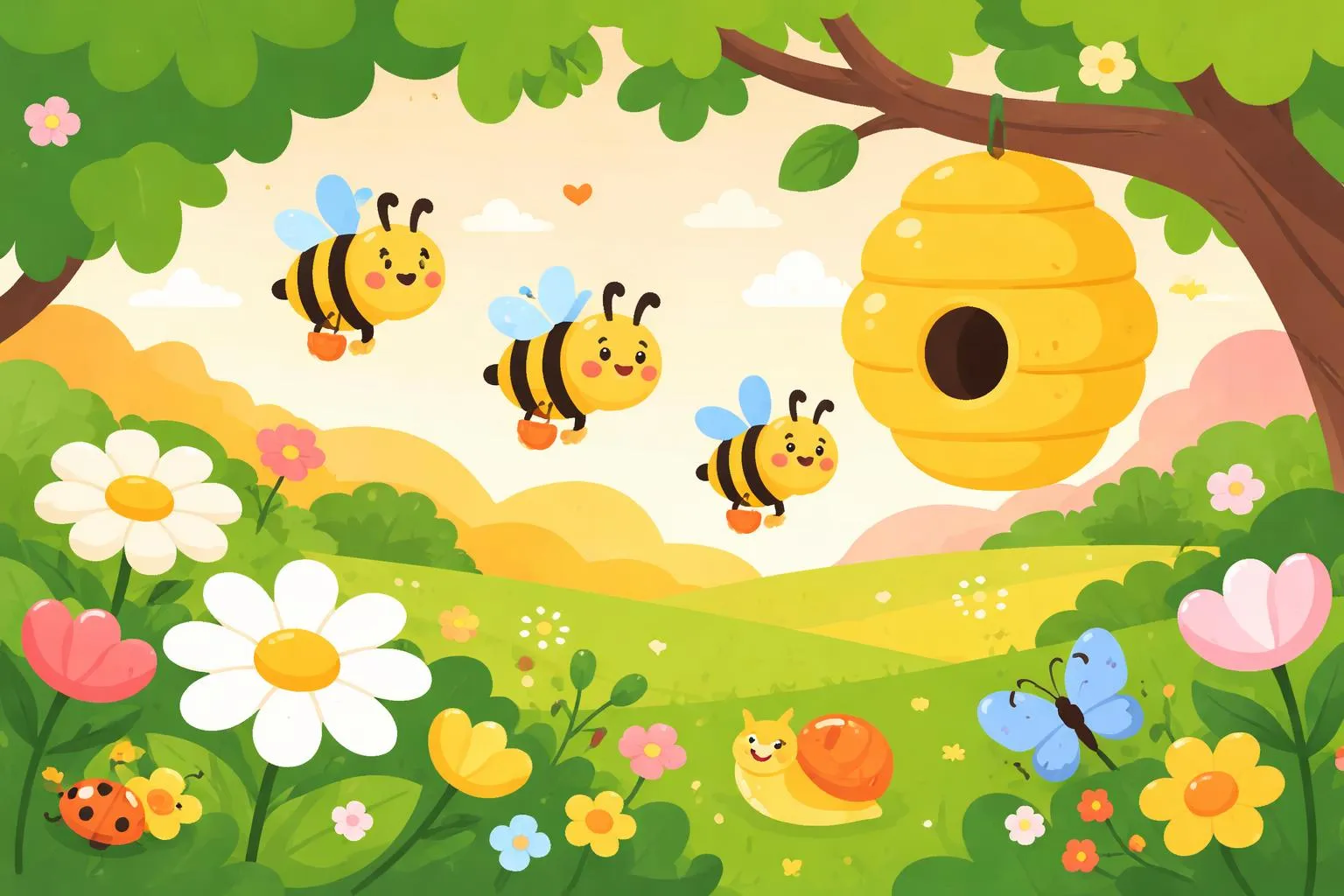
When the bees all homeward fly,
Flowers will not long be dry.
Expansion and Analysis
Meaning and Interpretation
This short, poetic line captures a simple yet profound observation about nature. It tells us that when bees return home, the flowers will soon be replenished with moisture. This can be understood literally as a natural cycle: bees pollinate flowers, which helps them flourish and maintain their vitality. Metaphorically, it suggests that when the right agents or helpers are in place, growth and renewal are inevitable.
The phrase "flowers will not long be dry" implies hope and the promise of rejuvenation. It reminds readers, especially children, that nature works in harmony and that every creature has a role to play in sustaining life.
Background and Author Introduction
This couplet is a traditional folk saying, often found in nursery rhymes or children's poetry collections. It reflects the timeless relationship between bees and flowers, a theme that has fascinated poets and educators alike. The author is unknown, as it likely originates from oral tradition passed down through generations.
The simplicity and rhythm make it ideal for young learners, helping them appreciate the beauty of nature and the importance of cooperation in ecosystems.
Reflection and Personal Response
Reading this brief poem encourages us to pause and observe the natural world more closely. It teaches patience and faith in natural processes. For children, it can inspire curiosity about bees, flowers, and the environment, fostering a sense of responsibility to protect these vital elements of our planet.
Educational Value and Learning Points
Children and students can learn several important lessons from this poem:
- Ecological Awareness: Understanding the role of bees in pollination and how this supports plant life.
- Cause and Effect: Recognizing that the bees' activity directly influences the health of flowers.
- Poetic Devices: Appreciating rhyme, rhythm, and metaphor in poetry.
- Environmental Stewardship: Encouraging care for nature and awareness of biodiversity.
Practical Applications and Life Lessons
- In Science Classes: This poem can be used to introduce topics like pollination, ecosystems, and the importance of insects.
- In Language Arts: It serves as an example of concise, meaningful poetry that uses imagery and rhyme.
- In Daily Life: Children can learn to observe nature, understand interdependence, and develop empathy for living things.
- In Environmental Education: It highlights the critical role of bees, which can lead to discussions on conservation efforts.
Reading Comprehension Questions
- What happens when the bees fly homeward?
- Why do you think the flowers will not be dry for long?
- What role do bees play in nature according to this poem?
- Can you think of a time when you saw bees around flowers? What did you notice?
- What lesson does this poem teach us about nature?
Answers
- When the bees fly homeward, it indicates the end of their pollination activity.
- Because bees help flowers by pollinating them, which helps flowers stay healthy and moist.
- Bees help flowers grow and stay healthy by pollinating them.
- (Open-ended; encourages personal observation and reflection.)
- The poem teaches us that nature is interconnected and that bees play an important role in helping flowers grow.
This simple yet elegant poem offers a rich opportunity for children to learn about nature, poetry, and the importance of cooperation in ecosystems. It encourages observation, respect for the environment, and appreciation of the small wonders around us.