
Original Story:
Night is for sorrow and dawn is for joy,
Chasing the troubles that fret and annoy;
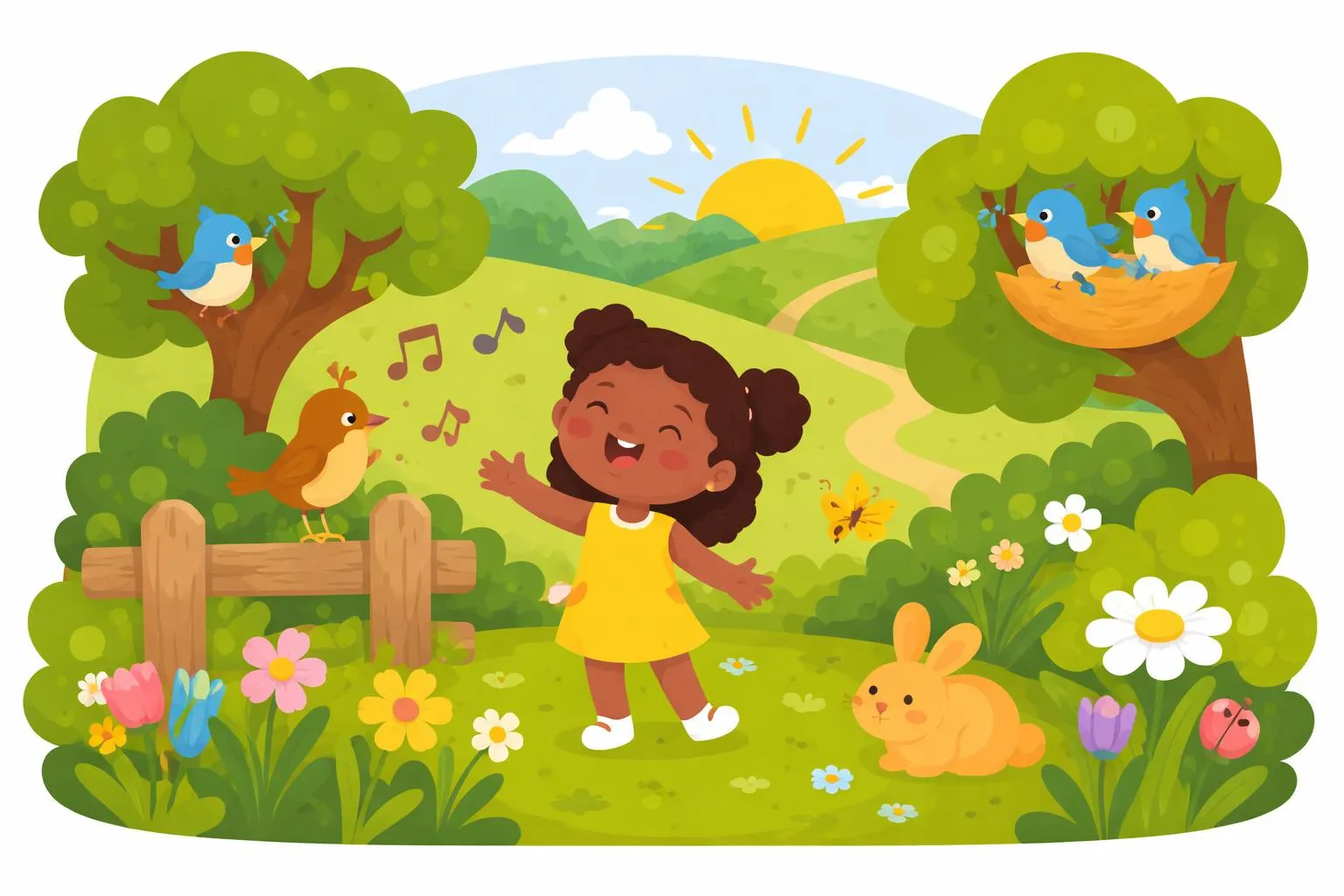
Darkness for sighing and daylight for song,—
Cheery and chaste the strain, heartfelt and strong.
All the night through, though I moan in the dark,
I wake in the morning to sing with the lark.
Deep in the midnight the rain whips the leaves,
Softly and sadly the wood–spirit grieves.
But when the first hue of dawn tints the sky,
I shall shake out my wings like the birds and be dry;
And though, like the rain–drops, I grieved through the dark,
I shall wake in the morning to sing with the lark.
On the high hills of heaven, some morning to be,
Where the rain shall not grieve thro’ the leaves of the tree,
There my heart will be glad for the pain I have known,
For my hand will be clasped in the hand of mine own;
And though life has been hard and death’s pathway been dark,
I shall wake in the morning to sing with the lark.
Explanation and Interpretation
This beautiful poem explores the contrast between night and day, symbolizing sorrow and joy respectively. The night represents times of sadness, worry, and grief, while the dawn symbolizes hope, renewal, and happiness. The speaker acknowledges the hardships and pain experienced during the dark hours but expresses a strong belief that each new morning brings a fresh start and the chance to rejoice, just like the lark that sings at dawn.
The recurring phrase, "I shall wake in the morning to sing with the lark," emphasizes resilience and optimism. No matter how difficult the night (life’s challenges) may be, the arrival of dawn (a new day) offers comfort and the opportunity to be joyful again.
The poem also touches on spiritual themes, hinting at a future time of peace and reunion beyond earthly suffering, where pain will be replaced by gladness and love.
Background and Author Introduction
This poem is a classic example of 19th-century English poetry that often used nature and daily cycles to symbolize human emotions and spiritual truths. The lark, a bird known for its early morning song, frequently appears in poetry as a symbol of hope and renewal.
The author, though not explicitly named here, is likely influenced by the Romantic tradition, which celebrated nature, emotion, and the triumph of the human spirit over adversity. Such poems were often written to comfort readers facing personal or collective hardships, reminding them that darkness is temporary and light will return.
Reflection and Insights
Reading this poem encourages children and students to understand that life includes both difficult and joyful moments, and it is important to remain hopeful during tough times. The metaphor of night and dawn teaches that sorrow is natural but not permanent, and resilience is key to overcoming challenges.
This poem can inspire young readers to develop a positive mindset, appreciate the beauty of nature, and recognize the power of renewal and new beginnings.
Learning Points for Children and Students
- Vocabulary: Words like sorrow, dawn, grieves, heartfelt, pathway enrich students’ language.
- Themes: Understanding hope, resilience, and the cycle of life.
- Literary Devices: Use of symbolism (night and dawn), repetition ("I shall wake in the morning to sing with the lark"), and imagery (rain whipping leaves, shaking wings).
- Emotional Intelligence: Recognizing feelings of sadness and joy and learning to cope with emotions.
- Nature Connection: Observing birds and the natural world as metaphors for human experiences.
Practical Applications and Life Lessons
- In daily life: When facing difficulties such as school stress or personal problems, children can remember this poem’s message to stay hopeful and look forward to better times.
- In learning: Teachers can use this poem to discuss emotional well-being and encourage students to express their feelings through writing or art.
- In social situations: Understanding that everyone experiences sadness can foster empathy and kindness among peers.
Reading Comprehension Questions
- What do the night and dawn symbolize in the poem?
- Why does the speaker say, "I shall wake in the morning to sing with the lark"?
- How does the poem describe the feelings during the night?
- What message does the poem give about dealing with hardships?
- What kind of bird is mentioned, and what does it represent?
- What future hope does the speaker express in the last stanza?
Answers
- Night symbolizes sorrow and sadness, while dawn symbolizes joy and hope.
- The speaker means that despite the sadness felt at night, they will find happiness and strength in the morning, just like the lark that sings at dawn.
- The poem describes feelings of grief, sighing, and moaning during the night.
- The poem encourages resilience and optimism, teaching that hardships are temporary and better times will come.
- The bird mentioned is the lark, which represents hope, renewal, and joy.
- The speaker hopes for a peaceful and joyful future beyond life’s hardships, where pain will be forgotten and love will be shared.
This poem offers a timeless lesson for young readers: no matter how dark or difficult life may seem, there is always hope for a brighter tomorrow. It nurtures emotional strength and inspires a positive outlook on life’s challenges.