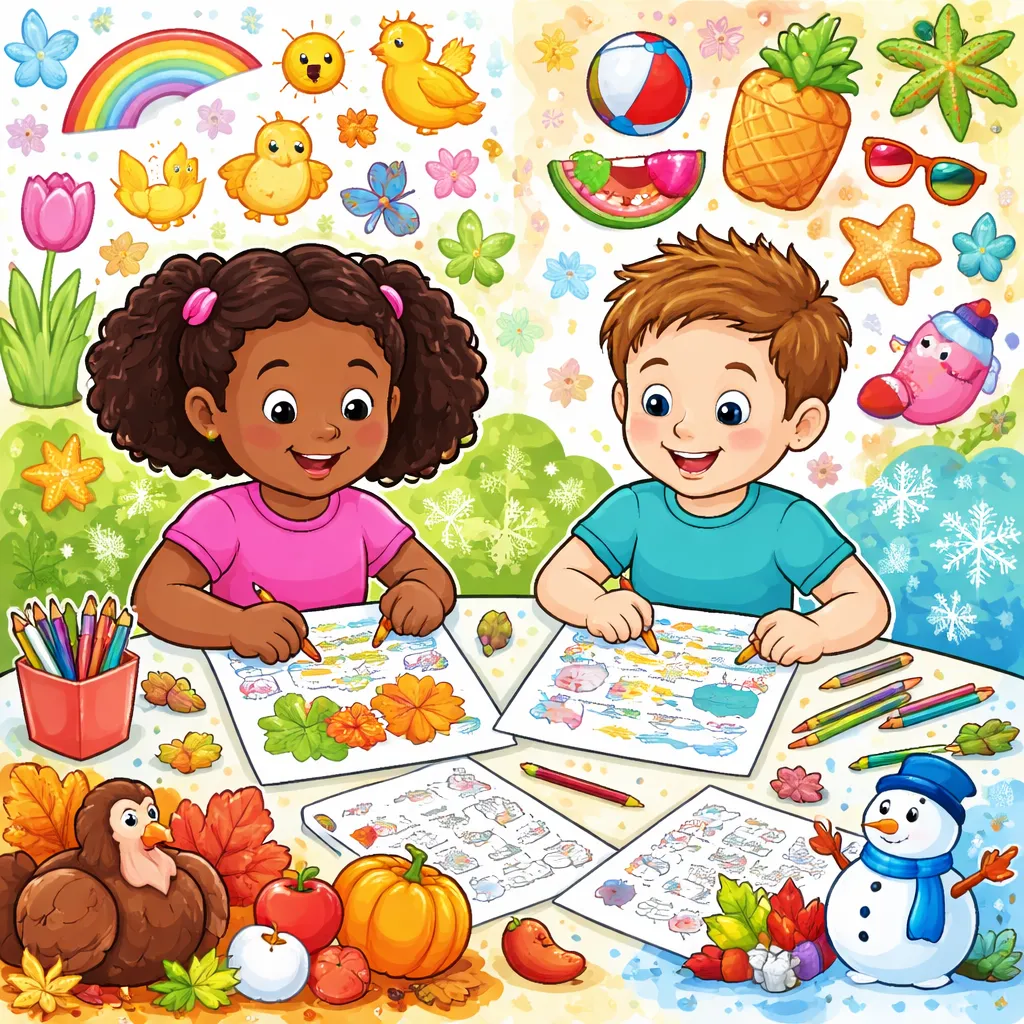

It’s a sunny Saturday morning! You run to your desk and find a stack of colorful papers. There are pictures of flowers, beaches, falling leaves, and snowmen. Your mom says, “These are seasonal vocabulary coloring sheets—let’s color and learn English together!” As you pick up your crayon, you wonder: What words go with each picture? Why do some pictures have suns and others have rain clouds? How can coloring help me talk about the seasons? Today, we’ll explore these magical sheets step by step. You’ll color beautiful pictures, learn new words, and even talk about your favorite season. Get ready for a fun journey through spring, summer, autumn, and winter—all while holding your crayons!
Core Knowledge Explanation First, let’s meet the four seasons! Each season has special features that make it unique. Let’s start with spring. Spring is the season of new life. The weather gets warm, and flowers bloom. You can see birds singing in trees and baby animals playing. The word “spring” is pronounced /sprɪŋ/. A simple sentence: “I love spring because flowers grow.”
Next is summer. Summer is hot and sunny! It’s the time for beaches, ice cream, and long holidays. The sun shines brightly, and we can wear light clothes. “Summer” sounds like /ˈsʌmə(r)/. Example: “We go swimming in summer.”
Then comes autumn (or fall). Autumn is cool and colorful. Leaves turn red, yellow, and orange and fall from trees. Farmers harvest fruits and vegetables. “Autumn” is pronounced /ˈɔːtəm/. Sentence: “I pick apples in autumn.”
Winter is the coldest season. Snow falls, and we can build snowmen or go skiing. We wear warm clothes to stay cozy. “Winter” sounds like /ˈwɪntə(r)/. Example: “It snows a lot in winter.”
Now, let’s learn weather words that match each season. Weather words tell us how the air feels. Here’s a list of common weather words: Sunny /ˈsʌni/: The sun is shining (summer, spring) Rainy /ˈreɪni/: Water falls from the sky (spring, autumn) Windy /ˈwɪndi/: The air moves fast (autumn, spring) Cloudy /ˈklaʊdi/: The sky has many clouds (all seasons) Snowy /ˈsnəʊi/: Snow falls (winter) Warm /wɔːm/: Not cold (spring, autumn) Hot /hɒt/: Very warm (summer) Cold /kəʊld/: Not warm (winter)
Each season needs different clothes. Let’s sort clothing words by season: Spring clothes: Light jacket /laɪt ˈdʒækɪt/, sweater /ˈswetə(r)/, jeans /dʒiːnz/, sneakers /ˈsniːkəz/ Example: “I wear a light jacket in spring.” Summer clothes: T-shirt /ˈtiː ʃɜːt/, shorts /ʃɔːrts/, dress /dres/, sandals /ˈsændlz/, swimsuit /ˈswɪmsuːt/ Example: “She wears a dress in summer.” Autumn clothes: Jacket /ˈdʒækɪt/, scarf /skɑːf/, trousers /ˈtraʊzəz/, boots /buːts/ Example: “He wears a scarf in autumn.” Winter clothes: Coat /kəʊt/, hat /hæt/, gloves /ɡlʌvz/, scarf /skɑːf/, snow boots /snəʊ buːts/ Example: “We wear gloves in winter.”
What activities do we do in each season? Let’s list fun things to do: Spring activities: Fly kites /flaɪ kaɪts/, plant flowers /plɑːnt ˈflaʊəz/, go hiking /ɡəʊ ˈhaɪkɪŋ/, have picnics /hæv ˈpɪknɪks/ Summer activities: Go swimming /ɡəʊ ˈswɪmɪŋ/, eat ice cream /iːt aɪs kriːm/, play beach games /pleɪ biːtʃ ɡeɪmz/, go camping /ɡəʊ ˈkæmpɪŋ/ Autumn activities: Pick apples /pɪk ˈæplz/, jump in leaves /dʒʌmp ɪn liːvz/, go to pumpkin patches /ɡəʊ tu ˈpʌmpkɪn ˈpætʃɪz/, have bonfires /hæv ˈbɒnfaɪəz/ Winter activities: Build snowmen /bɪld ˈsnəʊmen/, go skiing /ɡəʊ ˈskiːɪŋ/, drink hot cocoa /drɪŋk hɒt kəʊkəʊ/, watch movies at home /wɒtʃ ˈmuːviz æt həʊm/
Each season also has special (scenery). Spring has green grass and colorful flowers. Summer has blue skies and clear oceans. Autumn has golden leaves and ripe fruits. Winter has white snow and frost on windows. When you color your seasonal vocabulary coloring sheets, you can use these colors to make the pictures come alive!
Fun Interactive Learning Let’s start with coloring your seasonal vocabulary coloring sheets. Follow these simple steps:
- Look at the top of your sheet—what season does it show? Is it spring, summer, autumn, or winter?
- Find the word list next to the picture. Read each word carefully.
- Choose the right colors for the picture. For example, spring flowers can be pink, yellow, or purple. Winter snow is white.
- Color gently and stay inside the lines. As you color, say the word out loud: “This is a sun—sunny!”
- After coloring, write the word under the picture to practice spelling.
Now, let’s play a “What Season Is It?” game. Look at your colored sheets and answer these questions: What season is it when you see a snowman? (Winter!) What season has blooming flowers and flying kites? (Spring!) When do you wear a swimsuit and eat ice cream? (Summer!) What season has red and yellow leaves falling? (Autumn!)
Let’s try “Is It...?” questions. Use your weather words: Is it hot in summer? (Yes, it is!) Is it snowy in spring? (No, it isn’t. It’s warm!) Is it windy in autumn? (Yes, it often is!) Is it rainy in winter? (Sometimes, but it’s usually snowy!)
Now, let’s write simple season dialogues. Use these sentences to talk with a friend or family member: Dialogue 1: A: What’s your favorite season? B: My favorite season is summer. A: Why do you like summer? B: Because I can go swimming and eat ice cream. A: Is it hot in summer? B: Yes, it is!
Dialogue 2: A: Do you like winter? B: Yes, I do! A: What do you do in winter? B: I build snowmen and drink hot cocoa. A: What clothes do you wear in winter? B: I wear a coat, hat, and gloves.
Dialogue 3: A: What season is it now? B: It’s autumn! A: How’s the weather in autumn? B: It’s cool and windy. A: What do you pick in autumn? B: I pick apples with my family.
Let’s do a “Match the Clothes to the Season” activity. Take your seasonal vocabulary coloring sheets and draw lines between clothes and seasons: T-shirt → Summer Scarf → Autumn and Winter Light jacket → Spring Snow boots → Winter Shorts → Summer Sweater → Spring and Autumn
Another fun game: “Color and Guess.” Color a small part of your sheet and ask a friend: “What season am I coloring? What weather is it?” Let them guess, then show the whole picture!
Expanded Learning Let’s learn a fun season song to remember the words! Sing to the tune of “Twinkle, Twinkle Little Star”: Spring, spring, warm and bright, Flowers bloom with all their might. Summer, summer, hot and sunny, Swim and play, so fun and funny. Autumn, autumn, leaves fall down, Apples red and pumpkins round. Winter, winter, cold and white, Snowmen smile, what a sight!
Did you know different countries have different season activities? In Australia, summer is in December, January, and February. So Australian kids have Christmas on the beach! In Japan, people love to look at cherry blossoms in spring—they call this “hanami.” In Canada, winter is very cold, so many kids go ice skating and play ice hockey.
Let’s learn more season-related words! These are fruits and vegetables for each season: Spring fruits: Strawberries /ˈstrɔːbəriz/, cherries /ˈtʃeriz/ Spring vegetables: Carrots /ˈkærəts/, peas /piːz/ Summer fruits: Watermelon /ˈwɔːtəmelən/, mangoes /ˈmæŋɡəʊz/, grapes /ɡreɪps/ Summer vegetables: Tomatoes /təˈmɑːtəʊz/, cucumbers /ˈkjuːkʌmbəz/ Autumn fruits: Apples /ˈæplz/, pears /peəz/, pumpkins /ˈpʌmpkɪnz/ Autumn vegetables: Potatoes /pəˈteɪtəʊz/, carrots /ˈkærəts/ Winter fruits: Oranges /ˈɒrɪndʒɪz/, bananas /bəˈnɑːnəz/ Winter vegetables: Broccoli /ˈbrɒkəli/, cauliflower /ˈkɒlɪflaʊə(r)/
Here’s a simple sentence to remember the seasons and their weather: Spring: Warm, sunny, rainy—grow, grow, grow! Summer: Hot, sunny—swim, eat, play! Autumn: Cool, windy—fall, pick, harvest! Winter: Cold, snowy—snow, warm, stay!
Let’s practice making longer sentences with our season words. Use “and” to connect two ideas: I like spring because it’s warm and I can fly kites. In summer, we go to the beach and eat ice cream. Autumn is cool and we jump in leaves. Winter is cold and we build snowmen with our friends.
What You Will Learn From these seasonal vocabulary coloring sheets, you will learn many useful things! First, you’ll know the four season words perfectly: spring (/sprɪŋ/), summer (/ˈsʌmə(r)/), autumn (/ˈɔːtəm/), and winter (/ˈwɪntə(r)/). You can say their names, spell them, and know what each season looks like.
You’ll master 8 weather words: sunny, rainy, windy, cloudy, snowy, warm, hot, and cold. You can use these words to talk about how the day feels. You’ll also learn 20+ clothing words, like T-shirt, coat, scarf, and swimsuit. You know which clothes to wear in each season.
There are 16+ activity words, such as fly kites, go swimming, pick apples, and build snowmen. You can talk about what you do in different seasons. You’ll also learn simple句型 (sentence patterns) like “What season is it?”, “Is it...?”, “I like... because...”, “In [season], I...”, and “What do you do in [season]?”
Your thinking skills will get better too! You can tell the difference between seasons by their features, weather, and activities. You’ll learn to connect words to pictures (that’s why coloring helps!). You’ll also practice sorting words into categories, like clothes for summer or activities for winter.
You’ll develop great learning habits: coloring carefully, saying words out loud as you learn, and practicing English through fun activities. You’ll feel more confident talking in English because you’re learning words that are part of your daily life.
Using What You Learned in Life You can use your new English skills at home first! Ask your family: “What’s your favorite season, Mom?” or “Is it windy outside today, Dad?” Show them your colored seasonal vocabulary coloring sheets and say: “Look! This is summer. It’s hot. I wear a T-shirt and shorts.”
When you eat meals, talk about seasonal fruits and vegetables: “This watermelon is a summer fruit. It’s sweet!” or “We have carrots—they grow in spring!” Before going out, check the weather and choose clothes: “It’s rainy today. I need a raincoat. Is it spring or autumn?”
Go outside with your seasonal vocabulary coloring sheets! Look around and say what you see: “The grass is green—this is spring!” or “The leaves are falling—autumn is here!” If you see kids playing, ask: “Do you like summer? Do you want to go swimming?”
Have a family season party! Decorate your home with your colored sheets. Each person picks a season and talks about it. Then, play a game: someone says a weather word, and you run to the corresponding seasonal coloring sheet.
When you travel, use your season words. If you go to the beach in July, say: “It’s summer! I’m so happy to swim!” If you see snow in December, shout: “Winter is here! Let’s build a snowman!” You can also draw and color your own seasonal scenes from your trip—add new words to your sheets!
Closing Encouragement Wow! You’ve done an amazing job with your seasonal vocabulary coloring sheets. You know all four seasons, weather words, clothes, and fun activities. You can color, talk, and play games in English—how wonderful!
Every time you color a sheet, you’re learning more and more. Don’t be afraid to use your new words—practice makes perfect! Even if you make a mistake, it’s okay. Trying is what matters most.
Keep your colored sheets in a special folder. Look at them often to remember the words. Maybe you can make new seasonal vocabulary coloring sheets for your friends—teach them what you’ve learned!
You’re a brave and smart learner. The seasons change, but your English skills will keep growing. Next time you see a flower, a snowflake, or a falling leaf, smile and say the English word. You’re on your way to becoming an English star! Keep coloring, keep learning, and keep talking—we’re so proud of you