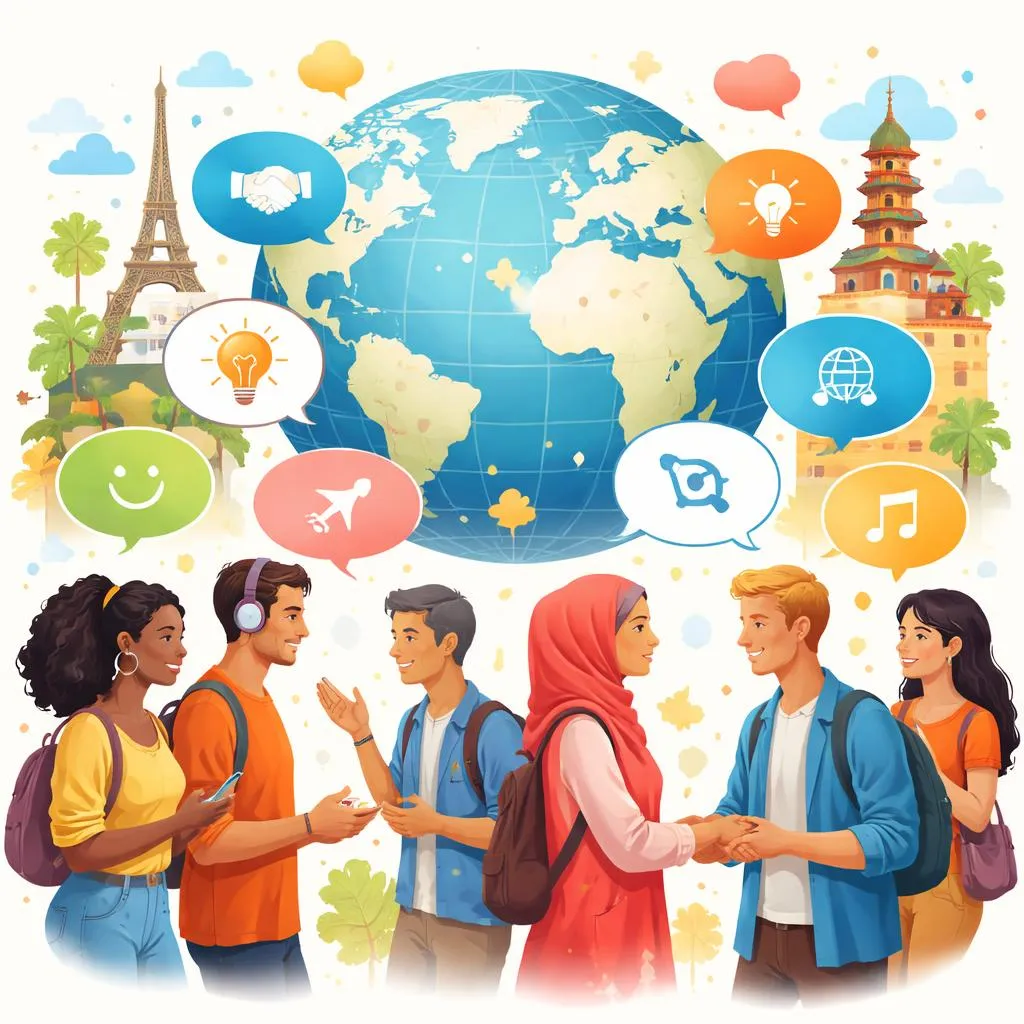

What is a Lingua Franca? A lingua franca is a language that is used to communicate between people who speak different native languages. It allows people to understand each other even if they don’t speak the same language. The term “lingua franca” comes from an old language used for trade and communication between different groups.
A lingua franca helps people communicate across languages.
Why Do We Use a Lingua Franca? We use a lingua franca when we need to communicate with people who do not speak the same language. For example, if someone speaks French and someone else speaks Spanish, they might use English as a lingua franca. It makes communication easier and more effective.
A lingua franca bridges language gaps.
Examples of Lingua Franca English is the most common modern-day lingua franca. It is spoken around the world, often used for business, travel, and education. Other examples of lingua franca include Swahili in East Africa and Arabic in parts of the Middle East.
Lingua franca can be different depending on the region.
The Role of English as a Lingua Franca English has become a global lingua franca. It is spoken by millions of people as a second language. In many countries, English is used for business, science, technology, and education.
English connects people worldwide.
How Lingua Franca Helps in Global Communication A lingua franca allows people from different countries to communicate without needing to learn each other’s languages. For example, when international students study abroad, they often use English as a lingua franca. This makes it possible for people from different cultures to collaborate and share ideas.
Lingua franca helps with global connections.
History of Lingua Franca The term “lingua franca” originally referred to a specific pidgin language used by traders in the Mediterranean Sea region. This language combined elements from many different languages, allowing merchants to communicate easily. Over time, the term began to be used more generally to refer to any language used for communication between speakers of different languages.
The history of lingua franca goes back to trade and cultural exchange.
Lingua Franca and Cultural Exchange Using a lingua franca makes cultural exchange possible. For example, tourists and locals might use a common language to exchange ideas, stories, and traditions. A lingua franca can help people understand each other better and learn about different cultures.
A lingua franca promotes cultural understanding.
Lingua Franca and Multilingual Societies In multilingual societies, a lingua franca is essential. For example, in India, where many languages are spoken, Hindi and English often serve as lingua franca to communicate across regions. This allows people from different linguistic backgrounds to work together and share ideas.
A lingua franca unites multilingual societies.
Lingua Franca in International Business In international business, a lingua franca is very important. Companies from different countries often use English as their lingua franca to communicate with clients, suppliers, and partners. This helps business transactions run smoothly.
A lingua franca makes international business easier.
Lingua Franca and Technology The rise of the internet and technology has increased the use of lingua franca. For example, in online gaming, people from all over the world use English to communicate. In social media, many people also use English or other common languages to connect with others.
Technology helps spread the use of lingua franca.
The Difference Between Lingua Franca and Native Language A lingua franca is not the native language of the speakers. It is used as a common language to communicate. On the other hand, a native language is the language a person grows up speaking.
A lingua franca is a second language for most speakers.
The Importance of a Lingua Franca in Education In education, a lingua franca helps students from different countries learn together. For example, many universities around the world use English as the primary language of instruction. This allows students from different linguistic backgrounds to study together.
A lingua franca is important for international education.
Lingua Franca in Diplomacy and Politics In diplomacy, a lingua franca helps countries with different languages communicate. For example, international organizations like the United Nations often use English and French as their lingua franca for communication. This makes it easier for diplomats to negotiate and work together.
Lingua franca plays a key role in diplomacy.
Lingua Franca in the Arts and Entertainment In the arts and entertainment industry, a lingua franca helps global audiences connect. For example, Hollywood movies are made in English, allowing people from many countries to watch and understand them. Music, sports, and other forms of entertainment also use common languages to connect people.
Entertainment uses lingua franca to unite people.
Lingua Franca and Translation When a lingua franca is used, translation may be necessary for some speakers. For example, if someone speaks Mandarin and their business partner speaks English, they may use a translator. The translator helps them understand each other, using a common language as the bridge.
Translation helps when a lingua franca is not enough.
Challenges of Lingua Franca While a lingua franca helps communication, it can also create challenges. Not everyone is fluent in the lingua franca, and miscommunication can occur. Some people may feel uncomfortable speaking in a second language.
Using a lingua franca can lead to misunderstandings.
The Future of Lingua Franca The role of a lingua franca will continue to grow as the world becomes more interconnected. English will likely remain the most widely used lingua franca, but other languages may also gain prominence in specific regions. The use of lingua franca will help people from different cultures continue to work together.
Lingua franca will evolve with globalization.
: The Importance of Lingua Franca A lingua franca is an essential tool for communication in today’s globalized world. It helps people from different countries, cultures, and backgrounds connect. By using a common language, we can understand each other better and share ideas.
Lingua franca helps unite the world.
The Role of Technology in Expanding Lingua Franca Technology has played a big role in making lingua franca more common. For example, social media platforms connect people who speak different languages. People can use a common language, like English, to share posts and interact with others.
Technology makes it easier to use a lingua franca.
Lingua Franca in International Travel When traveling internationally, a lingua franca helps you communicate with people from other countries. For example, many tourists use English when traveling to foreign countries. This helps people from different countries ask for directions, buy things, and understand signs.
Traveling is easier with a common language.
Lingua Franca in the Business World In the business world, a lingua franca is often used to communicate across borders. For example, multinational companies use English as their lingua franca in meetings and emails. This helps businesses operate in different countries and work with clients from around the world.
Business communication is smooth with a lingua franca.
The Benefits of Learning a Lingua Franca Learning a lingua franca opens up many opportunities. For example, if you know English, you can communicate with people from many different countries. Knowing a lingua franca helps with travel, work, and building relationships with others.
Learning a lingua franca helps you connect with people.
How Lingua Franca Helps with Global Cooperation A lingua franca allows countries to cooperate and solve global problems. For example, the United Nations uses English and French as lingua franca to discuss important issues. This helps countries share ideas and find solutions together.
Lingua franca is key for global cooperation.
Lingua Franca and Education Systems In many countries, students are taught a lingua franca in school. For example, many countries teach English to students as a second language. This gives students the ability to communicate with people from different backgrounds.
Teaching a lingua franca in schools helps students connect globally.
Lingua Franca in Online Communities Online communities are another place where a lingua franca is useful. For example, in online gaming, players from around the world use English to communicate. This helps them work together in teams, solve problems, and play games.
Gaming communities use a common language to connect.
The Role of a Lingua Franca in Scientific Research In the world of science, a lingua franca is essential for collaboration. For example, English is commonly used in scientific journals, research papers, and conferences. This allows scientists from different countries to share their discoveries and learn from each other.
Science relies on a common language to share knowledge.
The Importance of “Cultural Sensitivity” with Lingua Franca While a lingua franca helps people communicate, it’s important to be culturally sensitive. For example, even if English is the common language, people from different cultures may have different ways of speaking. Being aware of cultural differences is important when using a lingua franca.
Cultural sensitivity is important in global communication.
Lingua Franca and Multilingual Countries In multilingual countries, a lingua franca helps people from different language groups communicate. For example, in India, Hindi and English are used as lingua franca between different language communities. This allows people to understand each other despite speaking different native languages.
Lingua franca unites multilingual communities.
Lingua Franca in International Diplomacy In diplomacy, a lingua franca is used to negotiate and discuss international matters. For example, English is often used in diplomatic meetings between countries. This helps diplomats agree on policies and solutions for global issues.
Diplomacy uses a lingua franca to find common ground.
Lingua Franca and the Arts The arts also use a lingua franca to connect people across cultures. For example, many international films are made in English, which allows global audiences to enjoy them. The use of a common language helps share art, music, and culture worldwide.
The arts connect people through a common language.
Lingua Franca and Social Media Social media platforms have made the use of a lingua franca even more common. For example, Twitter, Instagram, and Facebook often use English as their primary language. This allows people from different countries to interact, share posts, and communicate easily.
Social media is a global place for using a lingua franca.
Lingua Franca in International Law In international law, a lingua franca is often used to make agreements and treaties. For example, English is commonly used in legal documents that involve multiple countries. This ensures that all parties can understand the terms and conditions.
Legal agreements are often made with a lingua franca.
Lingua Franca and Language Evolution Over time, a lingua franca can evolve and change. For example, English has borrowed many words from other languages, like French and German. As more people use a lingua franca, it may adapt to meet the needs of speakers.
Lingua franca evolves as languages mix.
The Future of Lingua Franca As the world becomes more interconnected, the role of a lingua franca will continue to grow. English is likely to remain the dominant lingua franca, but other languages may also become important in specific regions. The future of a lingua franca will depend on global communication and cultural exchange.
The future of lingua franca is shaped by global connections.
The Power of Lingua Franca A lingua franca is a valuable tool for communication in a globalized world. It allows people from different countries to connect, share ideas, and work together. By learning a lingua franca, we can break down language barriers and build stronger relationships across cultures.
Lingua franca helps people communicate and collaborate.