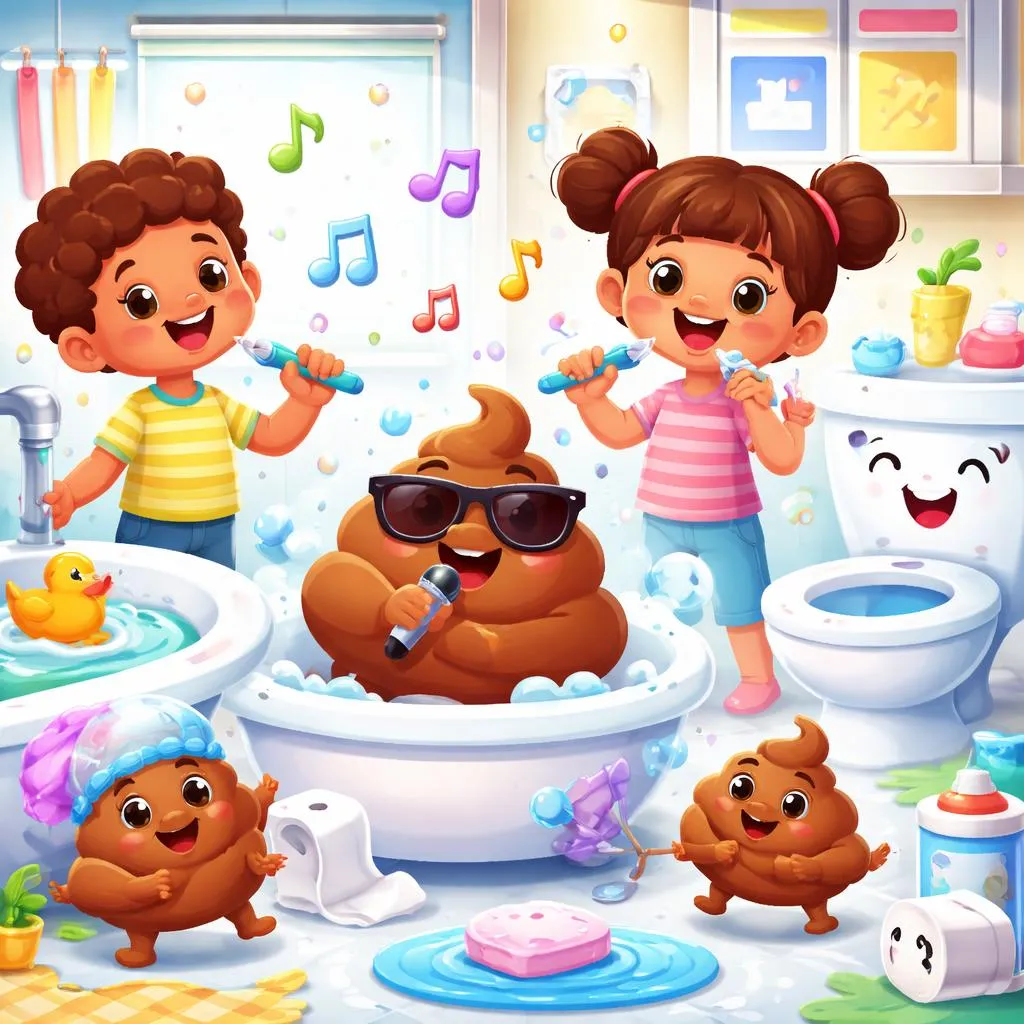

What is the rhyme?
Let's talk about a topic that brings giggles and learning together. A poop song for kids is a playful, often silly, nursery rhyme designed to address a very natural bodily function with humor and positivity. These songs are not about being gross. They are tools for reducing anxiety, teaching body awareness, and encouraging healthy bathroom habits in a lighthearted way.
The magic of a good poop song for kids lies in its ability to normalize a universal experience. It uses rhythm and repetition to make a potentially stressful topic feel manageable and even funny. This approach can be especially helpful during potty training or when teaching young children about their bodies. It turns a private moment into a shared, positive learning opportunity.
The lyrics of nursery rhymes
Lyrics for a poop song for kids are typically simple, repetitive, and set to a familiar tune like "Twinkle, Twinkle Little Star" or "The Farmer in the Dell." They focus on the process and the positive outcome. A common example might be:
When you feel something in your tummy, don't you worry, don't be glum-y. Just sit down on the potty seat, and make the poop go, "Plop!" so neat. Flush the toilet, wash your hands, you did it! Give a cheer across the lands!
Other versions might involve counting ("One push, two pushes, out it goes!") or animal sounds ("Can you poop like an elephant? Brrrummble!"). The lyrics avoid complex metaphors and stay direct, cheerful, and empowering, always ending with a celebration of success and hygiene.
Vocabulary learning
A well-crafted poop song for kids introduces important, practical vocabulary in a comfortable context. It moves beyond the silly word to include proper terms. Key nouns include: body, tummy, potty, toilet, poop, flush, hands, soap, water. These are essential words for daily life and self-care.
The songs are also rich with action verbs that describe the process: feel, sit, push, go, flush, wash, dry, cheer. They often include positive feeling words: good, great, happy, proud, strong. By singing these words, children build the language they need to communicate their needs confidently and understand the steps involved in personal hygiene.
Phonics points
The simple, rhyming structure of a poop song for kids offers great phonics practice. The lyrics often hinge on perfect rhymes that are easy to hear and predict, like tummy/gloomy or seat/neat. This reinforces phonemic awareness—the understanding that words can share similar ending sounds.
We can also highlight alliteration and initial consonant sounds. Phrases like "potty push" emphasize the /p/ sound. Words like "flush" and "wash" feature the distinctive /sh/ digraph. Clapping along to the rhythm of the song helps segment sentences into words and syllables, a foundational pre-reading skill. The engaging topic makes children want to repeat the sounds, aiding memorization.
Grammar patterns
These songs naturally model useful, simple grammar patterns through repetition. A very common structure is the imperative sentence used for giving gentle instructions: "Sit on the potty." "Flush the toilet." "Wash your hands." This is direct and helpful language.
They also use the simple present tense to state facts and routines: "When you feel something... you sit down." The songs frequently employ the connector "and" to sequence events: "Flush the toilet and wash your hands." This teaches chronological order and compound sentences in a very natural, applied way.
Learning activities
The learning extends far beyond the song. A great follow-up activity is "Sequence the Steps" storytelling. Using pictures or simple props, have children put the bathroom routine in order: 1. Feel the need, 2. Sit on the potty, 3. Poop, 4. Flush, 5. Wash hands. They can narrate each step using words from the poop song for kids. This reinforces procedure and vocabulary.
Another activity is "Good Habit Charades." Write down positive actions from the song and related habits on cards (e.g., "washing hands with soap," "flushing the toilet," "drying hands," "saying 'all done!'"). Children take turns acting out the action while others guess. This connects physical movement to the vocabulary in a fun, non-threatening game.
Printable materials
Printable resources can provide visual support and extension. Create a "Bathroom Routine Chart" with simple pictures and short phrases from the song. This chart can be personalized and hung in the bathroom as a positive, musical reminder of the steps. Children can add a sticker after each successful completion, linking the song to real-life achievement.
A "Body-Friendly Words" matching worksheet can be helpful. On one side, have friendly, scientific terms (like tummy, poop, potty). On the other side, have simple, clear definitions or pictures. Matching them helps solidify the appropriate vocabulary, giving children the correct words to use.
Educational games
Turn the theme into playful group learning. Play "The Potty Train Game." Set up chairs in a line like a train. The first child is the "engine" and holds a picture of a toilet. Sing the poop song for kids as the "train" chugs around the room. When the song gets to the "flush and wash" part, everyone pretends to flush and wash hands. Then, the engine goes to the back, and a new child leads. This combines music, movement, and routine practice.
A calm, table-top game is "Healthy Habits Bingo." Create Bingo cards with images of positive actions: a child sitting on a potty, a bar of soap, flowing water, hands being dried, a happy face. Call out the related vocabulary words. Players cover the corresponding image. This reinforces recognition of the habits in a fun, low-pressure setting.
The value of a poop song for kids is profound. It uses the universal language of music and silliness to demystify a natural process, reduce shame, and build confidence. It provides a shared vocabulary for parents and educators to discuss bodies and health positively. By approaching the topic with humor and song, we empower children, ease transitions, and teach that taking care of our bodies is a normal, celebrated part of life. The giggles that come with the song are just the sound of learning and comfort happening all at once.