
Teaching the concept of time to young learners can be challenging. A year is an abstract idea. Months are just names on a calendar. But music changes everything. A good song makes the information stick. The right 12 months of the year song lyrics turn a memorization task into a joyful activity. As teachers, we can use these songs to build a foundation for understanding seasons, dates, and the passage of time. Let's explore how to make the months memorable.
What is the 12 Months of the Year Song? This is a learning song. Its purpose is to teach the names and the order of the months. There are many versions. Some songs are set to familiar tunes like "Three Blind Mice" or "Frère Jacques." Others have original melodies. The common goal is to present the twelve months in a rhythmic, easy-to-repeat format.
Using a song is effective because of the melody and rhythm. They act as a memory aid. When we sing the 12 months of the year song lyrics , we are not just saying words. We are creating a musical pattern in the brain. This pattern helps children recall the sequence later. It turns a list into a story set to music.
The Lyrics of the Nursery Rhyme Let's look at one popular version of the song. It uses a simple, straightforward tune.
January, February, March, April, May, and June. July, August, September, October, November, December. These are the twelve months of the year. Now let's sing them all again, right here!
This version is clear and uncluttered. It groups the months into two lines of three. This grouping makes the list easier to process. The final two lines reinforce the total number and encourage repetition. These 12 months of the year song lyrics provide a solid foundation for learning.
Vocabulary Learning: The Month Names The primary vocabulary is the names of the months themselves. Each one is a new word. We need to pronounce them clearly.
January: We emphasize the first sound, "Jan."
February: This one can be tricky. We pronounce it clearly as "Feb-roo-air-ee."
March: A short, clear word.
April: We say it with a long "A" sound.
May: Another short, clear word.
June: We emphasize the "J" sound.
July: We say "Ju-lye," with the stress on the second part.
August: We say "Aw-gust."
September: We break it down: "Sep-tem-ber."
October: "Oc-to-ber."
November: "No-vem-ber."
December: "De-cem-ber."
We practice these names daily. The 12 months of the year song lyrics give us a fun way to repeat them. Repetition is the key to moving these words from short-term to long-term memory.
Phonics Points: Sounds Within the Months We can use the month names for phonics practice. They contain many common letter sounds.
The "J" sound: January, June, and July all start with the /j/ sound. We can practice writing the letter J and saying its sound.
The "M" sound: March and May start with the /m/ sound. We can feel our lips press together as we make this sound.
The "U" sound: April has a long /a/. June has a long /u/. July has a long /i/. We can compare these vowel sounds.
The "-ber" ending: September, October, November, and December all share the same ending. We can point out this pattern. It shows that many months end with the same sound. This helps with spelling later. The 12 months of the year song lyrics naturally highlight these phonetic patterns.
Grammar Patterns: Capital Letters and Time Words The song helps us teach two important grammar rules.
Proper Nouns: The names of the months are proper nouns. In English, we always capitalize them. As we write the 12 months of the year song lyrics on the board, we point out the capital letters. "Look, January starts with a big J." "February starts with a big F." This visual reminder reinforces the rule.
Prepositions of Time: We use specific words with months. We say "in January" or "in July." We do not say "on January." We can practice this pattern. "My birthday is in May." "School starts in September." The song introduces the names, and we build the grammar around them.
Learning Activities: Making the Months Real Here are some activities to bring the months to life.
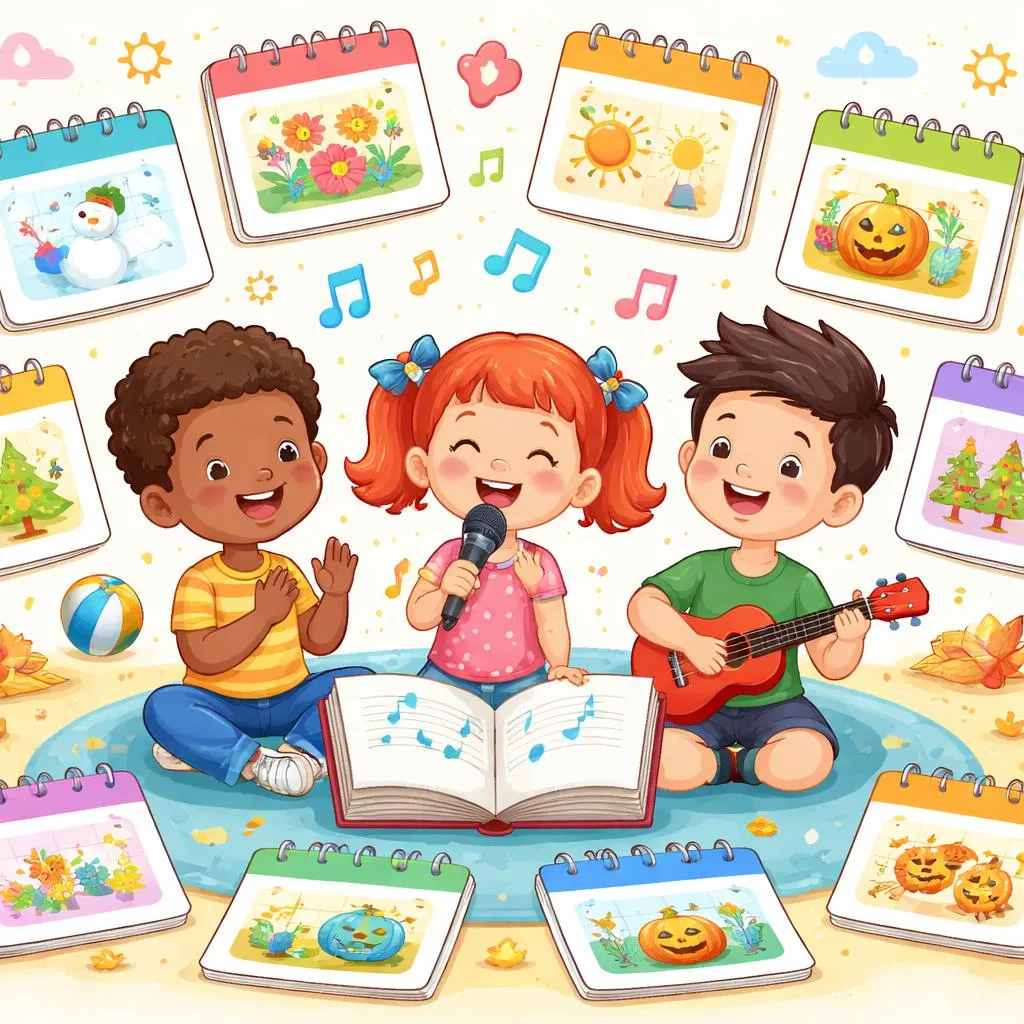
Activity 1: Monthly Picture Cards We create twelve picture cards. Each card represents a month. For January, we use a picture of snow. For July, we use a picture of the sun. For October, we use a picture of a pumpkin. As we sing the 12 months of the year song lyrics , we hold up the corresponding card. This connects the name of the month to a visual symbol and a season.
Activity 2: Birthday Line-Up This activity personalizes the months. We ask each child to say which month their birthday is in. We then line them up in month order. All the January birthdays stand together. Then February, and so on. We can count how many birthdays are in each month. This makes the months relevant to their own lives.
Activity 3: Month Sequencing Game We give small groups of students a set of month cards that are mixed up. They must put the cards in the correct order. To help, they can sing the song quietly to themselves. This uses the 12 months of the year song lyrics as a tool for problem-solving.
Printable Materials: Visual Aids for the Classroom Printables provide a constant visual reference.
Month Posters: We create a set of 12 posters. Each poster has the name of the month, a simple picture, and the number of the month (1 for January, 2 for February). We display these around the room. We can point to them as we sing.
Calendar Template: We provide a blank calendar template for one month. Students can write the name of the current month at the top. They can fill in the dates. This connects the month name to the practical tool we use to track time.
Word Search: We create a simple word search with the twelve month names. This reinforces spelling in a fun, low-pressure way. Students search for January, February, and the rest.
Educational Games: Reinforcing Through Play Games make review exciting and effective.
Game 1: Month Name Race We divide the class into two teams. We say a fact about a month. "This month has Halloween." The teams must guess the month (October). The first team to say the correct month gets a point. This game builds associations and recall.
Game 2: What Month Comes Next? We start singing the 12 months of the year song lyrics . Suddenly, we stop. We point to a student. They must say the next month in the sequence. For example, we sing, "January, February, March, April, May, and..." and then we stop. The student must say "June." This quick game builds automatic recall.
Game 3: Order the Months Relay We place two sets of month cards at one end of the room. Students are in teams at the other end. One student from each team runs to the cards, finds a specific month (for example, "Find July!"), and brings it back. The next student goes. The goal is to collect all the months in order. This combines movement with learning.
By using these strategies, we make the months of the year meaningful. The 12 months of the year song lyrics provide the structure. Our activities and games provide the context. Together, they build a deep understanding of the yearly cycle. We guide our students through the calendar, one month at a time.