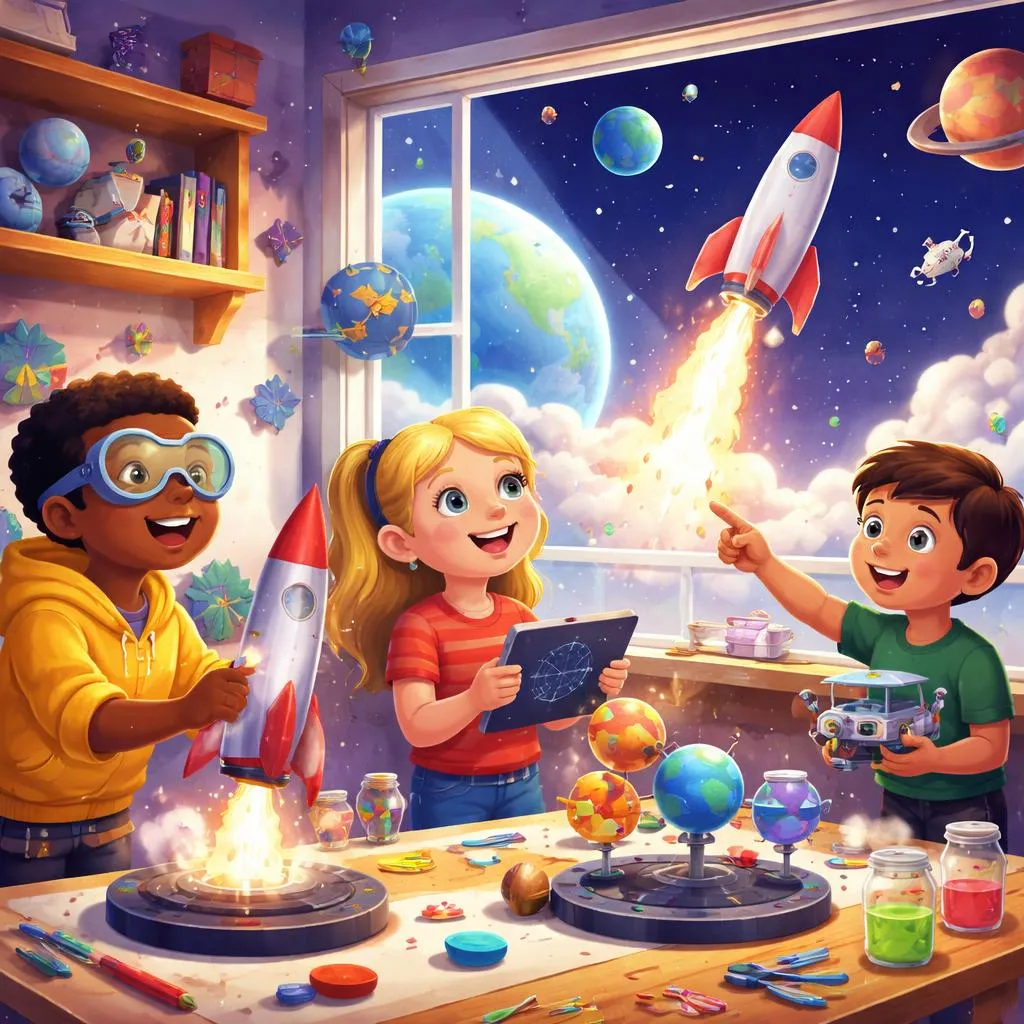

There is something magical about space. The stars, the planets, the moon, and the sun capture children's imaginations. They look up at the night sky and wonder. They dream of being astronauts. They imagine traveling to distant worlds. Planning space themed activities allows us to channel this natural curiosity into powerful learning experiences. We can teach science, math, literacy, and art all through the lens of space exploration. Let's explore how to bring the cosmos into our classroom.
What Are Space Themed Activities? Space themed activities are learning experiences built around the topic of space. They explore the sun, moon, stars, planets, astronauts, rockets, and galaxies. These activities can cover many subject areas while keeping a consistent space theme.
A space theme might include learning the names of planets. It might include building model rockets. It might include reading stories about astronauts. It might include creating art about the night sky. The theme ties everything together. It makes learning cohesive and exciting. Good space themed activities spark wonder and encourage children to ask big questions about the universe.
Meaning and Explanation: Why Teach About Space? Teaching about space serves many important purposes.
First, it builds science knowledge. Children learn basic astronomy. They learn that the Earth is one of many planets. They learn that the sun is a star. They learn about day and night, and about the seasons.
Second, it develops vocabulary. Words like astronaut, telescope, galaxy, and orbit become part of their language.
Third, it encourages curiosity and wonder. Space is mysterious. There is still so much we do not know. This mystery inspires children to ask questions and seek answers.
Fourth, it connects to many subject areas. We can do space math, counting rockets and stars. We can do space literacy, reading books about the moon. We can do space art, painting galaxies. We can do space science, learning about gravity.
Finally, space themed activities are naturally engaging. Children love the topic. They are eager to participate. This motivation makes learning easier and more effective.
Categories or Lists: Types of Space Activities We can organize space themed activities into different categories.
Science Activities:
Learning about the planets and their order from the sun
Experimenting with gravity and orbits
Exploring day and night with flashlights and globes
Learning about the phases of the moon
Discussing what astronauts need to survive in space
Art Activities:
Painting galaxies with watercolors
Creating planet mobiles
Making constellations with black paper and star stickers
Designing space helmets from paper bags
Building rockets from cardboard tubes
Math Activities:
Counting stars and planets
Measuring distances between planets (using scale models)
Sorting and classifying space objects
Creating patterns with stars and moons
Graphing favorite planets
Literacy Activities:
Reading books about space
Writing stories about imaginary space journeys
Learning space vocabulary words
Creating space-themed poems
Writing postcards from other planets
Dramatic Play Activities:
Setting up a space station in the classroom
Pretending to be astronauts on a mission
Building a rocket ship from large boxes
Communicating with mission control
Movement Activities:
Moving like astronauts in slow motion
Floating like in zero gravity
Rocket ship launches with countdowns
Orbiting around a "sun" in the classroom
These categories help us plan a well-rounded unit of space themed activities.
Daily Life Examples: Bringing Space into the Routine We can weave space into our daily classroom life.
Morning Greeting: "Good morning, astronauts! Ready for another day of space exploration?"
Calendar Time: We note the phase of the moon each day. We keep a moon journal.
Story Time: We read space-themed books throughout the unit. "Goodnight Moon," "Papa, Please Get the Moon for Me," and nonfiction books about planets.
Snack Time: We have space snacks. Round cookies decorated like planets. Star-shaped sandwiches. Rocket ship fruit kabobs.
Transition Times: We use countdowns to move between activities. "Five, four, three, two, one, blast off to the carpet!"
Closing Circle: We share one new thing we learned about space today. "Today I learned that Jupiter is the biggest planet."
By weaving space into the daily routine, we keep the theme alive and meaningful.
Printable Flashcards: Visual Tools for Learning Flashcards support space themed activities by providing visual references.
Planet Cards: We create cards for each planet. Each card has a picture of the planet, its name, and one key fact. Mercury is closest to the sun. Venus is the hottest. Earth is our home. Mars is the red planet. Jupiter is the biggest. Saturn has rings. Uranus spins on its side. Neptune is very windy.
Space Object Cards: We create cards for other space objects. Sun, moon, stars, asteroid, comet, galaxy, meteor.
Astronaut Equipment Cards: We create cards showing what astronauts need. Spacesuit, helmet, gloves, boots, oxygen tank, rocket, space shuttle.
Vocabulary Cards: We create cards with space words and simple definitions. Orbit, gravity, telescope, astronaut, launch, land.
These flashcards become a resource students use during space themed activities.
Learning Activities or Games: Hands-On Ideas Here are specific space themed activities to use in the classroom.
Activity 1: Planet Walk We create a scale model of the solar system in the hallway or playground. We place a large yellow ball for the sun. We mark distances for each planet. Students walk from the sun to each planet. They see how far apart the planets really are. This builds understanding of scale.
Activity 2: Moon Phases with Cookies We use round cookies or crackers with frosting. Students create the phases of the moon by eating away parts of the cookie. Full moon, half moon, crescent moon. This tasty activity makes the concept memorable.
Activity 3: Build a Rocket We provide cardboard tubes, paper, foil, and markers. Students design and build their own rockets. They name their rockets. They can later use them in dramatic play.
Activity 4: Star Constellation Creation We provide black paper and star stickers. Students create their own constellations. They give them names and make up stories about them. This combines art, creativity, and storytelling.
Activity 5: Astronaut Training We set up an astronaut training course. Students crawl through tunnels, balance on beams, and complete tasks while wearing "space gloves" (oven mitts). This simulates the difficulty of moving in a spacesuit.
Activity 6: Space Sensory Bin We create a sensory bin with black beans or rice as the "space." We add small planet toys, star erasers, and astronaut figures. Students explore and create space scenes.
Activity 7: Gravity Experiment We drop different objects. Which falls faster? A feather or a rock? We talk about how gravity works on Earth and how it is different on the moon.
Activity 8: Space Station Dramatic Play We transform a corner of the room into a space station. We add a cardboard rocket, control panels made from boxes, and space helmets. Students take turns being astronauts and mission control.
Activity 9: Planet Order Song We create a simple song to remember the order of the planets. "Mercury, Venus, Earth, Mars, Jupiter, Saturn, Uranus, Neptune." Singing helps memory.
Activity 10: Alien Visitor We imagine an alien has come to visit Earth. What would we show them? What would we tell them about our planet? Students draw or write about what they would share.
By using these space themed activities, we create a classroom environment full of wonder and discovery. Students learn about the universe while developing skills across all subject areas. They become space explorers, astronauts, and scientists. They look up at the night sky with new understanding and appreciation.