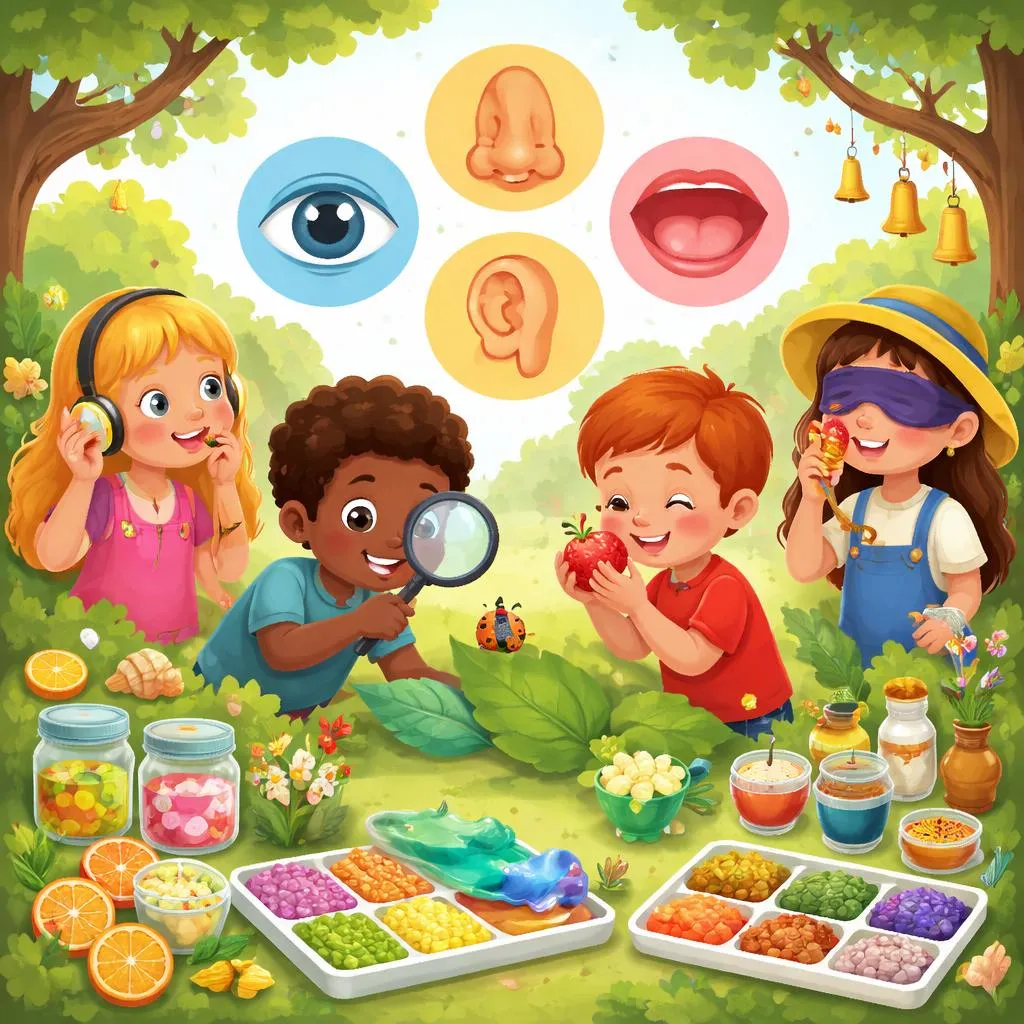

What Are The 5 Senses?
Let us begin our discovery. We understand the world through our senses. Think of them as our body's special tools. These tools gather information and send it to our brain. We use this information to learn, play, and stay safe. The five main senses are sight, hearing, smell, taste, and touch. Each sense has a unique and important job. Together, they help us experience everything from a sunny day to a delicious meal.
We often use our senses without thinking about them. Today, we will focus on each one. We will learn how they work. Then, we will explore some wonderful 5 senses games. These games turn learning into an active adventure. They help children connect ideas to real experiences. Are you ready to start this sensory journey?
Meaning and Explanation
Each sense has a specific organ and a type of input it receives. Imagine each sense as a different detective. Each detective looks for a particular clue. Sight uses our eyes to detect light, color, and shape. Hearing uses our ears to capture sound waves and vibrations. Smell uses our nose to identify tiny particles in the air.
Taste uses taste buds on our tongue to recognize chemical flavors. Touch uses nerve endings in our skin to feel pressure, temperature, and texture. These detectives always work as a team. For instance, when you pet a cat, you see its fur, hear its purr, smell its scent, feel its softness, and maybe even taste your snack afterward. Our 5 senses games will help us practice using each detective's skills.
Categories or Lists
We can organize the senses into a simple list for easy learning. First is Sight. Our eyes help us read, recognize faces, and enjoy colors. Second is Hearing. Our ears allow us to listen to stories, follow instructions, and enjoy music. Third is Smell. Our nose can detect wonderful aromas and important warnings, like smoke.
Fourth is Taste. Our tongue helps us enjoy food and identify if something is sweet, salty, sour, or bitter. Fifth is Touch. Our skin helps us feel a hug, the ground under our feet, and the texture of objects. Some discussions include balance or intuition as another sense. For our learning today, we focus on these primary five. They are the perfect foundation for our upcoming 5 senses games.
Daily Life Examples
Our senses are active from the moment we wake up. Let's find examples in a regular morning. You see the light coming through the curtains. You hear the sound of an alarm or birds singing. You smell toast or soap. You taste your orange juice or cereal. You feel the texture of your toothbrush and the temperature of the water.
Later at school or home, you see words in a book. You hear someone calling your name. You smell a pencil's wood or a crayon's wax. You taste your lunch. You feel the smooth page of a book. Playing outside offers even more examples. Noticing these moments makes the concept real. It also builds excitement for the hands-on 5 senses games we will try.
Printable Flashcards
Printable flashcards are wonderful visual tools. They make learning each sense clear and concrete. You can easily create a set. On one side, draw or paste a picture representing the sense. Draw a large eye for "sight," an ear for "hearing," a nose for "smell," a tongue for "taste," and a hand for "touch."
On the back, write the sense name and a few descriptive words. For "touch," you might write: soft, bumpy, cold, smooth. Use these cards for simple review or sorting games. You can also play a matching game with two identical sets. This activity builds vocabulary and prepares young learners for more interactive 5 senses games. It’s a calm, focused way to start.
Learning Activities and Games
Now, let's explore the games! The best 5 senses games are simple, engaging, and use everyday items. The goal is mindful exploration and joyful discovery. We will look at activities for each sense individually, followed by games that combine them all.
For Sight, try a "Texture Scavenger Hunt." Give children a list of textures to find only using their eyes. The list can include: something shiny, something fuzzy, something striped, something transparent. This game sharpens observation. Another is "Shadow Play." Use a flashlight and toys to create shadows on a wall. Guess the object based only on its shadow shape.
For Hearing, "Sound Mapping" is a calming game. Sit quietly indoors or outside. Listen for one minute. Then, draw or write every sound you heard. Did you hear a clock ticking? A car passing? A bird chirping? This builds listening focus. Another classic is "Musical Statues." Dance when the music plays and freeze when it stops. This connects hearing to physical movement.
For Smell, create "Scented Paint." Add a drop of food essence like peppermint or orange to washable paint. As children paint, they will engage both sight and smell. Ask them to describe the scent. "Smell Canisters" are always a hit. Place different familiar scents in small, opaque jars with vented lids. Scents can include cinnamon, coffee, soap, or dried herbs. Can they guess each one?
For Taste, have a "Sweet vs. Sour" tasting. Use very safe, familiar foods like apple slices and lemonade. Compare and describe each taste. A more involved game is "Guess the Flavor." Use plain yogurt or applesauce as a base. Mix in a small amount of another flavor like strawberry jam, honey, or vanilla. Blindfold the taster or have them close their eyes. Can they identify the secret ingredient?
For Touch, the "Mystery Bag" is essential. Place several common objects with distinct textures inside a cloth bag. Items could be a pinecone, a spoon, a piece of velvet, a rubber ball. The child reaches in without looking, feels one item, and describes it before guessing. "Texture Sorting" is another great activity. Provide a collection of fabric swatches, sandpaper, foil, and cardboard pieces. Sort them into piles like "rough" and "smooth."
The most engaging 5 senses games combine multiple senses. Try a "Sensory Walk." Create different panels on the floor using safe materials. Walk on bubble wrap, a damp towel, dry leaves, and a soft rug. Discuss what you see, hear, and feel with your feet. Another full-sense game is "Descriptive Snack Time." Choose a snack like popcorn or a cracker. Before eating, describe it. What does it look like? What sound does it make when you break it? How does it smell? What is the texture when you touch it? Finally, how does it taste?
These activities do more than teach science. They build vocabulary, focus, and observational skills. They encourage children to be curious explorers in their everyday world. The key is to talk about each experience. Ask open-ended questions. What did you notice? How did it feel? What did it remind you of? This reflective talk deepens the learning. Keep the atmosphere playful and pressure-free. The most important thing is to foster a sense of wonder about how our amazing bodies work.