
What is the rhyme?
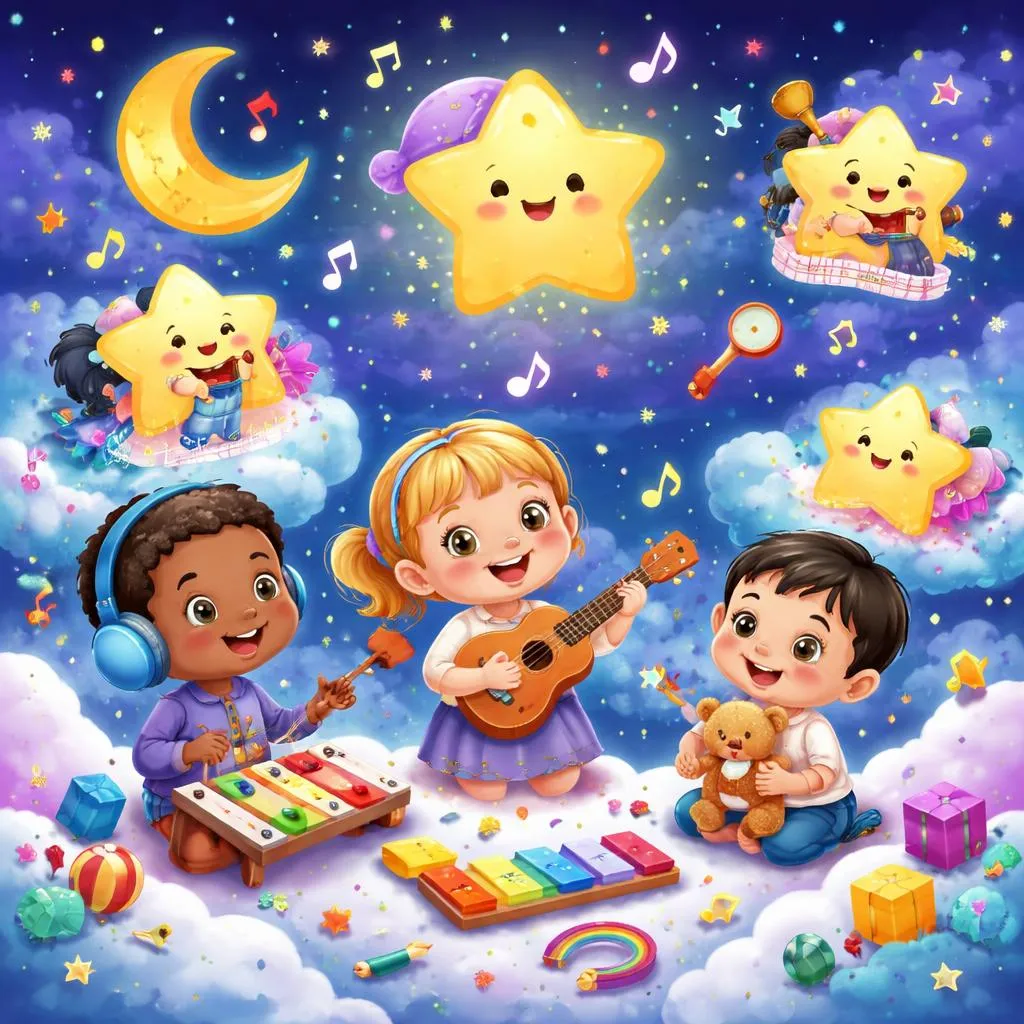
Let's look up at the night sky together through song. The search for "trickle little star" likely points to a common mishearing or creative variation of the world's most famous lullaby: "Twinkle, Twinkle, Little Star." This classic nursery rhyme, with its gentle melody and wondering lyrics, is often a child's first introduction to poetry, music, and the night sky.
The charm of this song, whether sung as "twinkle" or remembered as "trickle," lies in its simplicity and sense of wonder. It poses a beautiful question to a distant star, transforming a celestial object into a friendly, sparkling point of light a child can talk to. Its predictable rhythm and structure make it a perfect tool for early language development and a comforting bedtime ritual.
The lyrics of nursery rhymes
The traditional lyrics of "Twinkle, Twinkle, Little Star" are a single, elegant stanza. The song most children learn is:
Twinkle, twinkle, little star, How I wonder what you are! Up above the world so high, Like a diamond in the sky. Twinkle, twinkle, little star, How I wonder what you are!
The rhyme scheme is simple (AABB), and the rhythm is a steady, rocking meter. The repetition of the first two lines at the end creates a comforting, circular feeling. The word "trickle" is not in the standard lyrics, but it's an understandable mix-up! "Trickle" describes small drops of liquid flowing, which might be how some young listeners hear the soft, repetitive sounds of "twinkle, twinkle." Exploring this can be a fun way to talk about sounds and words.
Vocabulary learning
This short song is packed with rich, imaginative vocabulary. It introduces key nouns related to nature and the cosmos: star, world, sky, diamond. These words open conversations about science, space, and precious things in a poetic way.
The song is excellent for adjectives that describe appearance, position, and similarity: little, high, above, like. The core verb, twinkle, is a wonderfully descriptive word for light that seems to flicker or shine unevenly. If exploring the "trickle" variation, we can compare it to twinkle—both describe gentle, repetitive motions (of light or water). This builds vocabulary through comparison and curiosity.
Phonics points
Whether singing "twinkle" or discussing "trickle," this song is a fantastic resource for phonics. The most prominent feature is the clear rhyme between star/are and high/sky. This helps children identify similar ending sounds.
We can focus on several initial consonant blends and sounds. The /tw/ blend in twinkle is less common and great for practice. The /tr/ blend in trickle is also a useful sound to master. The /w/ sound appears in wonder and what, and the /sk/ blend is in sky. We can also highlight the long I sound in I, high, sky. Tapping the beat helps children feel the syllables in words like won-der (2) and dia-mond (2).
Grammar patterns
This rhyme beautifully illustrates several basic grammar patterns. The opening line is a classic example of a vocative phrase—directly addressing the star. The line "How I wonder what you are!" is an exclamatory sentence expressing strong feeling and contains an embedded clause.
The simile "Like a diamond in the sky" is a gentle, perfect introduction to figurative language, showing how we compare two unlike things (a star and a diamond) using "like" or "as." The repetitive structure reinforces these patterns naturally and musically.
Learning activities
A wonderful art-and-science activity is "Star Scopes." Provide black construction paper and toothpicks. Let children punch tiny holes in the paper to create their own constellations. Hold the papers up to a window. They will see light "twinkle" through the holes, physically illustrating the song's main verb. You can discuss how light "trickles" through the small holes, connecting both word ideas.
Another activity is "Rhyming Word Hunt." After singing, write the words star and high on a board. Ask learners to brainstorm or find objects in the room that rhyme. This builds phonemic awareness. You can also introduce trickle and find rhyming words like pickle or fickle for fun, advanced play.
Printable materials
Create a "Twinkle Twinkle Storyboard." This printable sheet has four boxes in a row. Each box has a line from the song (1. Twinkle, twinkle... 2. Up above the world... etc.) and a space for drawing. Children draw their interpretation of each line, creating a visual story sequence that reinforces comprehension and vocabulary.
A "Word Family Sparkle" worksheet is great for phonics. At the top, draw a large star with "-ar" in the center. Around it, have smaller stars with beginnings: st-, c-, f-, j-, b-. Children write the complete word on each small star (star, car, far, jar, bar). This turns word family practice into a themed, engaging task.
Educational games
Play "Star, Star, Moon!" (a variation of Duck, Duck, Goose). Children sit in a circle. One walks around, gently tapping heads saying "star" each time. When they say "moon!" the tapped child chases them. This connects the theme to a high-energy game.
For a calming listening game, try "Musical Star Pass." Sit in a circle and pass a glittery star cut-out while singing. Whoever holds the star when the song finishes must say one thing they "wonder" about, using the frame: "I wonder how/why/what ______." This encourages curiosity and full-sentence speaking.
Exploring "trickle little star" opens a delightful door to language play. It shows how songs can be remembered in unique ways, and how we can explore similar-sounding words. By using the beloved melody of "Twinkle, Twinkle" as a foundation, we can teach phonics, vocabulary, grammar, and creative thinking. This approach celebrates curiosity—about words, stars, and the sounds we hear—turning a simple mix-up into a memorable learning moment that sparkles with possibility.