
What is the rhyme?
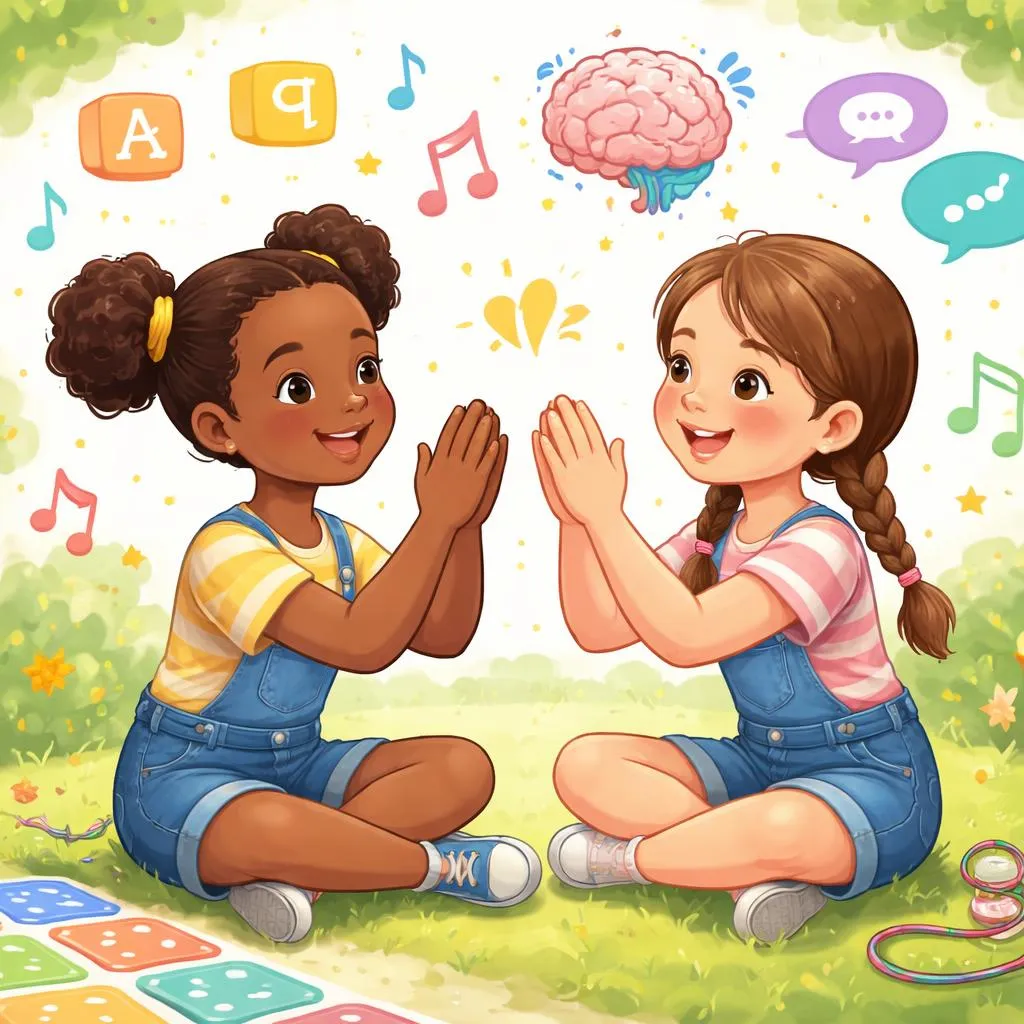
Mary Mack song is a traditional English clapping rhyme. It comes from playground culture and oral tradition. Learners sing it while clapping hands in rhythm with a partner.
This rhyme supports listening, speaking, and coordination. Teachers often use it to build rhythm awareness and social interaction. It also strengthens memory through repetition and rhyme.
In early English learning, this song connects language with movement and play.
The lyrics of nursery rhymes
Miss Mary Mack, Mack, Mack, All dressed in black, black, black. With silver buttons, buttons, buttons, All down her back, back, back.
She asked her mother, mother, mother, For fifty cents, cents, cents. To see the elephants, elephants, elephants, Jump over the fence, fence, fence.
The repetitive structure makes the lyrics easy to memorize. The rhythm supports pronunciation and fluency practice.
Vocabulary learning
The Mary Mack song introduces useful everyday vocabulary. Dress, black, silver, buttons, mother, cents, elephant, and fence appear in the rhyme.
Black and silver are colors. Buttons are small fasteners on clothes. Elephants are large animals. A fence is a barrier around a place.
Teachers connect these words to pictures and real objects. Learners touch buttons, point to colors, and look at animal images. This multisensory approach supports strong word retention.
Teachers also introduce money vocabulary through cents. This connects language with basic math and daily life.
Phonics points
This rhyme offers strong phonics practice. Mack and black highlight the short /æ/ sound. Back and fence highlight consonant blends and final sounds.
Buttons introduces the /t/ sound in connected speech. Elephant introduces the /e/ and /f/ sounds.
Teachers isolate sounds and practice blending. Learners repeat Mack, black, back, and fence slowly. Rhyming patterns help build phonemic awareness.
Clapping while singing reinforces syllable stress. This supports natural English rhythm and intonation.
Grammar patterns
The Mary Mack song shows simple sentence patterns. All dressed in black uses a descriptive phrase. She asked her mother shows past tense structure.
Teachers can expand grammar with guided practice. Mary is dressed in red. She asked her teacher for help.
Nouns, adjectives, and verbs appear in meaningful context. This supports early sentence comprehension and production.
Teachers also highlight repetition patterns. This repetition helps internalize structure and syntax.
Learning activities
Partner clapping builds coordination and social interaction. Learners sing and clap in pairs. They follow rhythm and eye contact.
Role play enhances speaking practice. One learner becomes Mary Mack. Others ask questions and respond with simple sentences.
Story extension activities deepen comprehension. Teachers ask about Mary’s clothes and her elephants. Learners draw or describe new scenes.
Movement activities connect lyrics to actions. Learners jump like elephants and pretend to cross a fence.
Sentence building tasks reinforce grammar. Mary has silver buttons. The elephants jump high.
Printable materials
Printable lyric sheets support reading practice. Large font and clear spacing help early readers.
Flashcards show Mary, buttons, elephants, and fences. Word cards support spelling recognition.
Clapping pattern charts guide rhythm practice. Learners follow hand symbols to clap correctly.
Coloring pages integrate art and language. Learners color Mary’s dress and label colors.
Mini-books retell the rhyme with pictures and short sentences. These materials support independent reading and review.
Educational games
Rhythm games strengthen listening and timing. Teachers clap patterns and learners repeat them.
Rhyming word games reinforce phonics. Learners match Mack with black and back.
Memory card games build vocabulary recall. Picture and word pairs reinforce recognition.
Role play games encourage spoken interaction. One learner asks for fifty cents. Another learner responds in simple English.
Digital clapping games provide visual rhythm cues. Learners follow animations and sing along.
Creative storytelling games expand imagination. Learners add new verses about Mary’s day.
The Mary Mack song offers a powerful blend of rhythm, language, and movement. It connects phonics, vocabulary, grammar, and social interaction in one playful activity. Through guided singing, clapping, storytelling, and printable materials, this rhyme supports holistic English development and joyful classroom engagement.