
Meaning of the Verb “have “
The verb have “ is one of the most important words in English. It expresses possession, experience, actions, and relationships. This word appears in daily conversations, stories, and classroom instructions.
In early language learning, have “ builds the foundation for simple sentences and basic communication. Understanding this verb helps with speaking, reading, and writing.
Conjugation of the Verb “have “
The verb have “ changes form based on the subject and the tense. These forms help express time and meaning clearly.
In the present tense, the forms are have and has.
In the past tense, the form is had.
In the future tense, the structure will have is used.
These changes follow clear grammar rules that support accurate sentence building.
Present Tense of “have “
The present tense describes actions or states that happen now or regularly.
I have a book. You have a pencil. We have a class today. They have a project.
He has a notebook. She has a backpack. It has a label.
The form has is used with he, she, and it. The form have is used with I, you, we, and they.
Past Tense of “have “
The past tense form had describes something that happened before now.
I had a test yesterday. You had a question. We had fun in class. They had homework.
He had a new ruler. She had a storybook.
The past form stays the same for all subjects. This makes it easy to remember.
Future Tense of “have “
The future tense describes something that will happen later.
I will have a lesson tomorrow. You will have a quiz next week. We will have a project. They will have a school trip.
The structure will have stays the same for all subjects.
Questions with “have “
Questions help with classroom interaction and daily conversation.
Do you have a pencil? Do they have a notebook?
Does he have a backpack? Does she have a dictionary?
Did you have homework? Did they have a test?
Will you have a class tomorrow?
Question forms use do, does, did, or will before have. This structure supports clear communication.
Other Uses of “have “
The verb have “ has many meanings beyond possession.
Have can describe experiences. Have can describe meals. Have can describe activities.
Examples show these meanings.
Have a snack. Have a lesson. Have a party. Have a walk. Have fun.
Have also appears in common expressions.
Have a look. Have a try. Have a seat.
These expressions appear in classroom language and daily conversation.
Daily Life Examples with “have “
Classroom routines often use this verb.
We have English class today. The class has a new student. The teacher has a storybook.
Family routines also use this verb.
I have breakfast at home. We have dinner together. They have a pet.
These examples connect grammar to real life.
Grammar Patterns with “have “
Simple sentence patterns help with early speaking.
Subject + have + object I have a pencil.
Subject + has + object She has a book.
Negative patterns also appear in early grammar.
I do not have a ruler. He does not have a pen.
These patterns support basic sentence building.
Phonics Focus with “have “
The word have “ starts with the /h/ sound. This sound is common in English.
The short vowel sound /æ/ appears in have. This sound appears in cat and bag.
Phonics practice connects sounds to spelling and meaning.
Learning Tips for Teaching “have “
Real objects help with understanding. Holding a pencil and saying “I have a pencil” connects language to reality.
Visual cards support memory. Pictures with sentences reinforce meaning.
Repetition strengthens confidence. Short daily practice sessions improve retention.
Context-based practice improves understanding. Classroom routines provide natural examples of have “.
Learning Activities with “have “
Role-play activities support speaking practice. A classroom shop can use sentences like “I have a book” or “Do you have a pen?”
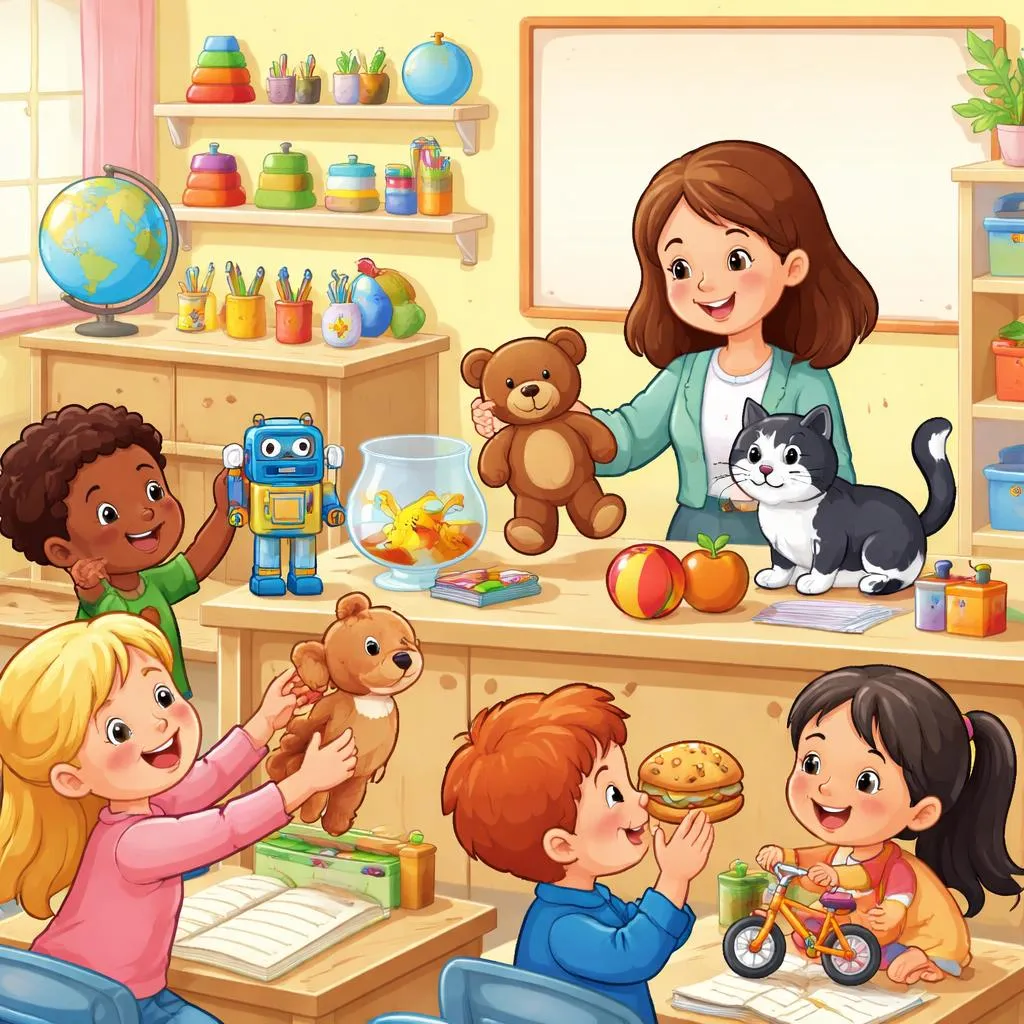
Picture description tasks help with sentence creation. A picture of a classroom can prompt sentences using have “.
Sentence building activities use word cards. Cards with subjects and objects form complete sentences.
Story creation activities allow creative language use. A short story about school supplies can include many have “ sentences.
Educational Games with “have “
A guessing game builds listening skills. One student describes an item using have “, and others guess the object.
A memory game uses sentence pairs. Matching cards include sentences with have “ and pictures.
A sentence race game builds fluency. Teams create correct sentences with have “ quickly.
A bingo game includes pictures of objects and sentences with have “. This game supports recognition and comprehension.
Printable Materials for “have “
Flashcards with pictures and sentences help with review.
Worksheets with fill-in-the-blank sentences support writing practice.
Mini books with simple stories include repeated have “ structures.
Printable posters show conjugation charts for classroom reference.
Classroom Language with “have “
Teachers often use this verb in instructions.
Have a seat. Have a look at the board. Have your books ready. Have a partner.
Understanding these phrases improves classroom participation and confidence.
Story-Based Learning with “have “
Short stories make grammar meaningful. A story about a classroom day can include many examples of have “.
The class has a new pet. The teacher has a big book. The students have many questions.
Stories support reading comprehension and grammar recognition.
Integration with Other Grammar Topics
The verb have “ connects with possessive adjectives.
I have my book. She has her pencil.
It also connects with plural nouns.
They have two notebooks. We have many crayons.
This integration supports broader grammar development.
The verb have “ forms a core part of English grammar for early learners. Clear explanations, real-life examples, and engaging activities build strong communication skills. Continuous practice with simple sentences helps language grow naturally in classroom and daily settings.