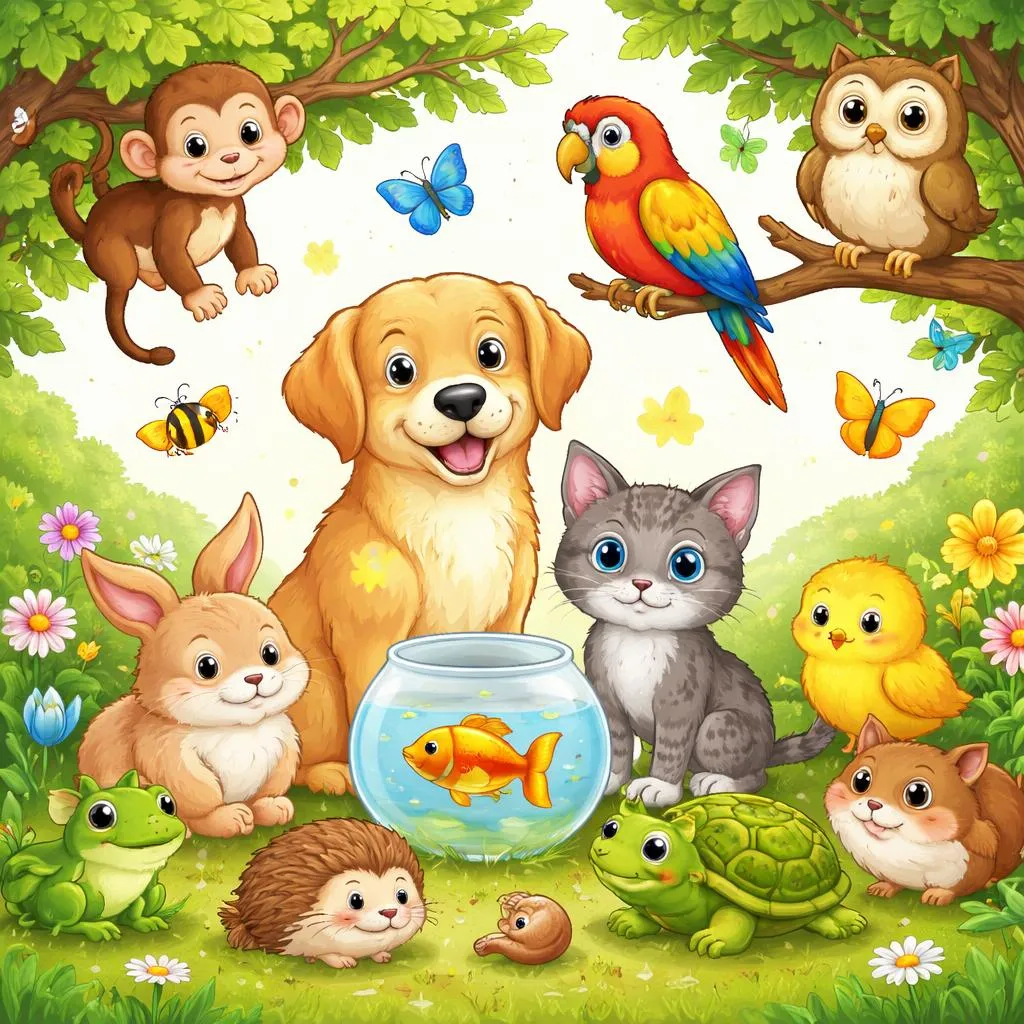

Names for animals are some of the first words learners meet. They feel fun. They feel familiar.
Animals appear in stories. They appear in songs. They appear in daily life.
Learning animal names helps beginners build vocabulary, improve reading, and enjoy language learning from the very start.
This guide introduces names for animals in a clear, friendly way, with short sentences and simple ideas.
Why Animal Names Matter
Animal names are concrete.
You can see them. You can imagine them.
Concrete words are easier to remember.
This makes animal names perfect for children and beginner learners.
Farm Animal Names
Farm animals are common.
Cow Pig Sheep
These animals appear in books. They appear in songs.
Farm animal names are easy to visualize.
More Farm Animal Names
Horse Goat Chicken
These names appear early. They support basic stories.
Old stories often use farm animals. This makes the vocabulary useful.
Pet Animal Names
Pets are close to people.
Dog Cat Fish
These words feel personal. Many learners know them already.
Pet names help learners talk about home life.
Common Pet Animal Names
Rabbit Hamster Bird
These animals are gentle. They are common in families.
Their names are short. Short words help memory.
Wild Animal Names
Wild animals feel exciting.
Lion Tiger Bear
These names appear in stories. They appear in cartoons.
Wild animal names add interest to learning.
More Wild Animal Names
Elephant Giraffe Zebra
These animals look unique. Their names feel special.
Visual difference supports word recall.
Jungle Animal Names
Jungle animals feel adventurous.
Monkey Snake Parrot
These names appear in children’s books. They support playful learning.
Ocean Animal Names
Ocean animals feel calm.
Fish Whale Dolphin
Water animals create strong images.
Strong images help memory stay longer.
More Ocean Animal Names
Shark Octopus Crab
These names add variety. They build richer vocabulary.
Bird Names
Birds appear everywhere.
Bird Duck Swan
These names are simple. They appear in poems and songs.
More Bird Names
Eagle Owl Penguin
Bird names help learners describe nature.
Nature words feel peaceful.
Insect Names
Insects are small but common.
Ant Bee Fly
These words appear in daily life. They are easy to spot.
More Insect Names
Butterfly Spider Ladybug
These names sound playful. They attract children’s attention.
Animal Names and Sounds
Animals make sounds.
Dog says woof. Cat says meow.
Sound connections help children remember names.
Sound and word together strengthen learning.
Animal Names and Actions
Animals move.
Birds fly. Fish swim.
Action words connect with animal names.
This builds sentence skills.
Animal Names in Simple Sentences
Simple sentences work best.
The dog runs. The cat sleeps.
These sentences feel natural. They feel easy.
Easy language builds confidence.
Animal Names and Plural Forms
Animals can be one or many.
One cat. Two cats.
Plural forms appear naturally with animal names.
This supports grammar awareness.
Animal Names and Colors
Animals have colors.
A black cat. A white sheep.
Color plus animal creates clear images.
Clear images support memory.
Animal Names and Size Words
Size words fit animals well.
A big elephant. A small mouse.
Opposites feel clear. Clear meaning helps learning.
Baby Animal Names
Baby animals feel cute.
Puppy Kitten Chick
These words appear in stories. They add emotional connection.
Emotion helps memory.
Animal Names and Family Words
Animal families appear in learning.
Mother dog. Baby cat.
Family language feels familiar to children.
Animal Names in Stories
Stories love animals.
Animals talk. Animals help.
Animal names make stories fun.
Fun supports repetition.
Animal Names in Songs
Songs repeat animal names.
Old songs use animals. New songs do too.
Repetition through music feels natural.
Animal Names and Games
Games use animals often.
Guess the animal. Match the picture.
Play reduces pressure. Reduced pressure improves learning.
Animal Names and Flashcards
Flashcards work well.
Picture plus word. Animal plus name.
Visual pairing supports fast recognition.
Animal Names and Classroom Language
Classrooms use animals.
Point to the dog. Circle the cat.
These commands feel friendly.
Animal Names and Early Reading
Early readers meet animals first.
Simple books use animals. Pictures support meaning.
This builds reading confidence.
Animal Names and Listening Practice
Listening helps recognition.
Learners hear animal names in songs and videos.
Repeated hearing builds familiarity.
Animal Names and Speaking Practice
Speaking starts small.
I like dogs. I see a bird.
Short sentences feel safe to say.
Animal Names and Writing Practice
Writing slows learning.
Learners spell animal names. They notice letters.
This improves accuracy.
Animal Names and Children
Children love animals.
Animals feel friendly. They feel safe.
This emotional comfort supports learning.
Animal Names and Adult Learners
Adults also enjoy animal words.
They feel simple. They feel relaxing.
Simple vocabulary builds early success.
Animal Names and Cultural Learning
Animals appear in cultures.
Different stories use animals. Different symbols exist.
Animal names open cultural awareness.
Animal Names and Visual Memory
Visual memory is strong.
Animals look different. Their names stick.
Difference helps recall.
Animal Names and Categorizing
Animals fit groups.
Farm animals. Wild animals.
Grouping words helps organization.
Organization supports long-term memory.
Animal Names and Vocabulary Growth
Animal names build base vocabulary.
Once learned, learners add adjectives.
Big dog. Fast horse.
Vocabulary grows naturally.
Animal Names and Sentence Expansion
Sentences grow step by step.
The dog runs. The brown dog runs fast.
Animal names support expansion.
Animal Names and Confidence
Confidence comes from success.
Animal names are easy wins. Easy wins motivate learners.
Motivation supports consistency.
Animal Names and Daily Exposure
Animals appear everywhere.
Books. Signs. Media.
Frequent exposure keeps words active.
Animal Names and Long-Term Learning
Animal names do not disappear.
They stay useful. They stay familiar.
Strong early vocabulary supports later grammar.
Animal Names as a Learning Foundation
Names for animals are more than simple words.
They support imagination. They support emotion.
They help learners practice reading, listening, speaking, and writing in a calm, friendly way.
With clear images, short sentences, and regular exposure, animal names become familiar, easy to recall, and enjoyable to use, making them a strong foundation for confident, happy English language learning.Animal Names and Habitats
Animals live in places.
Some live on farms. Some live in forests.
Farm animals live near people. Wild animals live in nature.
Linking animals and habitats builds world knowledge.
Animal Names and Home Language
Home language uses animals.
The dog is at home. The cat sleeps inside.
These sentences feel warm. Warm language supports comfort.
Animal Names and Outdoor Language
Outdoor language uses animals too.
Birds fly outside. Insects move on plants.
Nature words connect language and environment.
Animal Names and Seasons
Seasons change animals.
Birds fly south. Bears sleep in winter.
Season talk adds time awareness.
Time awareness supports language growth.
Animal Names and Movement Verbs
Movement verbs fit animals well.
Run Jump
Swim Fly
Animals help explain actions. Actions make sentences lively.
Animal Names and Adjectives
Adjectives describe animals.
Fast horse Slow turtle
Big elephant Small mouse
Describing animals teaches comparison naturally.
Animal Names and Feelings
Animals show feelings.
A happy dog A scared cat
Emotion words connect to animal names.
Emotion improves memory.
Animal Names and Sounds Again
Sound words repeat learning.
Roar Chirp
Buzz Hiss
Sounds make animals memorable. Memory becomes playful.
Animal Names and Question Practice
Questions use animal names.
What animal is this. Do you like cats.
Questions invite answers. Answers build speaking confidence.
Animal Names and Answer Patterns
Answers stay simple.
It is a dog. Yes, I like cats.
Simple answers feel safe to use.
Animal Names and Counting
Counting uses animals.
One dog. Two birds.
Numbers and animals work well together.
This supports math language too.
Animal Names and Plural Awareness
Plural forms repeat naturally.
Dogs bark. Cats sleep.
Hearing plural endings builds grammar awareness.
Animal Names and Opposites
Opposites fit animals.
Fast and slow. Big and small.
Animals show contrast clearly. Clear contrast aids learning.
Animal Names and Early Science
Science starts small.
Animals eat. Animals grow.
Simple facts build knowledge.
Knowledge supports reading later.
Animal Names and Describing Actions
Actions add meaning.
The dog runs. The bird sings.
Action sentences feel complete.
Completeness builds confidence.
Animal Names and Short Stories
Short stories use animals.
The cat waits. The mouse runs.
Stories repeat patterns. Patterns support fluency.
Animal Names and Role Play
Role play feels fun.
You are a lion. You are a bird.
Imagination supports learning. Learning feels playful.
Animal Names and Classroom Play
Classroom play uses animals.
Act like a frog. Jump like a rabbit.
Movement and language work together.
Animal Names and Visual Charts
Charts show animals.
Pictures with names. Groups by type.
Visual organization supports recall.
Animal Names and Sorting Games
Sorting builds thinking.
Farm or wild. Big or small.
Sorting words deepens understanding.
Animal Names and Daily Review
Daily review keeps words active.
Seeing animals again refreshes memory.
Short review is enough.
Animal Names and Language Confidence
Confidence grows with familiarity.
Animals feel friendly. Friendly words feel safe.
Safe words encourage speaking.
Animal Names and Long-Term Vocabulary
Animal names stay useful.
They appear in stories. They appear in lessons.
Strong animal vocabulary supports later learning.
Animal Names as Gentle Learning Tools
Animal names teach gently.
They bring joy. They bring color.
With repetition, simple sentences, and playful use, names for animals continue to support vocabulary growth, sentence building, and confidence development for children and beginner learners in a natural, friendly way that makes language learning feel easy and enjoyable.