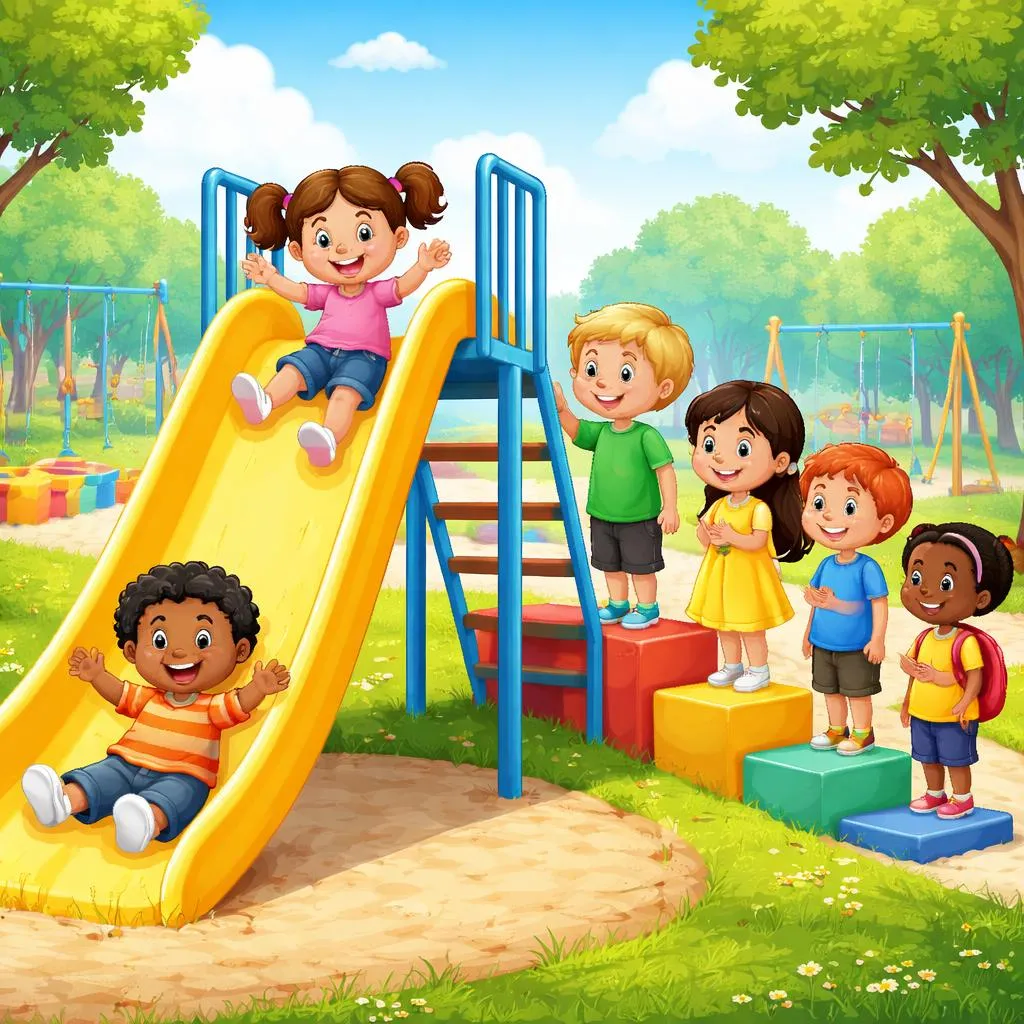

What Do These Expressions Mean? “Take turns” and “wait for your turn” both teach children to share time on a shared item. They tell children that using something one after another is fair. Children hear these words with swings, toys, games, or speaking time. Both build patience.
“Take turns” means you use it, then I use it, then you use it again. It focuses on the action of switching. A parent says it when two children want the same bike. It is active and cooperative.
“Wait for your turn” means stand in line and be patient until the person before you is done. It focuses on waiting, not the switching. A parent says it when a child is rushing or pushing. It teaches patience and self-control.
These expressions seem similar. Both ask for fairness. Both prevent fights over turns. But one is about the action of switching while one is about the act of waiting.
What's the Difference? One is about the switching action. One is about the waiting action. “Take turns” tells children what to do together. It implies cooperation and sharing. It is positive and active.
“Wait for your turn” tells one child what to do while someone else is using the item. It is about patience, not cooperation. It can feel like a restriction. It teaches self-control.
Think of a child on a swing. Another child wants a turn. “Take turns on the swing” means they both will use it. “Wait for your turn” means stand there until the first child is done. One is about sharing. One is about waiting.
One is for teaching cooperation. The other is for teaching patience. “Take turns” is for when both children need to learn to share. “Wait for your turn” is for when one child needs to learn to be patient. Use the first for sharing. Use the second for waiting.
Also, “take turns” is more positive. “Wait for your turn” can sound like a negative command. Add “please” to make it kind.
When Do We Use Each One? Use “take turns” when teaching cooperation. Use it for toys, games, and activities that can be shared. Use it to create a fair system. It fits proactive teaching.
Examples at home: “Take turns with the computer. Ten minutes each.” “Let's take turns pushing the cart.” “Take turns picking the TV show.”
Use “wait for your turn” when a child is rushing or pushing. Use it for immediate patience correction. Use it to stop grabbing. It fits reactive moments.
Examples for patience: “Wait for your turn. She is still on the swing.” “Stop pushing. Wait for your turn.” “Wait for your turn to speak. Let your brother finish.”
Children need both phrases. “Take turns” for cooperation. “Wait for your turn” for patience. Both build fair children.
Example Sentences for Kids Take turns: “Let's take turns on the trampoline.” “Take turns with the markers. Everyone gets a color.” “Take turns telling your stories.”
Wait for your turn: “Wait for your turn. He is almost done.” “You need to wait for your turn to pet the puppy.” “Wait for your turn. No cutting in line.”
Notice “take turns” is about sharing time. “Wait for your turn” is about being patient. Children learn both. One for playing. One for waiting.
Parents can use both. At a playground: “take turns on the slide.” In a line: “wait for your turn.” Children learn fairness in different situations.
Common Mistakes to Avoid Some parents only say “wait for your turn” but never teach “take turns.” Children learn patience but not cooperation. Teach both skills. Waiting and sharing go together.
Wrong: Only making children wait for turns. Better: “Now it's your turn. Remember to take turns later.”
Another mistake: saying “take turns” when the item cannot be shared. Some things need waiting, not switching. A one-person ride needs waiting. Choose the right phrase for the right item.
Wrong: “Take turns on the drinking fountain” (one person uses it once). Better: “Wait for your turn at the fountain.”
Some learners forget that waiting is hard. Acknowledge how hard it is. “I know waiting is hard. You are doing a great job.” Validation helps patience grow.
Also avoid long waits for young children. They cannot wait 20 minutes. Set a timer for short turns. Success builds patience.
Easy Memory Tips Think of “take turns” as a dance. You dance. Then I dance. Back and forth. Cooperation.
Think of “wait for your turn” as standing in line. The line moves slowly. One by one. Patience.
Another trick: remember the focus. “Take turns” is about sharing. “Wait” is about waiting. Sharing gets “take turns.” Waiting gets “wait for your turn.”
Parents can say: “Take for share. Wait for the chair.” That means sharing activities get “take turns.” Waiting activities get “wait for your turn.”
Practice at home. Board game: “take turns.” Water fountain: “wait for your turn.” Two different fairness skills.
Quick Practice Time Let us try a small exercise. Choose the better phrase for each situation.
Two children both want to use the same blue crayon. They can switch back and forth. a) “Wait for your turn with the crayon.” b) “Take turns with the blue crayon.”
One child is at a drinking fountain. Another child pushes in front. a) “Take turns at the fountain.” b) “Wait for your turn. No pushing.”
Answers: 1 – b. A crayon can be shared back and forth. “Take turns.” 2 – b. A drinking fountain needs waiting, not back-and-forth sharing. “Wait for your turn.”
Fill in the blank: “When my children play a game with one ball, I tell them to ______.” (“Take turns” fits the back-and-forth sharing of the ball.)
One more: “When my child is in line for a ride, I say ______.” (“Wait for your turn” fits the patient, one-direction waiting.)
Fairness takes practice. “Take turns” teaches sharing. “Wait for your turn” teaches patience. Teach your child both. A child who can take turns and wait is welcome everywhere.
Wrap-up “Take turns” teaches children to cooperatively share an item back and forth. “Wait for your turn” teaches children to be patient while someone else uses an item. Use “take turns” for toys, games, and activities that can be shared. Use “wait for your turn” for lines, fountains, and one-time use items. Both phrases build fair, patient children. A child who knows how to wait and share makes friends easily.