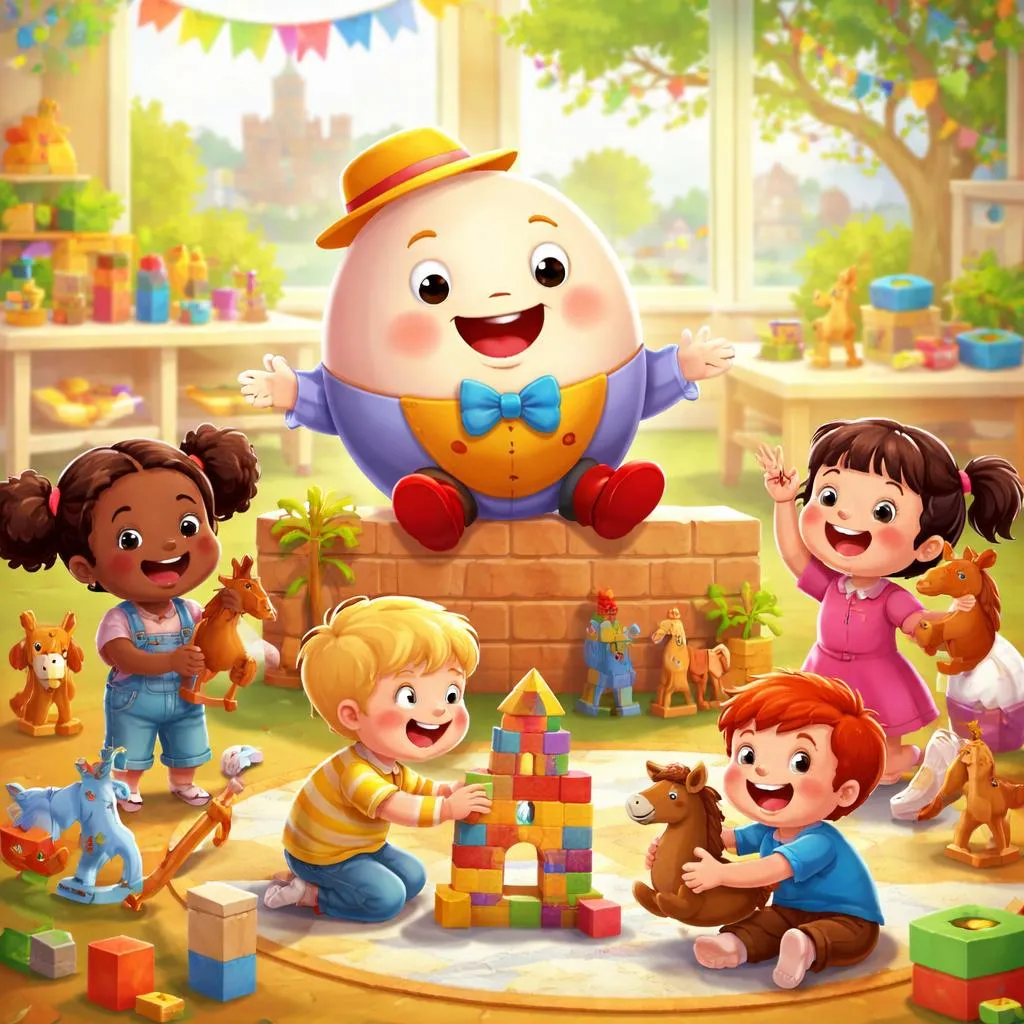

What Is “humpty dumpty lyrics”?
“humpty dumpty lyrics” refers to one of the most famous English nursery rhymes. The rhyme tells a short story about Humpty Dumpty, who sits on a wall and falls. This simple story has stayed popular for hundreds of years.
Nursery rhymes introduce rhythm, sound, and storytelling. Short lines and clear rhyme patterns support early language learning. Familiar characters help build emotional connection to language.
This rhyme supports listening skills and early reading awareness. It also encourages imagination and storytelling.
The Rhyme: Humpty Dumpty Lyrics
Below is the classic version used in many classrooms and children’s books.
Humpty Dumpty sat on a wall, Humpty Dumpty had a great fall. All the king’s horses and all the king’s men Couldn’t put Humpty together again.
This short rhyme is easy to remember. Its rhythm makes it ideal for chanting and singing.
Vocabulary Learning with Humpty Dumpty Lyrics
This rhyme introduces simple and meaningful vocabulary. Words appear in a clear story context.
Key words include sat, wall, fall, king, horses, men, and again. These words connect with actions, places, and people.
Action words like sat and fall support verb learning. Nouns like wall, king, and horses build basic vocabulary.
Story words help connect language with meaning. Pictures and storybooks deepen comprehension.
Phonics Points in Humpty Dumpty Lyrics
Phonics patterns appear through rhyme and repetition. Sound awareness grows through repeated listening and chanting.
The rhyme wall and fall highlights the long vowel sound /ɔː/. The words men and again show short vowel sounds.
Consonant sounds appear clearly in sat, fall, and king. Repetition helps with articulation and sound discrimination.
Rhyming words support phonological awareness. Clapping to rhythm supports syllable recognition.
Segmenting words like Hum-pty and to-ge-ther supports syllable practice. Blending sounds supports early decoding skills.
Grammar Patterns in Humpty Dumpty Lyrics
The rhyme uses simple past tense and sentence structure. These patterns appear naturally in storytelling.
Humpty Dumpty sat on a wall shows past tense sat. Humpty Dumpty had a great fall shows past tense had.
All the king’s horses and all the king’s men shows possessive form king’s. Couldn’t put Humpty together again shows negative past tense.
Simple sentence patterns help early grammar awareness. Repeated exposure supports pattern recognition.
Learning Activities with Humpty Dumpty Lyrics
Story acting supports comprehension and speaking. One participant can act as Humpty Dumpty. Others can act as horses and men.
Movement activities deepen memory. Pretend to sit on a wall and fall gently.
Story sequencing activities strengthen listening skills. Cards with story events can be ordered in sequence.
Drawing activities connect language with art. Drawing Humpty Dumpty and the wall reinforces vocabulary.
Retelling activities support oral language development. Short sentences describe each event in the rhyme.
Printable Materials for Humpty Dumpty Lyrics
Printable lyric sheets support reading practice. Large fonts and spacing help early readers.
Flashcards support vocabulary practice. Images match words like wall, king, and horses.
Sequencing worksheets reinforce story order. Sentence strips support grammar practice.
Coloring pages provide visual context. Fine motor skills develop alongside language learning.
Phonics worksheets highlight rhyme patterns and vowel sounds. Tracing words supports early writing skills.
Educational Games Using Humpty Dumpty Lyrics
Games increase motivation and attention. Playful repetition strengthens memory.
A story-building game adds new verses. New endings or characters extend the narrative.
A rhyme matching game pairs fall with wall. Matching strengthens phonics awareness.
A missing word game builds listening comprehension. Pause before key words and supply the missing word.
A puppet game encourages storytelling. Puppets represent Humpty Dumpty and other characters.
A picture-word matching game reinforces vocabulary. Match images with words from the rhyme.
Cultural Background of Humpty Dumpty Lyrics
This rhyme comes from English literary tradition. It appears in nursery books and folklore.
Humpty Dumpty also appears in Lewis Carroll’s “Through the Looking-Glass.” This connection introduces literature and classic stories.
Nursery rhymes often carry historical and cultural meanings. They also reflect oral storytelling traditions.
Shared rhymes create cultural connection across generations. They form part of early childhood literary heritage.
Teaching Tips for Humpty Dumpty Lyrics
Clear pronunciation supports listening comprehension. Slow pacing supports understanding of story events.
Visual aids increase engagement. Pictures of walls, kings, and horses add context.
Short repeated practice sessions improve retention. Spaced repetition strengthens memory.
Positive classroom atmosphere encourages participation. Encouragement builds confidence in speaking.
Integration with drama and art enriches learning. Creative activities deepen comprehension.
Why Humpty Dumpty Lyrics Supports Language Learning
The rhyme combines rhythm, repetition, and narrative. These elements align with early language development research.
Repetition strengthens vocabulary retention. Rhythm supports pronunciation and fluency.
Narrative structure supports comprehension and sequencing skills. These skills support reading development.
Movement and acting support multisensory learning. Multisensory learning improves memory and engagement.
Extending Learning Beyond the Rhyme
The story invites creative storytelling. New adventures for Humpty Dumpty can be created.
Science integration explores eggs and fragile objects. Physics topics include falling and gravity.
Math integration counts characters and events. Counting verses supports number recognition.
Writing activities describe Humpty Dumpty’s day. Drama activities act out new endings and characters.
Using Humpty Dumpty Lyrics in Home Learning
Home reading and chanting build daily language exposure. Routine practice builds familiarity with rhythm and vocabulary.
Picture books about Humpty Dumpty reinforce comprehension. Toy figures support imaginative storytelling.
Printable worksheets provide structured practice. Coloring and matching activities reinforce learning.
Story retelling strengthens speaking skills. Short phrases support communication confidence.
Humpty dumpty lyrics provides a timeless tool for early English learning. Simple storytelling, strong rhythm, and clear vocabulary support foundational language skills. Phonics patterns and grammar structures appear in meaningful context. Classrooms and homes can use this rhyme to build listening, speaking, and early reading skills. Playful rhythm and imaginative storytelling create joyful and lasting language experiences.