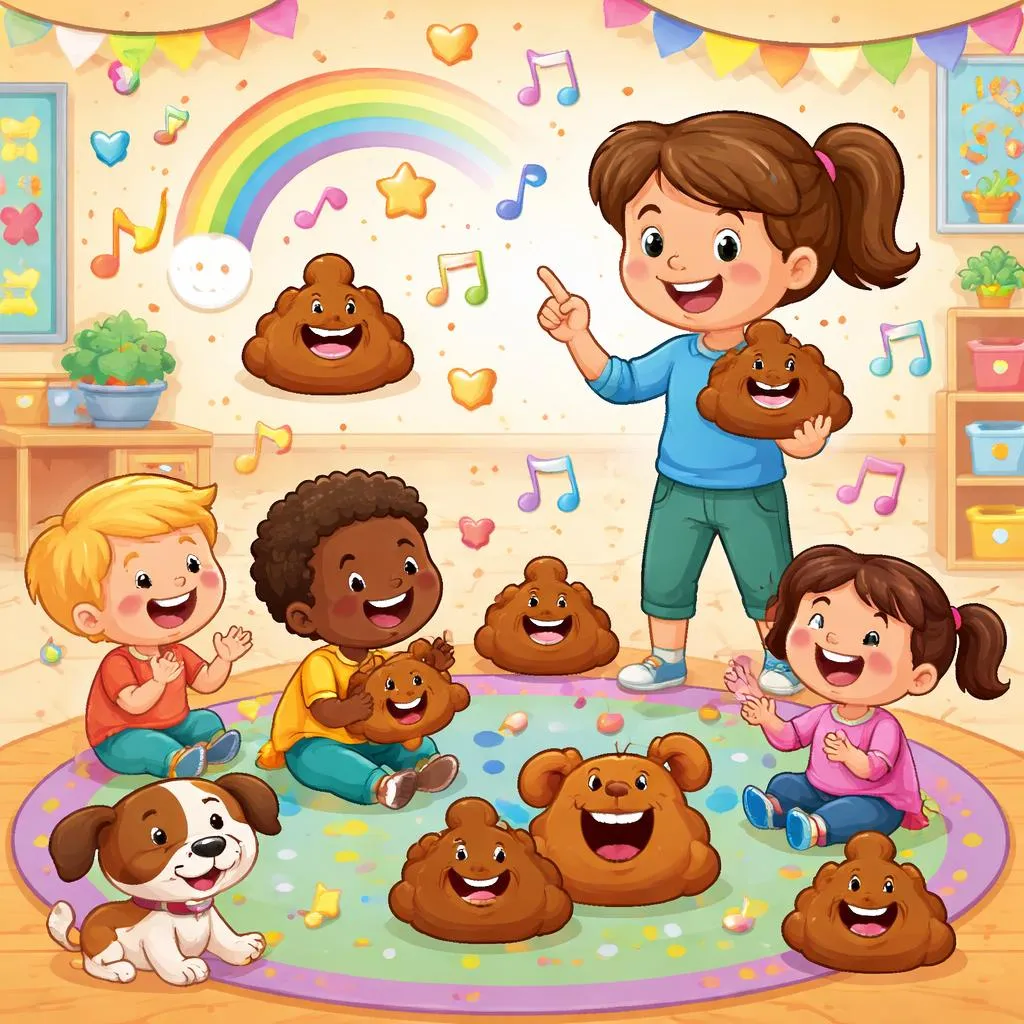

What is the rhyme? “Poop song lyrics” refers to humorous children’s songs that use the word poop in a playful and age-appropriate way. These songs often appear in classrooms, videos, and playful learning content. Teachers use funny songs to reduce anxiety and increase engagement. Humor supports memory and attention in language learning. In this lesson-style article, teaching strategies will connect “poop song lyrics” with vocabulary, phonics, and grammar patterns. The tone remains respectful, educational, and developmentally appropriate.
The lyrics of nursery rhymes Many versions of poop-themed songs exist online and in classrooms. Lyrics usually follow a simple rhyme and repetitive structure. A common pattern sounds like: “Poop, poop, funny little poop, Flush it down and watch it loop.” The exact lyrics vary by creator and platform. Teachers often adapt lyrics to match classroom standards and learning goals. Songs repeat key words and rhythm patterns. Repetition supports pronunciation and listening skills. Simple rhymes allow learners to predict sounds and words. Predictability increases comprehension and confidence.
Vocabulary learning The word poop belongs to informal everyday vocabulary. It relates to body functions and hygiene topics. In a teaching context, it can introduce polite and impolite word distinctions. Teachers explain that some words are casual and better used in jokes or songs. Related vocabulary includes toilet, bathroom, flush, wash, and clean. These words connect to daily routines and personal hygiene lessons. Using songs helps learners associate words with actions. Associations improve retention and recall. Contextual teaching is essential. Students learn when a word is humorous and when formal alternatives are better.
Phonics points Poop song lyrics support phonics practice through repetition and rhythm. The word poop includes a long vowel sound /uː/. Teachers can highlight the oo vowel pattern. Examples include moon, spoon, food, and zoo. Rhyming words often appear in the song. Words like loop, scoop, and group reinforce vowel sounds. Rhymes build phonological awareness. Learners hear sound patterns and predict endings. Songs also support stress and intonation practice. Chants and rhythms help with natural speech flow.
Grammar patterns Poop song lyrics often use simple present tense and imperatives. Examples include Flush it, Wash your hands, and Don’t forget soap. Imperatives teach instructions and classroom language. Teachers model polite commands and health-related routines. Simple subject-verb structures appear frequently. Sentences like Poop goes in the toilet teach basic syntax. Songs also include repetitive sentence frames. Repetition reinforces grammatical structures naturally. Teachers can pause the song to analyze sentence patterns. Short explanations connect music to grammar learning.
Learning activities Songs allow movement-based learning. Teachers can pair lyrics with gestures like flushing, washing, and cleaning motions. Action-based learning supports kinesthetic learners. Movement improves memory and engagement. Call-and-response singing encourages participation. Teachers sing a line and learners repeat it. Gap-filling activities build listening skills. Teachers remove a word and learners fill it in. Rewriting lyrics supports creativity and grammar practice. Learners replace poop with polite vocabulary like waste or trash. Discussion activities introduce hygiene and social norms. Teachers guide respectful conversations using simple language.
Printable materials Printable flashcards help reinforce vocabulary. Cards can show pictures of toilets, soap, and sinks. Lyrics worksheets allow students to trace or copy key lines. Tracing improves handwriting and word recognition. Phonics worksheets highlight oo vowel words. Matching exercises connect pictures and sounds. Coloring sheets connect humor with learning. Visual tasks maintain motivation and focus. Teachers can create lyric sequencing cards. Learners arrange lines in correct order to practice comprehension.
Educational games Song-based games increase motivation and reinforce language. Teachers can play “Sing and Stop” where music pauses and learners say the next word. Rhyming bingo helps identify vowel patterns. Students mark rhyming words when they hear them. Role-play games simulate bathroom routines with polite expressions. Learners practice phrases like May I go to the bathroom? Memory card games pair words and pictures from the song. This supports vocabulary recall. Classroom competitions can involve rewriting lyrics with new words. Creativity encourages deeper language processing. Digital games and interactive quizzes extend learning beyond the classroom. Teachers integrate technology for blended learning environments.
Humorous content like poop song lyrics can serve as a powerful teaching tool when used thoughtfully. Songs reduce stress, support phonics, and reinforce grammar patterns. With guided instruction, humor becomes a gateway to serious language learning and classroom engagement.