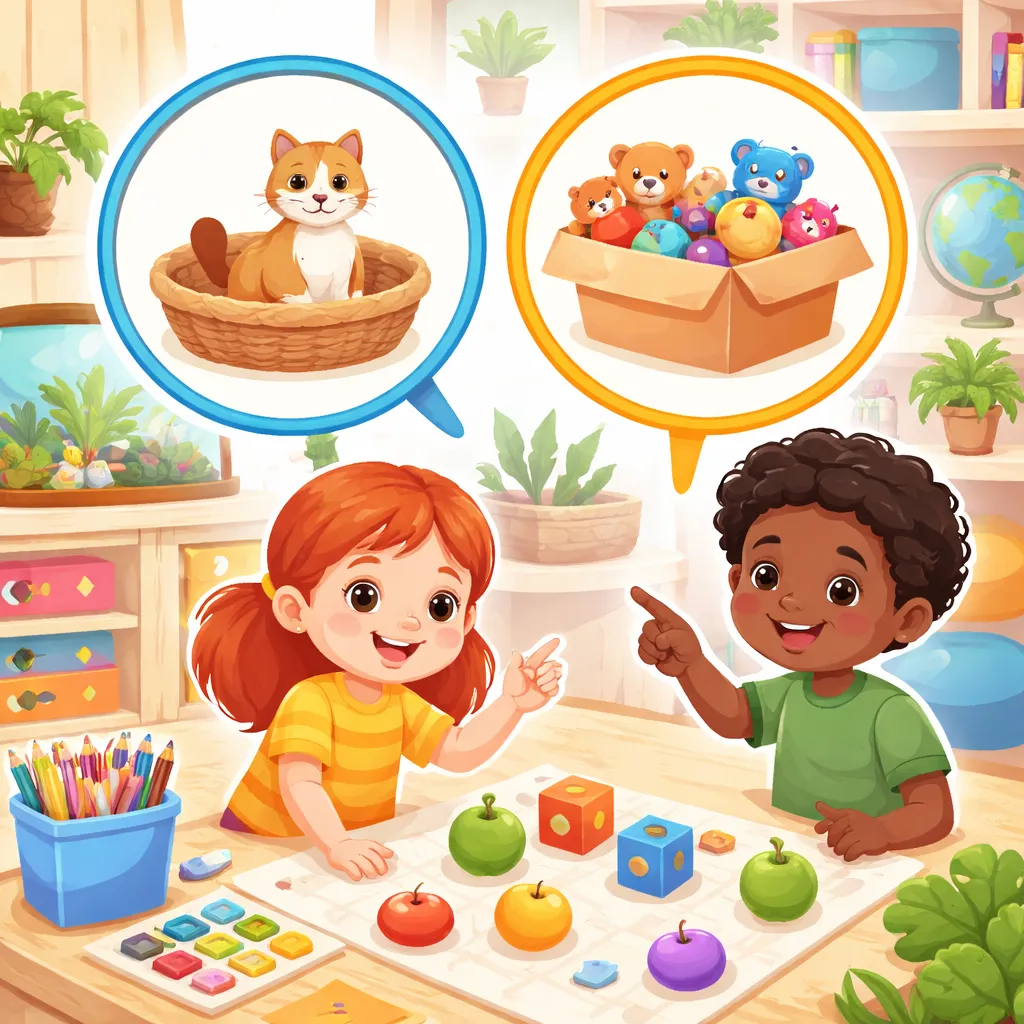

O que são 'There Is' e 'There Are'?
Em inglês, as frases "there is" e "there are" são comumente usadas para descrever a presença de algo em um local específico. Essas frases são simples, mas muito importantes para as crianças aprenderem, pois ajudam na criação de frases básicas. Ao entender como usar "there is" e "there are", as crianças podem se expressar com mais confiança em situações cotidianas.
A diferença entre as duas reside em se o substantivo que segue é singular ou plural. "There is" é usado com substantivos singulares, enquanto "there are" é usado com substantivos plurais.
Por exemplo:
There is a cat in the garden. (singular) There are two dogs in the yard. (plural)
Ambas as estruturas são essenciais para construir frases básicas em inglês e são uma parte fundamental do desenvolvimento inicial da linguagem.
Regras de 'There Is' e 'There Are'
Aqui estão algumas regras simples que ajudarão as crianças a entender como usar essas frases corretamente.
'There is' é usado ao falar sobre um objeto ou coisa singular. Exemplo: There is a book on the table. 'There are' é usado ao falar sobre dois ou mais objetos (plural). Exemplo: There are three pencils in the box. Quando o sujeito é um substantivo não contável (como água ou ar), 'there is' é usado. Exemplo: There is milk in the fridge. Em frases negativas, "there is" e "there are" mudam para "there isn’t" e "there aren’t". Exemplo (singular): There isn’t a dog in the park. Exemplo (plural): There aren’t any cookies left. Para perguntas, a estrutura se inverte. Você coloca "is" ou "are" antes de "there". Exemplo (singular): Is there a pen on the desk? Exemplo (plural): Are there books on the shelf? Como Usar 'There Is' e 'There Are'
Vamos detalhar como usar "there is" e "there are" em algumas etapas simples.
Comece com "there". Isso nos diz que estamos falando sobre a presença de algo. Use "is" ou "are", dependendo do número de coisas sobre as quais você está falando. Siga com um substantivo. Esse substantivo pode ser uma pessoa, objeto ou coisa. Adicione detalhes. Às vezes, incluímos mais informações sobre a localização ou outras características do substantivo.
Por exemplo:
There is a tree in the yard. (singular) There are many stars in the sky. (plural) There is a toy on the floor. (singular) There are five pencils in the drawer. (plural)
Em perguntas, apenas trocamos a ordem:
Is there a bird in the tree? Are there cookies in the jar? Exemplos de 'There Is' e 'There Are'
Para tornar as coisas mais claras, vamos ver alguns exemplos:
Singular (usando "there is") There is a cat on the sofa. There is a ball in the yard. There is a book on the table. Plural (usando "there are") There are two birds in the tree. There are many cars on the street. There are three chairs in the room. Em perguntas Is there a dog in the garden? Are there four apples in the basket? Em frases negativas There isn’t a book in the bag. There aren’t any people at the park.
Esses exemplos mostram como é fácil usar "there is" e "there are" em diferentes tipos de frases. As crianças podem usar essas estruturas para descrever coisas em suas vidas diárias.
Erros Comuns
Ao aprender essas regras, as crianças podem cometer alguns erros comuns. Veja como evitá-los:
Confundir substantivos singulares e plurais Erro: There is two dogs. Correto: There are two dogs. Usar "there is" com um substantivo plural Erro: There is many people. Correto: There are many people. Esquecer o “s” em “there is” ou “there are” ao formar negativas ou perguntas Erro: There no milk. Correto: There isn’t any milk. Usar "there are" com substantivos não contáveis Erro: There are water in the bottle. Correto: There is water in the bottle.
Esses erros são muito comuns, mas com a prática, as crianças logo aprenderão a fazê-los corretamente.
Comparação Entre 'There Is' e 'There Are'
Embora “there is” e “there are” sejam ambos usados para falar sobre existência, a principal diferença reside no número de coisas que estão sendo discutidas.
Use "there is" quando você fala sobre uma coisa (singular). Use "there are" quando você fala sobre mais de uma coisa (plural).
Exemplo:
There is a dog in the yard. (singular) There are three dogs in the yard. (plural)
A compreensão dessa diferença ajudará as crianças a criar frases claras e precisas.
Exercícios Práticos
Agora que você entende as regras, vamos praticar o uso de "there is" e "there are" com esses exercícios divertidos. Escreva suas respostas ou diga-as em voz alta!
Preencha as lacunas: () a book on the table. () many students in the classroom. () a dog outside. () three cats in the garden. (______) cookies in the jar. Responda às perguntas: Is there a pencil on the desk? Are there toys in the toy box? Is there a clock on the wall? Are there five chairs in the room?
Esses exercícios simples ajudarão a reforçar o que seu filho aprendeu.
Respostas e Explicações
Aqui estão as respostas para os exercícios:
Preencha as lacunas: There is a book on the table. There are many students in the classroom. There is a dog outside. There are three cats in the garden. There are cookies in the jar. Responda às perguntas: Yes, there is a pencil on the desk. Yes, there are toys in the toy box. Yes, there is a clock on the wall. Yes, there are five chairs in the room.
Essas respostas devem facilitar a visualização de como a estrutura funciona.
Dicas de Aprendizagem
Para ajudar as crianças a dominar "there is" e "there are", aqui estão algumas dicas de aprendizado práticas:
Pratique com objetos da vida real: Incentive as crianças a olhar ao redor e fazer frases sobre o que veem. Por exemplo, "There is a table" ou "There are five apples". Use recursos visuais: Mostre fotos ou use brinquedos e objetos para criar exercícios divertidos. Isso tornará o processo de aprendizado mais interativo. Repita com frequência: Quanto mais as crianças praticarem, mais confortáveis elas se sentirão com essas estruturas. Continue usando "there is" e "there are" em conversas diárias. Transforme em um jogo: Transforme em um jogo em que as crianças têm que apontar para coisas na sala e fazer frases usando "there is" e "there are".
Ao praticar e usar essas frases consistentemente, as crianças naturalmente construirão uma forte compreensão de como expressar a existência em inglês.