
Opening Introduction
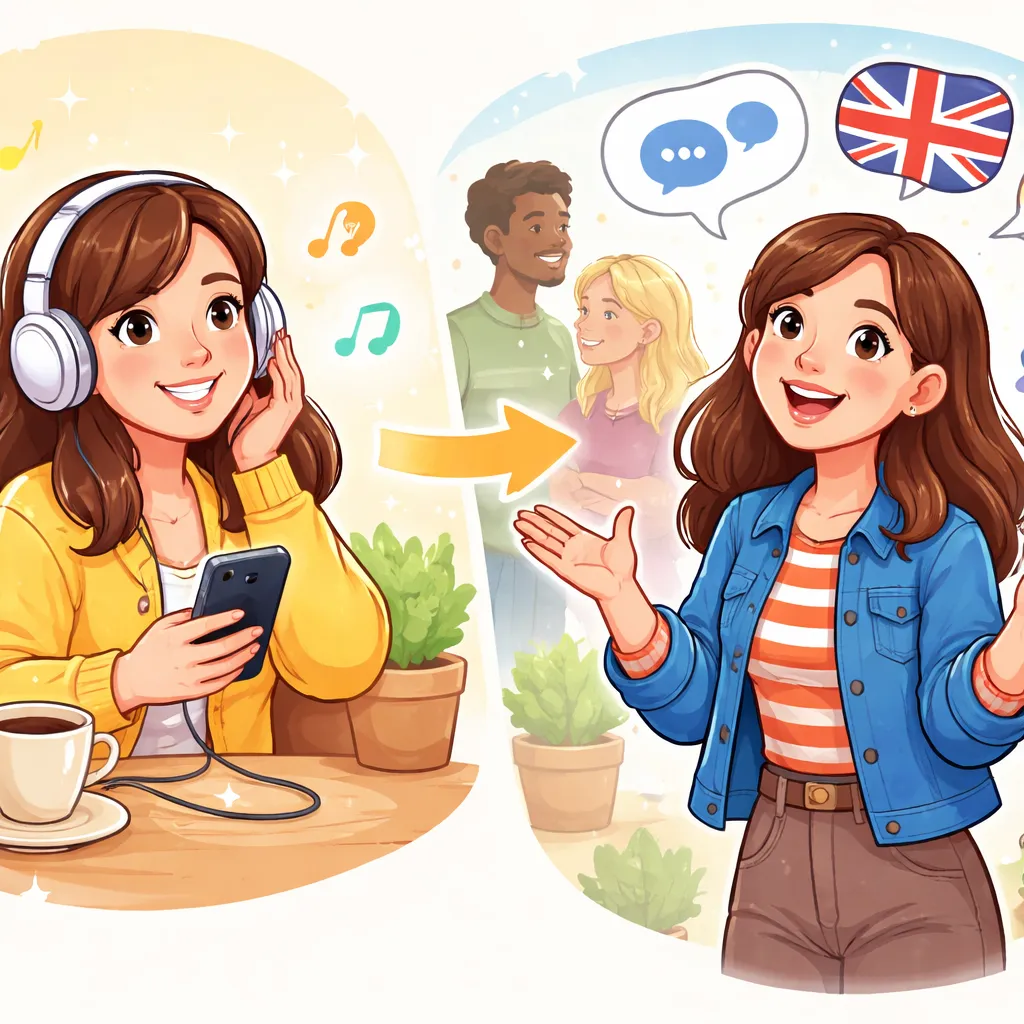
Leo loves English songs. He listens to them every day. He understands many words. He can follow the story in his English cartoon. But when his teacher asks, "Leo, how are you?" he feels his heart beat fast. He knows the answer. He wants to say, "I am fine, thank you." But the words feel stuck. He just smiles and nods. Leo is a great listener. Now, he wants to become a speaker. He is ready for a big change. This change is called transitioning from listening to speaking English. It is like learning to swim after watching others in the pool. Let's dive in and help Leo find his brave voice.
Core Knowledge Explanation
What does transitioning from listening to speaking English mean? A transition is a change from one state to another. It is like a caterpillar becoming a butterfly. First, you are a listener. You take in the language. You hear it. You understand it. This is the caterpillar stage. It is safe and comfortable. Then, you feel ready to try speaking. This is the butterfly stage. It is about using the language to express yourself. It is beautiful but can feel scary at first. This change does not happen overnight. It is a journey.
Listening is the most important first step. You cannot speak a language you have never heard. By listening, you learn the sounds, the rhythm, and the music of English. Your brain is like a sponge. It soaks up all the words and sentences. This is called your "listening vocabulary". It is very big. But your "speaking vocabulary" is smaller. These are the words you can use easily when you talk. Transitioning from listening to speaking English is about moving words from your listening vocabulary to your speaking vocabulary.
Why is speaking hard? Because speaking is active. It takes courage. When you listen, you are thinking. When you speak, you are doing. You must choose words, put them in order, and say them with the right sounds. All at once. Your brain is working very fast. It is normal to feel nervous. Everyone does. Even famous speakers felt nervous at first. The secret is to start small and be kind to yourself.
How do you start this transition? You begin with repetition. Repeat words after a song. Repeat sentences from your cartoon. This is like training wheels. You are not making your own sentences yet. You are copying. This is a safe and powerful first step. Then, you move to answering simple questions. "What is your name?" "How old are you?" You know these answers. Practice saying them out loud. Then, you try asking questions. "What is that?" "Can I play?" Step by step, you build your speaking muscles.
Remember, mistakes are your friends. They are not bad. They are proof that you are trying. Every time you make a mistake and fix it, your brain learns. Do not be afraid to sound silly. The goal is communication, not perfection. Transitioning from listening to speaking English is about connection, not perfection. You are learning to share your ideas with the world. That is a wonderful thing.
Fun Interactive Learning
Let's play some games to help with transitioning from listening to speaking English. First, the "Echo Game". Find a short, fun English video or song. Listen to one sentence. Pause it. Say the sentence out loud, exactly like you heard it. Try to copy the voice. This builds your mouth muscles for English sounds. It is like being a parrot. Parrots are great at repeating.
Second, the "Two-Word Game". Look around your room. Point to an object and say two words about it. "Blue chair." "Big book." "Soft bed." Do this for five things. Tomorrow, try three words. "My blue chair." This slowly builds your sentences.
Third, play "Interview a Toy". Get your favorite stuffed animal. Pretend you are a TV host. Ask your toy questions. "Hello, Mr. Bear. How are you today?" Then, answer in a funny voice for the bear. "I am very happy. I love honey." This is silly and fun. It takes the pressure off because you are playing.
Fourth, sing karaoke. Find the lyrics to a simple English song. Sing along loudly. Do not worry about the tune. Focus on saying the words. Music makes speaking easier. Your feelings go into the song, and the words come out.
Fifth, use "Sentence Starters". Ask a family member to help. They say the start of a sentence. You finish it. For example, they say, "My favorite color is..." You say, "...blue!" Or, "Today, I feel..." You say, "...happy." This game gives you a helpful push. You are transitioning from listening to speaking English one word at a time.
Expanded Learning
Babies are the best at transitioning from listening to speaking. They listen for about a year. They do not say anything. This is called the "silent period". They are soaking up sounds. Then, they say "mama" or "dada". Then, more words. Then, sentences. They are not afraid. They just try. You can be like a baby with English. Give yourself a silent period to listen. Then, start with simple words. Be proud of every sound.
In many schools around the world, children learn English by listening first. They watch shows, listen to stories. Then, they start speaking in class. Teachers encourage them. They know that the transition takes time. In some countries, people can read and listen to English very well but find speaking hard. This is common. You are not alone. Knowing this can make you feel braver.
Let's make a chant about speaking. Chants are easy to remember. Say this out loud:
First I listen, then I speak. Finding words that I can keep. Start with one, then two, then three. Speaking English happily!
You can say this chant before you practice. It is your speaking motto.
What You Will Learn
You are learning about the journey of language. You are learning new words: transition, listener, speaker, active, courage, repetition, muscles, communication, perfection, connection. You are learning about the process: silent period, listening vocabulary, speaking vocabulary, training wheels.
You are learning brave sentences. You can say, "I am transitioning from listening to speaking." You can ask, "Can you repeat that, please?" You can declare, "I will try to speak English today." You are using English to talk about your own growth. This is powerful.
You are building amazing skills. You are building courage. You face your fear of mistakes. You are building clarity. You learn to express your thoughts. You are building resilience. If a word is hard, you try again. You are building social skills. You learn to talk with others. You are building confidence. Every word you say makes you stronger.
You are forming a golden habit. The habit of practice. You make speaking a normal part of your day. You talk to yourself, to your toys, to your family. You look for chances to use English. This habit turns English from a subject in school into a part of your life. Transitioning from listening to speaking English is the habit of finding your voice and using it.
Using What You Learned in Life
Start small at home. When you want a snack, say it in English. "Apple, please." When you greet your family, say, "Good morning!" These tiny moments add up. They make speaking normal.
At school, volunteer to answer one question in English class. Just one. Raise your hand. Say, "I know the answer." Your teacher will be so happy. So will you. If you have an English-speaking friend, ask them a simple question. "How was your weekend?" Listen to the answer. Then, say something about your weekend.
When you are playing a game, say the actions in English. "I jump!" "I run!" "I win!" Use English for your play-by-play commentary. It is fun and practice.
If you are feeling shy, remember Leo. He started by saying "hello". Then "thank you". Then a whole sentence. You can do it too. Every time you speak, you are getting better. You are moving forward on your journey of transitioning from listening to speaking English. The more you do it, the easier it gets.
Closing Encouragement
You are doing something incredible. You are finding your voice in a new language. You are a brave explorer. You are a communicator. I am so proud of you. Thinking about this transition shows you are serious and smart about learning.
Keep listening. It is your foundation. But now, add your voice. Share your thoughts. Share your jokes. Share your stories. The world wants to hear you.
Remember, your English voice is unique and important. It is okay if it is quiet at first. It is okay if it makes mistakes. It is yours. Nurture it. Use it. Celebrate it. You are capable, you are courageous, and you are becoming a wonderful English speaker. Fantastic work, my amazing language adventurer. Keep talking.