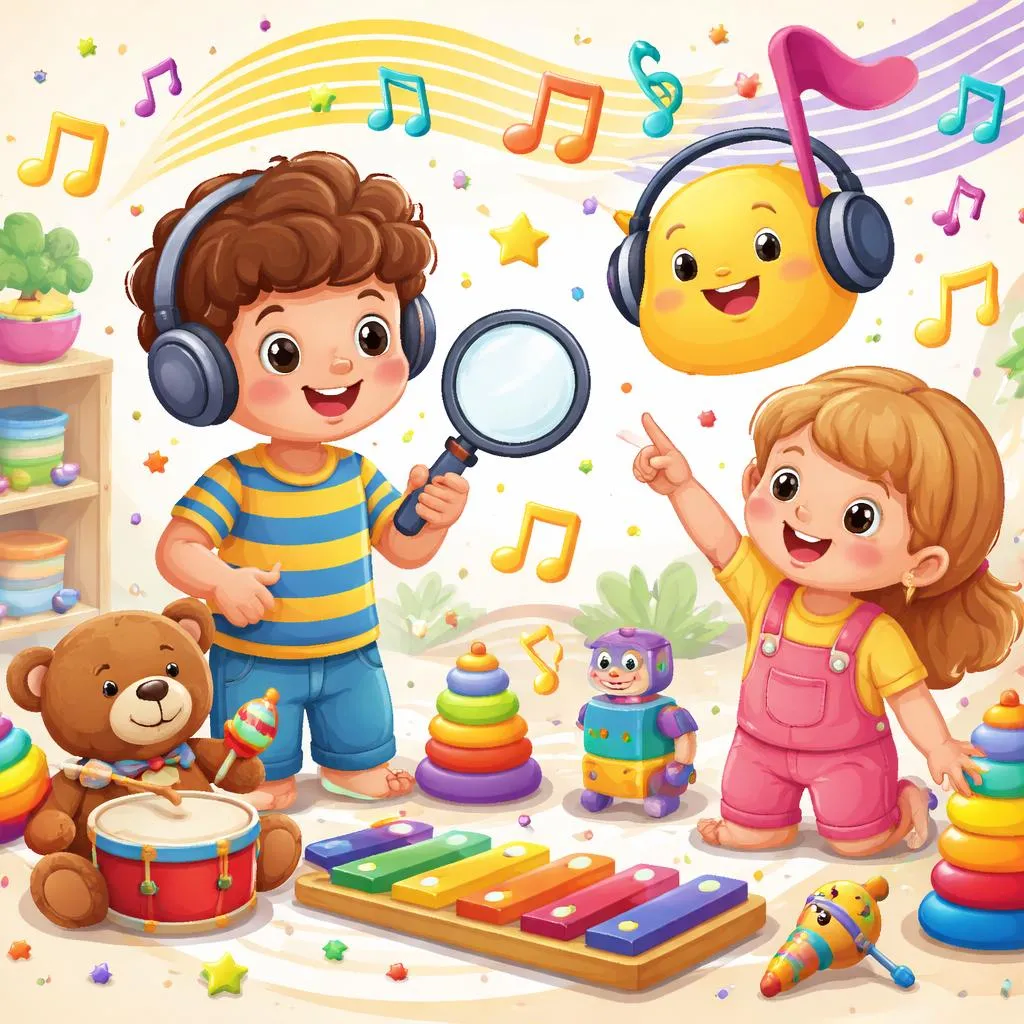

What is the rhyme?
Let's sing about our favorite things today! A Toy Song is a joyful and engaging type of nursery rhyme. It focuses on the familiar, wonderful world of toys. These songs often list different toys, describe their actions, or tell a simple story about playing with them. The magic of a great Toy Song is its instant connection to a child's own experiences.
Singing a Toy Song turns everyday playthings into characters in a musical adventure. It might be about a bouncing ball, a rolling car, or a sleepy doll. These songs are perfect for building vocabulary in a context that feels like play, not study. They encourage movement, participation, and lots of smiles as we give voices to our playtime friends.
The lyrics of nursery rhymes
Many classic and original tunes fall into this category. A common structure involves naming toys one by one. Lyrics might go: "I have a little red ball, a ball, a ball. I bounce my little red ball, up and down!" Another verse could introduce a blue car or a fluffy teddy bear. The repetition of the toy's name and its action is key.
Some Toy Songs tell a fuller story. For example: "My teddy bear is soft and brown, he never makes a single sound. But when I go to sleep at night, he guards my room till morning light." Other versions are interactive, asking questions like "Do you have a toy train? Choo-choo! Do you have a spinning top? Whirr!" The lyrics are simple, rhythmic, and designed for easy echo and response.
Vocabulary learning
A Toy Song is a fantastic vehicle for vocabulary acquisition. It naturally introduces the names of common toys: ball, car, train, doll, teddy bear, blocks, kite, drum, puzzle. Beyond the nouns, these songs are rich with action verbs that describe how we play: bounce, roll, drive, build, fly, hug, sleep, spin.
We also learn useful describing words (adjectives). Toys can be red, blue, big, small, soft, fast, sleepy, new, old. Singing "a big, blue ball" or "a fast, red car" teaches how adjectives work in a phrase. This thematic approach groups related words together, making them easier to remember and use in conversation about a favorite topic—playtime.
Phonics points
The simple, repetitive lyrics of a Toy Song are perfect for highlighting early phonics. We can focus on initial sounds. Many toy names start with distinct consonants: /b/ for ball and bear, /k/ (or hard c) for car and car, /d/ for doll and drum, /t/ for train and teddy.
We can also find rhyming words within the songs. Pairs like ball and small, bed and said, or top and stop often appear. Clapping the syllables in words like ted-dy bear (3), puz-zle (2), or ba-na-na (3, if singing about a toy food set) builds phonological awareness. The musical rhythm makes this sound practice effortless and fun.
Grammar patterns
Through the natural repetition of song, several foundational grammar patterns are reinforced. A very common pattern is the simple statement using "I have..." or "This is my..." to express possession: "I have a ball." "This is my teddy bear."
We frequently see the present continuous tense used to describe an ongoing playful action: "The train is chugging." "The ball is bouncing." "I am building." Questions are also common, often using "Do you...?" : "Do you have a doll?" "Do you see the car?" These patterns are absorbed musically, providing a strong, intuitive feel for basic English sentence structures.
Learning activities
The learning doesn't stop when the song ends. Extend the Toy Song experience with hands-on activities. Try a "Toy Orchestra." Gather safe toys that make different sounds—a shaking rattle, a tapping block, a crinkly book. Assign each toy a sound or action from the song. As you sing, "play" the correct toy instrument at the right time. This connects sound, meaning, and rhythm.
Another wonderful activity is "Toy Sorting Sing-Along." Place a variety of toy objects in the center of a circle. Sing your Toy Song. When you name a toy (e.g., "red ball"), a learner finds the red ball and holds it up. You can sort by color, size, or type as you sing. This activity builds listening comprehension and categorization skills in a playful, musical context.
Printable materials
Printable resources can make the Toy Song visual and tactile. Create "Toy Song Story Sequencing Cards." These cards illustrate key lines from the song. For a song about a bouncing ball, cards might show: 1. A child with a ball. 2. The ball bouncing up. 3. The ball bouncing down. 4. The child catching it. Learners can color, cut, and arrange the cards in order, retelling the song.
A "My Toy Book" mini-book printable is also excellent. Each page has a sentence frame: "I have a ____." and a space for drawing. Learners can draw the different toys mentioned in the song, writing or tracing the toy's name. This personalizes the vocabulary and creates a lovely reading artifact they can "sing" from.
Educational games
Turn the song into playful games for practice. Play "Toy Song Charades." Write down toy names or actions from the song on cards (e.g., "bounce a ball," "drive a car," "hug a teddy"). A learner picks a card and acts it out without speaking. The others must guess the toy and the action, then sing the relevant line from the Toy Song.
For a memory and matching game, create "Toy Sound Bingo." Make bingo cards with pictures of toys. Instead of calling out names, make the sound or describe the action of the toy. "I make a 'choo-choo' sound." (Train). "You bounce me." (Ball). Players mark the matching picture on their card. This deepens the association between the word, the object, and its properties.
The true power of a Toy Song lies in its beautiful simplicity. It starts from a place of known joy—toys—and weaves language learning seamlessly into that joy. Through melody, movement, and play, new words and patterns are not just heard but experienced. This creates positive, confident associations with English. So, grab a favorite toy, find a tune, and let the musical learning play begin. The room will soon be filled with the sounds of singing, laughter, and language growing stronger with every verse.