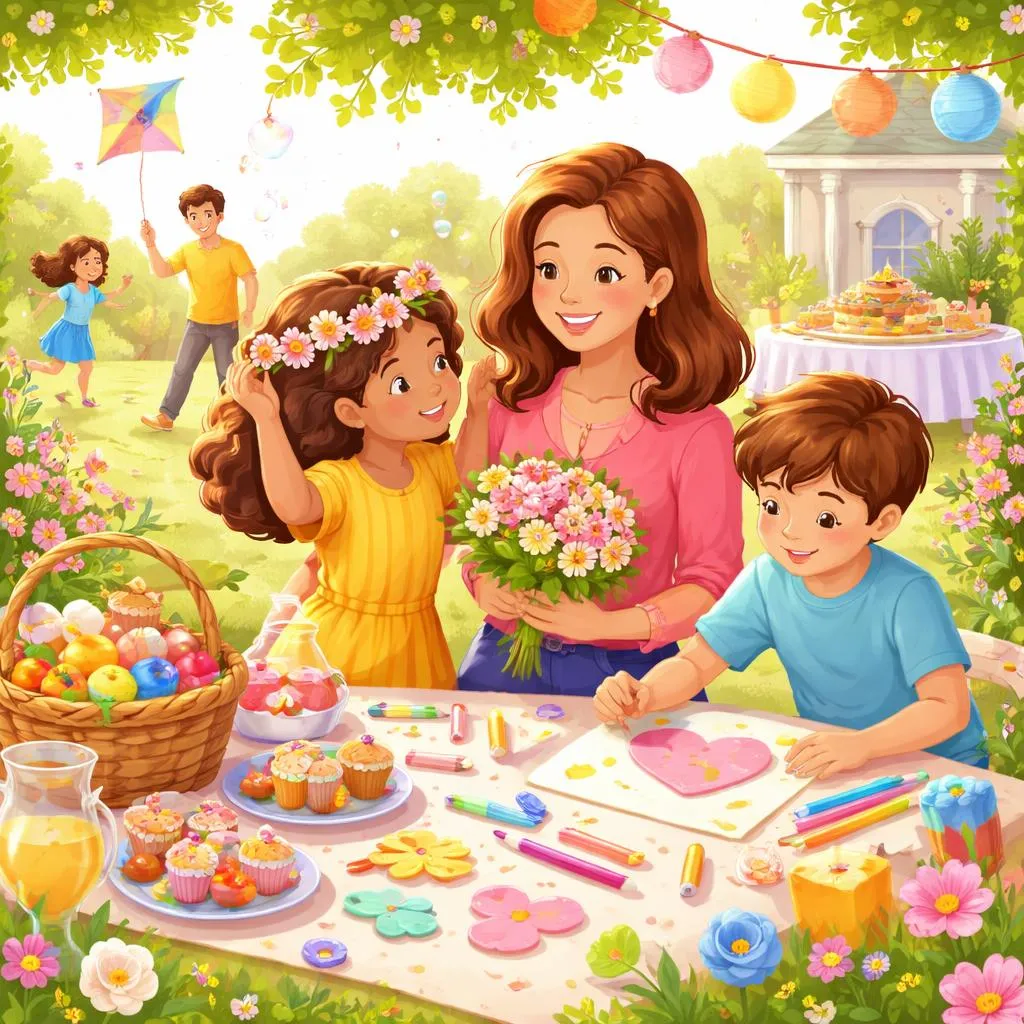

What is this topic about?
Let’s explore a special way to celebrate an important person. The topic of Mother's Day family activities focuses on creating meaningful, shared experiences to show love and appreciation. It moves beyond simply giving a card or gift. It's about spending quality time together, creating memories, and using creativity to express gratitude.
Engaging in Mother's Day family activities is a wonderful opportunity for language learning and emotional expression. Children can practice vocabulary related to family, emotions, and actions. These activities foster connection, cooperation, and the joy of giving through shared effort and presence.
Meaning and explanation
Why plan special Mother's Day family activities? This holiday is a perfect moment to pause and focus on the act of appreciation. Planned activities provide a structured yet heartfelt way for families to connect. They shift the focus from commercial gifts to shared time and personalized creations.
These activities teach children about thoughtfulness and effort. They involve planning, collaboration, and communication—all valuable social skills. By participating in Mother's Day family activities, children learn to express love through actions, not just words. They see the joy that comes from making someone else feel special.
Categories or lists
We can organize Mother's Day family activities into friendly categories. One group is Creative Craft Activities. This includes making handmade cards, painting flower pots, or creating a family coupon book. Another is Culinary Activities, like baking cookies together or preparing a simple breakfast in bed as a team.
We also have Experience-Based Activities. This could be planting a garden together, having a family photo session, or creating a "Mom's Favorite Things" scavenger hunt. Lastly, there are Service and Relaxation Activities, such as kids taking over mom's chores for the day or giving a homemade spa treatment. Categorizing helps families choose an activity that fits their style and resources.
Daily life examples
The spirit of Mother's Day family activities can be found in simple, daily moments. It's not always about a grand project. An activity could be as simple as a family walk where everyone shares what they appreciate about mom. It could be cooking dinner together, with each person handling a small, age-appropriate task.
Looking at old family photos and sharing stories is a beautiful, low-prep activity. Even a planned "tech-free" hour of board games or reading together qualifies. These examples show that meaningful Mother's Day family activities are about intentional time and presence, not complexity or expense. The goal is connection.
Printable flashcards
Printable resources can be the centerpiece of great activities. Create a set of "Mom Interview" cards. These are printable cards with fun, loving questions for children to ask their mom: "What's your favorite memory of us?" "What makes you laugh?" The activity involves the child "interviewing" mom and writing down or drawing the answers, creating a precious keepsake.
Another idea is a "Family Recipe Card" printable. Provide a beautifully designed card where children can write or dictate a favorite family recipe, perhaps one mom makes. They can decorate it. The activity becomes cooking that recipe together on Mother's Day, blending writing, art, and culinary fun into one memorable Mother's Day family activity.
Learning activities and games
Let's translate these ideas into structured yet joyful learning experiences. A wonderful language-based activity is creating a "Word Bouquet." Cut out paper flower shapes. On each petal, a family member writes or draws a word that describes mom (e.g., "kind," "funny," "strong"). Glue the flowers to stems and present the bouquet. This builds vocabulary for emotions and character traits.
An engaging game is "Mom's Superhero Trivia." Before the day, children (with help from another adult) create simple trivia questions about mom: "What is mom's favorite color?" "Where was mom born?" On Mother's Day, the family plays the trivia game together. This encourages listening, memory, and playful conversation, making mom feel known and celebrated.
For a collaborative art project, try a "Family Handprint Tree." Use a large paper or canvas. Paint a simple tree trunk and branches. Each family member dips their hand in paint and makes a handprint on the branches as leaves. Label each print. This symbolizes the family growing together and creates a lasting piece of art from a shared Mother's Day family activity.
What is the story?
Many cultures have stories about mothers. A beautiful Mother's Day family activity is a "Storytelling Evening." Choose a picture book about the love between a parent and child, such as Love You Forever by Robert Munsch or The Runaway Bunny by Margaret Wise Brown. Read it aloud as a family.
After reading, each person can share their own short, true story about a happy memory with mom. This activity builds listening skills, narrative understanding, and emotional connection. It celebrates mom through the power of shared stories, creating a warm and intimate family moment.
Vocabulary learning
These activities naturally build thematic vocabulary. Key nouns include: mother, family, love, gratitude, gift, memory, hug, kiss, card, flower. We also practice adjectives to describe mom: loving, caring, wonderful, special, kind, strong, beautiful, amazing.
Action verbs are central to the activities: make, create, give, help, hug, thank, celebrate, share, cook, draw. Learning these words in the heartfelt context of Mother's Day family activities gives them deeper meaning and makes them more memorable for young learners.
Phonics points
Crafting for Mother's Day offers natural phonics practice. Many key words feature common beginning blends and digraphs: the /m/ in mother and make, the /th/ in thank and mother, the /fl/ in flower and family.
Writing simple messages like "I love you, Mom!" allows practice with sight words (I, love, you) and vowel sounds (the long /o/ in love and Mom). Making a card with the word "MOM" at the top is a perfect chance to discuss how the letter 'M' makes the /m/ sound.
Grammar patterns
Preparing for Mother's Day allows practice of meaningful grammar. Children can practice using possessive pronouns: "This is my mom." "This card is for her." They use imperative sentences to give their handmade coupons: "Relax for 10 minutes!" "Get one free hug!"
They also use the simple future tense to talk about plans: "We will make breakfast." Or the simple past tense to share a memory: "We made this together." This grammar practice is embedded in real, purposeful communication about their Mother's Day family activities.
Printable materials
Beyond flashcards, consider a "All About My Mom" fill-in-the-blank book. This printable booklet has pages with prompts like "My mom is really good at..." and "I love it when my mom...". The child completes it and can draw illustrations. It becomes a personalized, read-aloud gift.
A "Mother's Day Bingo" game sheet is fun for a family game night. The squares contain simple, loving actions: "Give mom a compliment," "Tell a joke to make mom laugh," "Help with a chore." The first to complete a row wins, but really, mom wins by experiencing all these kind acts.
The most successful Mother's Day family activities are those filled with genuine presence and personal touch. They are less about perfection and more about the shared experience of creating something meaningful together. These activities teach children that love is an action verb. They build family bonds, create positive traditions, and give children the language and confidence to express their appreciation. The memories created during these simple, heartfelt activities often become the most treasured gifts of all.