
What is the rhyme?
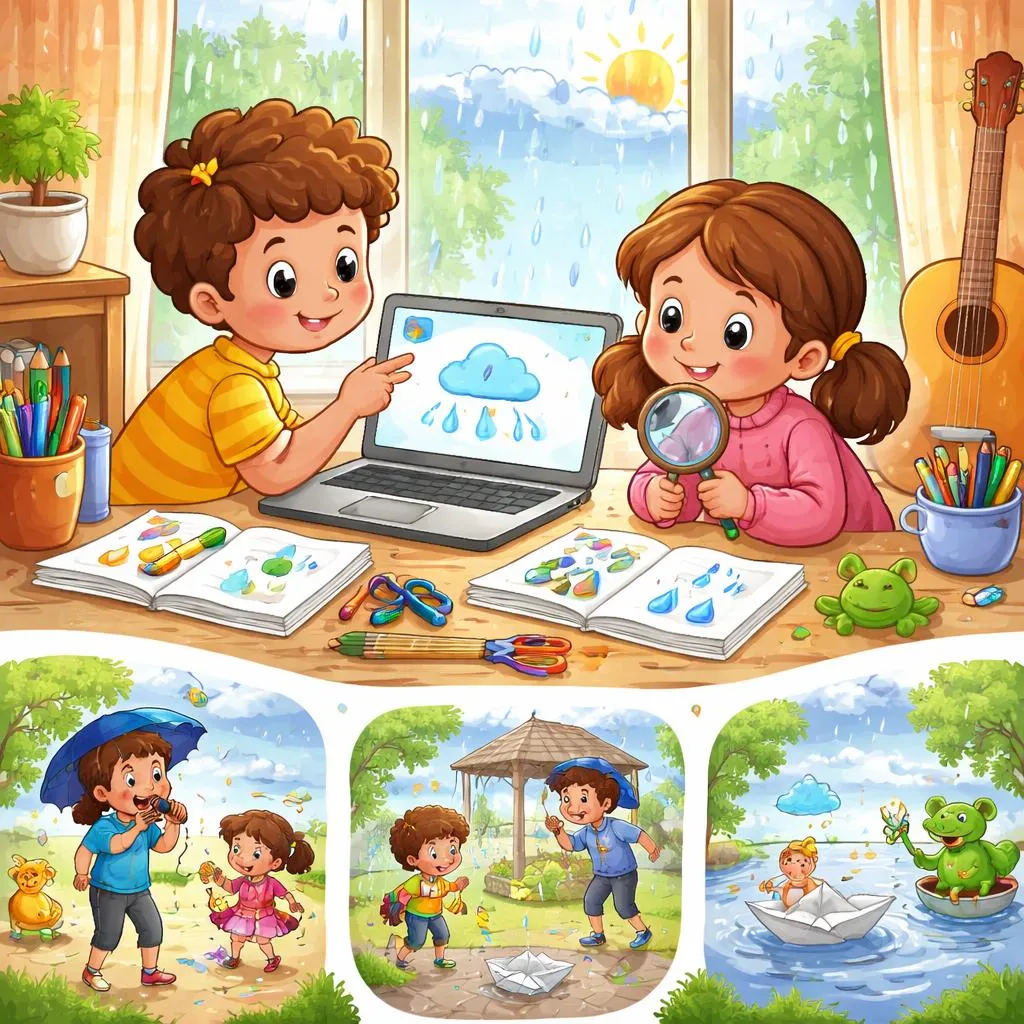
Let's talk about a song for a rainy day. The Rain Rain Go Away song is one of the oldest and most beloved English nursery rhymes. It’s a simple, repetitive chant that expresses a universal wish: for the rain to stop so that children can go outside and play. This song transforms a sometimes disappointing weather event into a playful, musical interaction.
The charm of the Rain Rain Go Away song lies in its directness and rhythm. It gives young children a way to articulate their feelings about the weather and a sense of agency through song. It’s often one of the first songs children learn that connects language to their immediate environment and emotions, making it a powerful tool for early language development.
The lyrics of nursery rhymes
The lyrics of the Rain Rain Go Away song are short, memorable, and easy to adapt. The most traditional version is:
Rain, rain, go away, Come again another day. Little [child's name] wants to play; Rain, rain, go away.
The song is beautifully flexible. The third line can be personalized with any name: “Little Johnny wants to play,” or made plural: “All the children want to play.” Some extended versions list family members: “Rain, rain, go away, come again another day. Daddy wants to play, Mommy wants to play…” This repetitive, customizable structure is key to its enduring popularity and educational value.
Vocabulary learning
This short song introduces clear, practical vocabulary. The core noun is rain. It teaches the verb phrase go away as a request for something to leave. The phrase come again introduces the concept of returning at a different time.
The song also uses the high-frequency verb wants to express desire, and the all-important verb play. Learning these words in the context of a familiar wish helps children understand and use them to express their own needs and wants. It’s a perfect example of functional, everyday language set to music.
Phonics points
The Rain Rain Go Away song is wonderful for early phonics. It heavily features the long A sound, heard in rain, away, day, and play. Repeating this sound in a rhyming context (away/day/play) helps children recognize and produce this common vowel phoneme.
We can also focus on alliteration with the repeated /r/ sound in rain and again. The initial consonant blend /pl/ appears in play. Clapping the steady beat of the song (“Rain, clap, rain, clap, go a-clap-way”) helps children segment the phrases into individual words and feel the rhythm of the English language, building phonological awareness.
Grammar patterns
The song neatly demonstrates several basic grammar structures. The main sentence, “Rain, rain, go away,” is an imperative sentence—a command or request directed at the rain. This is a common sentence type in daily speech.
The line “Little Johnny wants to play” uses the third person singular present tense (wants), showing a current desire. The phrase “Come again another day” is another imperative, and “another day” introduces the concept of an unspecified future time. These patterns are absorbed effortlessly through the song’s melodic repetition.
Learning activities
The best activity is, of course, to sing the song on a rainy day! Look out the window and chant it together. This creates a powerful real-world connection. Then, extend the learning with creative play.
A wonderful follow-up activity is “Weather Charades.” Write different weather types on cards (sunny, rainy, windy, snowy). A child picks a card and acts it out. If they act out “rainy,” the whole group can respond by singing the Rain Rain Go Away song. This links vocabulary, physical expression, and music.
Printable materials
Printable resources can make the song visual. Create a “Story Sequencing Sheet.” This printable has four boxes: 1. A picture of rain. 2. A picture of a sad child inside. 3. The sun coming out. 4. A happy child playing outside. Children can put them in order, draw them, or paste provided images, then narrate the story using words from the song.
Another great printable is a “Personalized Song Book.” Create a mini-book where each page completes a sentence: “Rain, rain, go away. ______ wants to play.” The child can draw a picture of themselves, a family member, or a friend on each page and write the name. This combines art, writing, and personalization of the Rain Rain Go Away song lyrics.
Educational games
Turn the theme into playful games. Play “Musical Puddles.” Cut out blue “puddle” shapes from paper and place them on the floor. Play music (or sing the song) while children walk around. When the music stops, everyone must find a puddle to stand on. The last one to find a puddle gets to lead the next round of singing. This adds movement and listening skills.
For a phonics-focused game, create “Rhyming Word Clouds.” Draw cloud shapes on paper. In one cloud, write “RAIN.” Have children brainstorm or find picture cards of words that rhyme with “rain” (train, plane, cane) and draw/write them in connecting clouds. This extends the phonological practice from the song’s core rhyme.
The Rain Rain Go Away song does more than pass time on a wet afternoon. It gives children a simple, rhythmic framework to express a common feeling, practice key sounds and grammar, and connect language to their lived experience. By using this familiar tune as a springboard for discussion, creativity, and play, we deepen its value. This song teaches that language is not just for naming things, but for expressing wishes, engaging with the world, and even trying to change it—one sung request at a time. That’s a wonderfully empowering lesson to learn, rain or shine.